Welcome to Civita di Bagnoregio
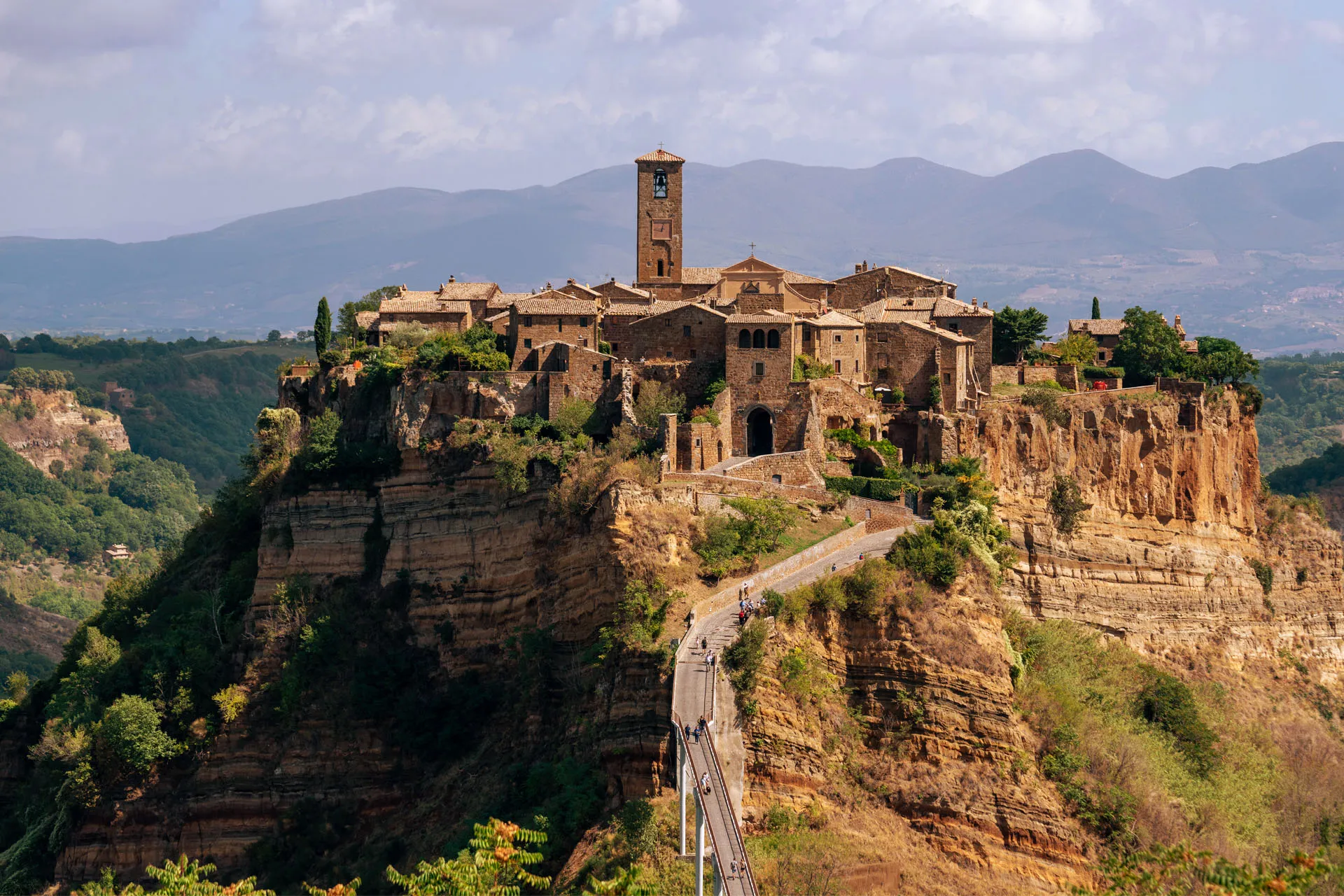
Benvenuti a Chivita di Bagnoregio! Located about 75 miles northwest of Rome, this “City in the Sky” seems almost too beautiful to be real. Perched atop a volcanic plateau, Chivita was founded more than 2,500 years ago. Today, it is home to a small but vibrant community dedicated to protecting its remarkable heritage. Join us as we explore this dramatic landscape and enchanting Italian village.
Stop 1. Bridge to Another World
Our journey begins on the bridge, the main way in and out of Chivita. From here, it becomes clear just how isolated the town really is, rising from its rocky hilltop like something from a storybook. When fog fills the surrounding valleys, the town truly seems to float above the clouds. The bridge is narrow, but it serves as a lifeline, carrying people, supplies, and the rhythms of daily life into the village. Visitors cross on foot, and locals may use small scooters or even donkeys, reminding us that Chivita remains a vibrant living town.
Stop 2. Living on the Edge
As we soar overhead, we can appreciate just how compact the village is. Tan terracotta tile roofs cluster tightly together, following the natural contours of the plateau. The edges of the town fall away dramatically into the valley below, emphasizing both its beauty and its fragility. The streets are too narrow for cars, so life here unfolds on foot. Neighbors meet face to face, visitors wander slowly, and the village’s scale encourages a strong sense of connection.
Stop 3. Piazza San Donato
Moving down toward the heart of the town, we arrive at Piazza San Donato, Chivita’s central square. For generations, this open space has been a place of gathering and celebration. It may seem calm at this moment, but the piazza is often filled with visitors, vendors, and local craftspeople. During the holidays, it can transform into a live nativity scene, and in June and September, it hosts the Palio della Tonna, the town’s traditional donkey races. These lively events honor the donkey’s long-standing role in transporting goods and people through Chivita’s narrow pathways.
Stop 4. Millions of Years in the Making
Chivita di Bagnoregio sits on a base of volcanic stone called tuff, formed by ancient eruptions millions of years ago. But the story of this landscape goes back even further. What is now a dramatic valley was once under the sea. Over time, layers of sediment and volcanic ash built up and hardened into the rock that supports the town today. This high, defensible position made Chivita an ideal place to settle. Yet that same geology that made the town possible also makes it vulnerable. Wind, rain, and erosion continue to erode the cliffs, threatening the land beneath the village.
Stop 5. On Its Own
At the edges of Chivita, its isolation is impossible to ignore. Surrounded by valleys and connected to the outside world by a single bridge, the village has long existed apart. Over time, many residents left, earning Chivita the nickname “the Dying Town.” But that is only part of the story. Other residents stayed, caring for this extraordinary place and keeping it alive. Today, Chivita’s isolation is part of its magic, drawing visitors from around the world and reminding us that even the most fragile places can endure.