Story outline
-
Elephanta Caves
Given Shiva's importance in Hinduism, the Main Cave at Elephanta serves as a significant cultural and historical landmark, as well as a sacred pilgrimage site. The cave temple hosts sixteen sculptures, including nine within its main hall, mostly crafted as reliefs from the natural rock of the hill. These artworks not only highlight the site's religious significance but also its artistic heritage. -
Stop 1. Cave Temple Design
Elephanta island or Gharapuri (City of caves) is located 11 km from the Mumbai coastline and stands as a testament to India's rich cultural and spiritual heritage. The rock-cut cave-temples at Elephanta are stellar examples of rock-cut temple architecture practiced between the 6th – 8th centuries C.E and are a testament to the architectural ingenuity, engineering prowess and artistic skill of the time. -
Stop 2. Earthly to the Divine
Temples are meant to mirror the cosmos and are spaces that act as the link between man and the divine – a spiritual journey towards liberation (moksha). Every step of that journey is symbolically represented by the different elements/components of the temple. -
Stop 3. Ravanaanugraha - Ravana Shaking Kailash
Mount Kailash holds immense significance in Hinduism as the abode of Lord Shiva. Positioned in the transcendental dimension of the universe, Shiva is believed to reside at its summit in a state of perpetual meditation, emanating cosmic energy. This sacred mountain symbolizes the axis of the world and the stairway to heaven, embodying themes of divinity, eternity, and enlightenment. -
Stop 4. Sadashiva - Eternal Shiva
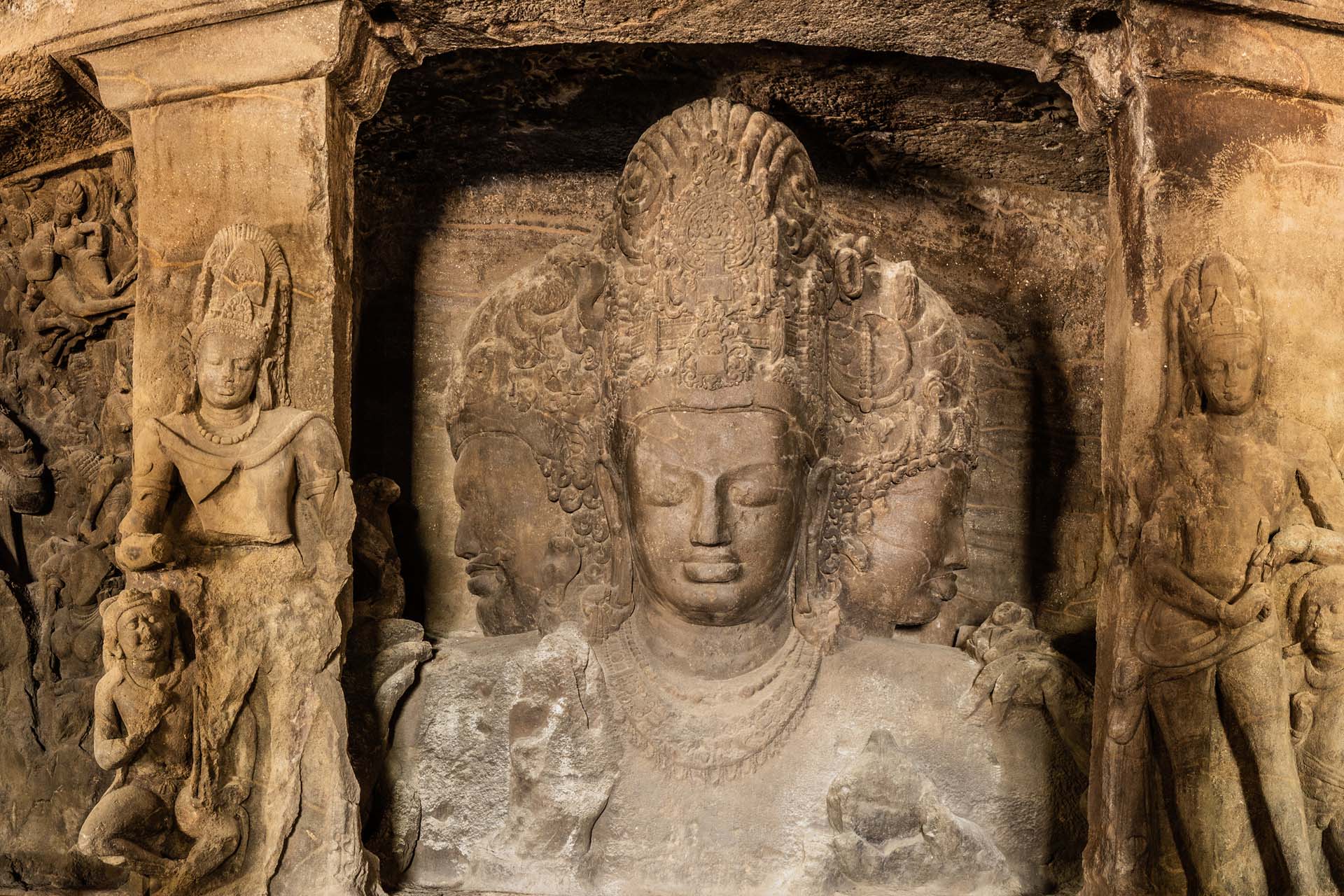
The large bust depicting Sadashiva reveals three of the implied four headed figure. The implied fourth face at the back and fifth face on the top, noted as being Sadyojata (the first manifestation of Siva) and Ishana (the highest manifestation of Siva) respectively. Each of the visible faces describes a part of Siva's nature and embodies specific features to allude to those qualities. -
Stop 5. Gangadhara - Shiva Bearing Ganga
The Ganga River is revered as the most sacred river, embodying purity and holiness. It is believed to originate from the locks of Lord Shiva, symbolizing the descent of life-giving waters from the heavens to the earth. Hindus view the Ganga as not just a physical river but as a divine entity that purifies the soul, washes away sins, and facilitates the path to moksha, or liberation. -
Stop 6. Ardhanarishvara - Shiva as the androgyn
Ardhanarishwar is the androgynous form of Shiva symbolises the coming together of male and female forms in a manner most seamless. This ultimate union represents the coming together of innate and conscious energies, contrasting but complementary forms that exist and create balance. -
Stop 7. Sancta Sanctorum
The Garbagriha or the inner sanctum enshrines a Shivlinga or Shiva in his aniconic form. The inner sanctum has four entrances pointing in each of the cardinal directions. Each entrance is flanked by dwarapalas or temple guardians. These eight dwarapalas are of colossal size and their magnanimity is only enhanced by the ornaments they adorn. -
Stop 8. Storing Water
Cisterns are simple openings cut in the bedrock that served as water storage tanks. They were mostly designed to capture rainwater or, less frequently, to tap into springs. Rainwater would fill these cisterns during the four monsoon months (June to September) and could then be harvested throughout the rest of the year. -
Stop 9. Conclusion
Shiva is believed to imbibe both creation and destruction and thereby achieves and represents universal balance. The sculptural panels in the Main Cave represent different stories and aspects in the life of Shiva, each with an innate message. The positioning of the panels with juxtaposing themes opposite each other itself captures the idea of balance.
Voices
-
Dr. Kurush Dalal
Archaeologist
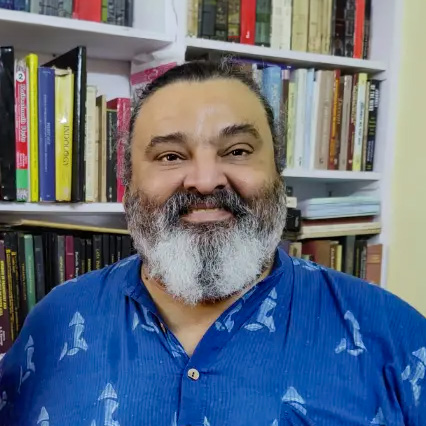
Dr. Kurush Firouz Dalal is the Director of the School of Archaeology at INSTUCEN Trust. He has a BA in Ancient Indian History and History from the University of Mumbai, an MA in Archaeology as well as a Ph.D. in the Early Iron Age in Rajasthan, both from Deccan College, Pune University. Subsequently, he shifted focus to the Early Medieval Period predominantly on the West Coast of India, and excavated the sites of Sanjan, Chandore, and Mandad. These excavations and the data recovered have had a strong impact on scholarship in the region. The recent Mandad excavations have revealed a brand new hitherto unknown Indo-Roman Port site with antecedents going back even further. Dr. Dalal also actively works on Memorial Stones and Ass-curse Stones in India and dabbles in Numismatics, Defence Archaeology, Architecture, Ethnoarchaeology, and allied disciplines. -

Dr. André Baptista
Archaeologist
Dr. Baptista is a lecturer and consultant in Ancient Indian History, Culture & Archaeology. His research interests include prehistory, man-land relationships, landscape evolution on the one hand and colonial history, urban development and shaping of socio-cultural spaces on the other. He has a doctorate in Landscape and Environmental Archaeology from the Deccan College Postgraduate and Research Institute, Pune, India. -
Professor A.P. Jamkhedkar
Former Director of Archaeology & Museums
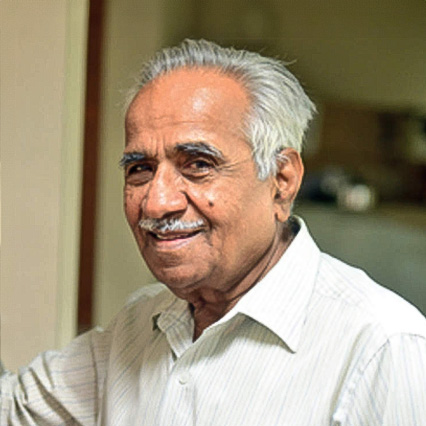
Dr. Arvind Prabhakar Jamkhedkar was the Chairman of the Indian Council of Historical Research (ICHR) from 2018-2021. He is the Chancellor of the Deccan College Pune, deemed a university, an institution from which he took his Ph.D in Ancient Indian Culture in 1966. He has served as the Director of Archaeology and Museums in Maharashtra. He has participated in numerous excavations of chalcolithic, megalithic and early historical sites. Proficient in classical and vedic Sanskrit, Pali and Ardhamagadhi, his wide range of research interests includes archaeology, temple architecture, art history, epigraphy, Buddhism and Jainism and more. -
Meena Mukesh Bhoir
Sarpanch of Gharapuri
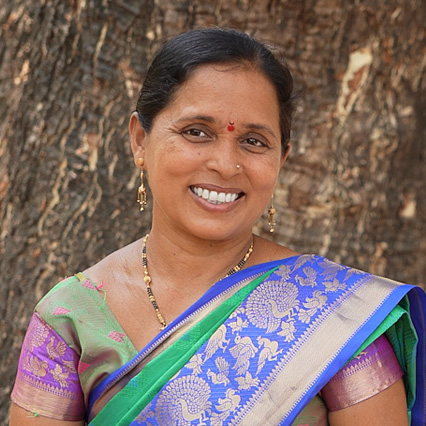
Meena Mukesh Bhoir, serving as the sarpanch (village leader) of Gharapuri village, also known as Elephanta Island, is a native of the island with a deep-rooted connection to its community and heritage. Born and raised on Elephanta, Madam Bui has dedicated herself to the development and welfare of her community, leveraging her unique position to advocate for the preservation of the island's rich cultural history and its natural environment.
Gallery
Partners



About the Project
The Elephanta Cave Complex, nestled on an island near Mumbai, is a UNESCO World Heritage Site that dates back to the 5th and 8th centuries. This labyrinth of cave temples, dedicated to the Hindu god Shiva, showcases an impressive array of rock-cut art and architecture, symbolizing the zenith of ancient Indian artistry. The main cave temple, the centerpiece of this complex, features exquisite sculptures and reliefs depicting various aspects of Shiva's character. The 3D data of the main cave was collected by CyArk and partners from the Instucen Trust in May 2023.
Related Links
Credits
The Elephanta Cave Tapestry Tour was realized with the generous support of Iron Mountain. We extend our heartfelt gratitude to the Archaeological Survey of India (Mumbai Circle), Dr. Kurush Dalal and Dr. Mugdha Karnik from the Instucen Trust, Dr. Tejas Garge from the Directorate of Archaeology and Museums, Maharashtra, for their invaluable contributions.
The script was expertly developed by Dr. Andre Baptista.
Project Team:
Riddhi Joshi, Yogini Aatreya, Keenan Pereira, and Gaurav Gamre.
Hindi Narration and Musical Performances by Riddhi Joshi.
Translation by Madhuri Joshi
Related experience
Cliff Palace (Opens in new tab) — Explore a cliff dwelling and hear from descendent communities