The House on Fire
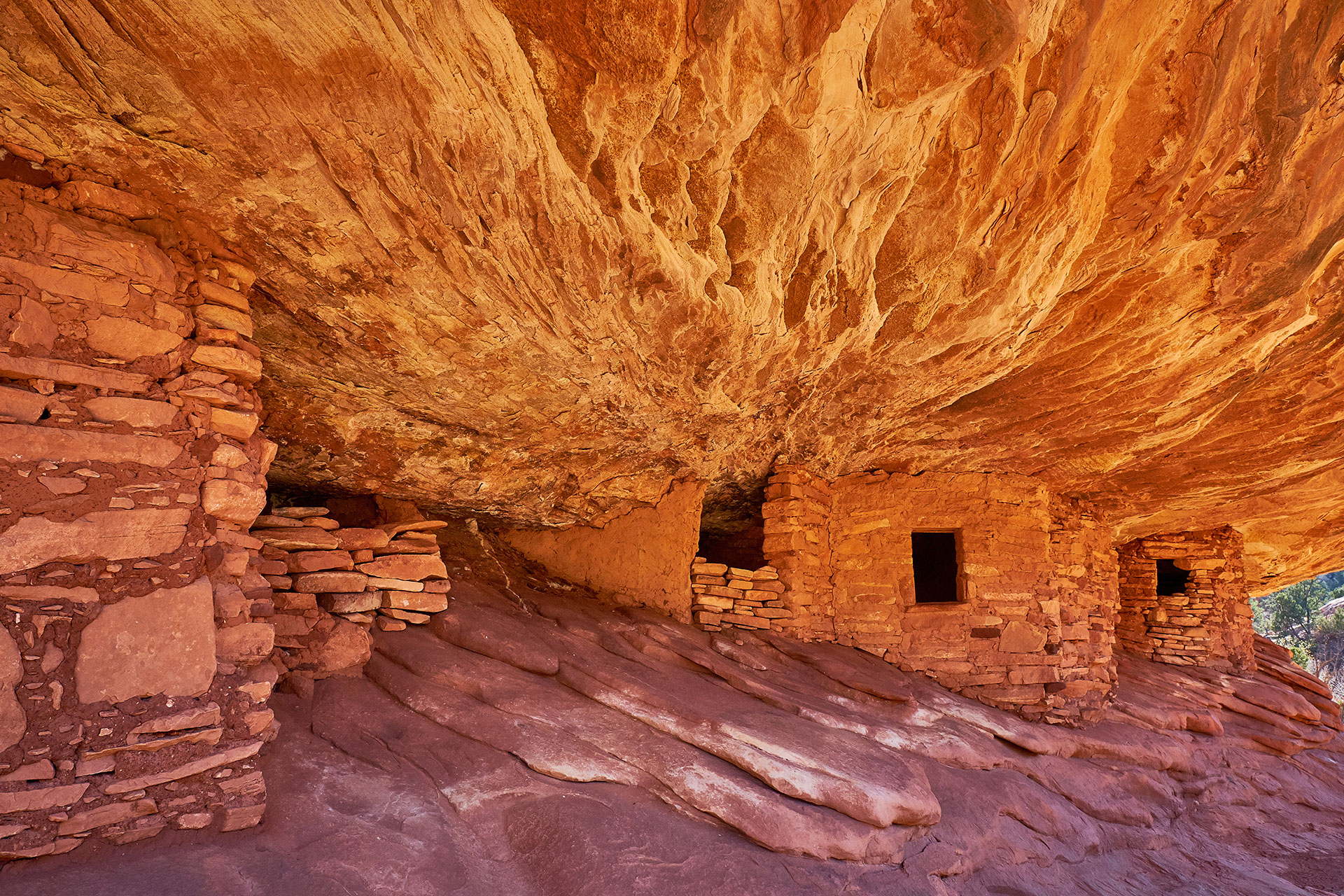
Welcome to the House on fire. A breathtaking geological feature. An ancestral Pueblo granary that is part of Bears Ears National Monument in Utah. Surrounded by towering sandstone cliffs, it's easy to see how this place earned its name. Natural erosion and iron oxide staining create the illusion of flames dancing across the rock face, as if the stone itself is alive. But this site is more than a geological wonder. It's a window into the lives of the people who built and used it as a storage area for food and other necessities. In this experience, we'll explore how this place is part of a living landscape of past communities and their descendants today. Follow along with Shirley Cloud Lane from the Bureau of Land Management, who will share insights that bring this site to life.
Stop 1. Architecture and Craftsmanship
Look up at the alcove above us. High on the cliff face, the Ancestral Pueblo people constructed a storage space designed to hold food and other necessities, utilizing locally sourced rock and materials for mortar. The walls of the storage area align with five different design styles, showcasing the builders adaptability and skill. Imagine the effort it took to carry stones, water, and clay up this steep incline using only yucca twine and woven baskets. The mortar they crafted from clay and dirt was carefully applied to secure the stones. These granaries are more than just functional. They are a testament to human ingenuity and the relentless determination to thrive in a challenging environment.
Shirley Cloud-Lane
I think the important thing about this House on Fire is the architecture. If you take a close look at how it was built, the craftsmanship really shows, and there's different styles of architecture at this particular site or particular grainary. It's a storage area. There's five of them. I don't know if you can pick out the five, but there's actually five. And just the way that they built is absolutely phenomenal. And if you keep in mind the fact that they had to carry this stone up onto that alcove, which is on an incline, carry it on their back, lots of rocks, and then they had to carry water up that incline, you know. Probably, like I described before in the pitch line baskets attached to yucca twine, that's how they would have carried it on their back with the Yucca twine as rope. And then they mix the mortar. They had to find clay to mix in with the dirt. And there’s not a whole lot of dirt on there because it's slick rock. So they had to carry that down. So when you think about all the time that it took to build these storage areas and you know, it was important to them.
Stop 2. Food Storage and Survival
As we move above the alcove, you will see how people constructed these structures deep within the recesses of the cliff, away from the elements. These granaries were not just buildings, they were lifelines in this arid landscape where extreme environmental changes were a constant threat. The people stored surplus crops like corn and beans to ensure their survival during lean times. Planning ahead was essential. These granaries also highlight the importance of community, as surplus food could be shared with neighboring villages, fostering connections of cooperation and mutual support in a world where hard work was foundational to survival. These structures symbolize hope, preparation, and resilience.
Shirley Cloud-Lane
So what are they doing there? They're storing food. Why are they storing food? Well, they knew that they lived in a dry environment and they knew that at times there was going to be plenty of food and they knew that at times their crops would not be as good and they wouldn't have as much food. And of course, you've got the winter, the winters can be harsh up there at times. And so they had to store food. So they were preparing so that they could survive. And I think that's the takeaway for these people is that they struggle, but they were survivors and they did that through a lot of hard work. And that's how we, as the Ute people, the Nuuchu, what we say is that when you go to these sites, be reminded of hard work and be a hard worker.
Stop 3. Community and Shared Efforts
This site was more than a place to store food. It was also part of a larger landscape of similar sites built throughout the area. The people who used this granary were not isolated. They were part of a vast network of villages connected by family, marriage and shared traditions. Together they prayed, struggled and thrived, passing down knowledge and customs through generations. As we stand here today, we're reminded that even in the harshest conditions, human connection and cooperation form the foundations of resilience.
Shirley Cloud-Lane
So it wasn't just the people up in that one village that utilized this story you're most of the folks would come and share, help build and come and share. So they, it was not an isolated group of people living in one village and no one else around, there are many sites up there and they all knew each other and they were probably related to each other through marriage, through clans. And so they would come and celebrate together. So it's not like they were isolated and they are all alone. This is a large community of people in this area that helped each other out, survived, prayed together, survived together, struggled together. It's a beautiful story of human survival.
Stop 4. Enduring Spirit
As we prepare to leave this place, let's take a moment to reflect on the ingenuity, resilience and community spirit of the people who built it. Their legacy is etched into these cliffs and granaries, reminding us of the enduring connection between people and the land, a connection that continues today among ancestral communities in the region. To maintain these connections, it is essential that visitors approach these sites with respect, tread lightly and leave nothing behind. Thank you for joining us on this journey through time and history.