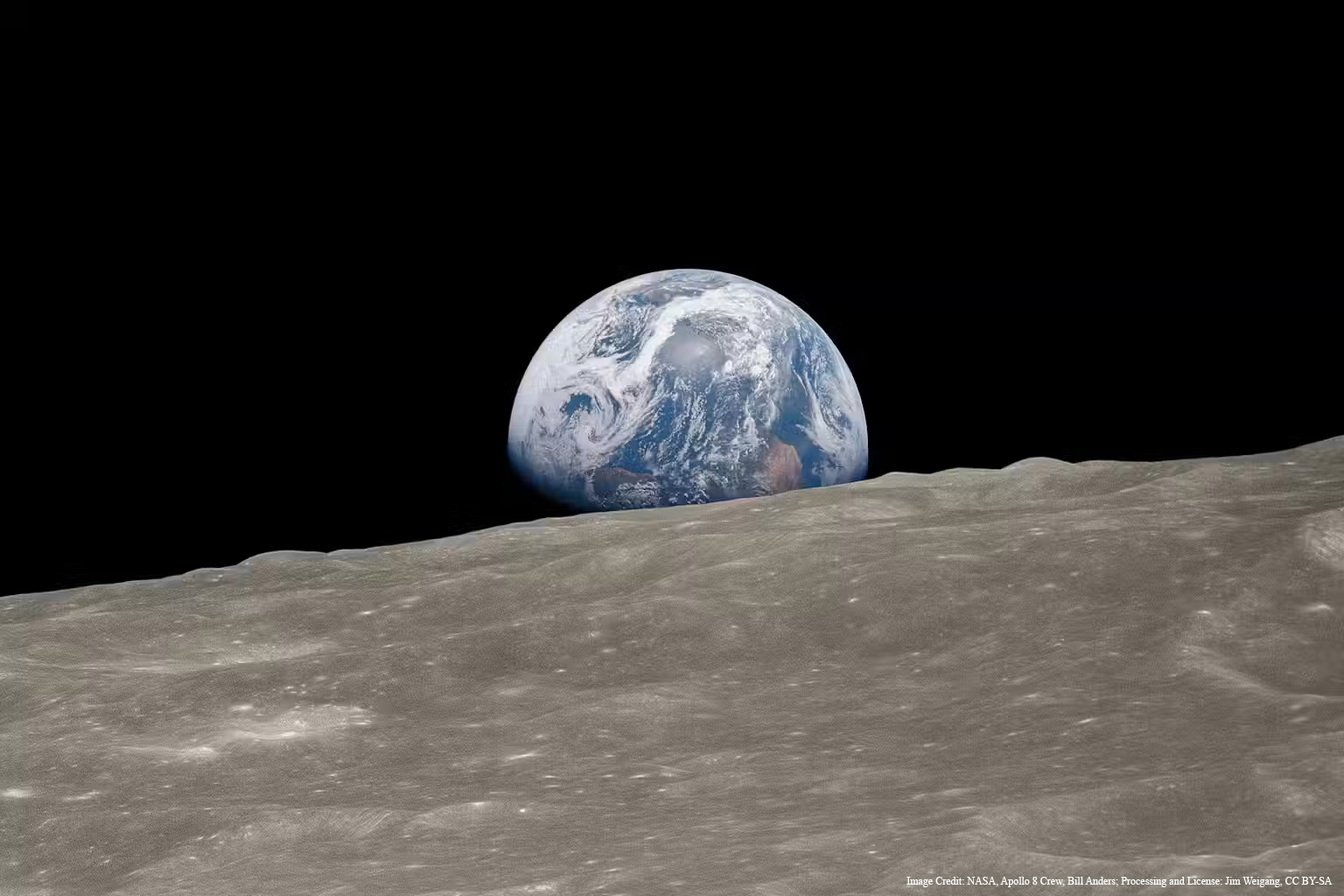
Story outline
-
Exploring Lunar Heritage
Explore the significance of humanity’s presence on the Moon and the challenges of preserving lunar sites today. This experience has been created through a partnership between World Monuments Fund, CyArk and the ICOMOS International Scientific Committee on Aerospace Heritage. -
Stop 1. Humans and the Moon
For millennia, the Moon has inspired cultures worldwide, serving practical, spiritual, and artistic roles while its surface now holds artifacts from decades of exploration. -
Stop 2. The Space Race
The Cold War rivalry between the United States and the Soviet Union fueled the Space Race, leading to historic firsts from the first artificial satellite, Sputnik 1, to landing the first humans on the Moon with Apollo 11. -
Stop 3. Apollo 11
Apollo 11’s first Moon landing was a defining moment in human history that was witnessed by millions around the world. -
Stop 4. Exploring Tranquility Base
At Tranquility Base, artifacts like the Eagle lander, flag, and Laser Ranging Retroreflector remain as enduring symbols of Apollo 11. -
Stop 5. Luna 17
The Soviet Union's Lunokhod 1 became the first remote-controlled rover to study the Moon, marking a scientific milestone for uncrewed lunar exploration. -
Stop 6. Exploring Mare Imbrium
Outfitted with cameras and instruments, Lunokhod 1 traveled over 10 kilometers and pioneered robotic planetary exploration. -
Stop 7. Apollo 17
Apollo 17 marked the last crewed lunar landing and achieved major scientific milestones in the Taurus-Littrow Valley. -
Stop 8. Exploring Taurus-Littrow
With the help of Lunar Roving Vehicle 3 and geologist Harrison Schmitt, Apollo 17 became the most scientifically productive lunar mission to date. -
Stop 9. Returning to the Moon
Lunar exploration expanded in the 21st century with new missions from China, India, Japan, and private companies, ushering in a new era of discovery and sustainability challenges. -
Stop 10. Protecting Lunar Heritage
As renewed missions increase, fragile traces of lunar history face risks—underscoring the need for protocols to protect heritage beyond Earth. -
Stop 11. The Lunar Legacies
The Moon continues to inspire humanity, and preserving its legacy will require global collaboration to safeguard our shared cultural memory in space
Voices
-
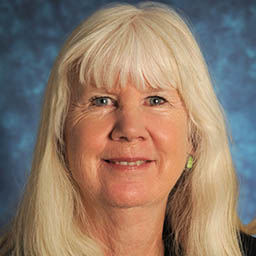
Beth O'Leary
Lunar Archeologist
Dr. Beth O’Leary is an archaeologist and professor emerita at New Mexico State University, best known as a pioneer in the field of space archaeology. Her research focuses on the preservation and study of human artifacts left in outer space, particularly on the Moon. She co-founded the Lunar Legacy Project, which helped establish the Apollo 11 landing site as a cultural heritage location. O’Leary’s work bridges archaeology, anthropology, and space policy, highlighting the importance of protecting humanity’s off-world heritage. -

Gai Jorayev
Cultural Heritage Expert
Gai Jorayev is an engineer and researcher specializing in aerospace systems and space mission technology. His work focuses on spacecraft design, lunar exploration, and the development of instruments for off-world research. Jorayev has contributed to multiple international space projects, bridging engineering innovation with scientific exploration. -
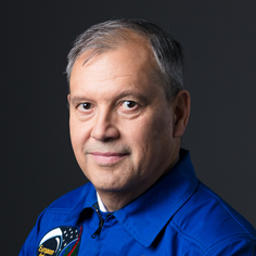
Dumitru-Dorin Prunariu
Romanian Cosmonaut
Dumitru-Dorin Prunariu is a Romanian astronaut and engineer, best known as the first Romanian to fly in space. He flew aboard the Soviet Soyuz 40 mission in 1981 and has since been active in promoting space research and international cooperation in aerospace.
Gallery
Partners



About the Project
This experience was created through a collaboration between World Monuments Fund, CyArk, and the ICOMOS International Scientific Committee on Aerospace Heritage to explore the concept of lunar heritage. Using existing 3D data of the Moon and hand-modeled reconstructions of historic landing sites, CyArk recreated key locations based on archival imagery and research. The project builds on World Monuments Fund’s 2025 inclusion of the Moon on the World Monuments Watch, highlighting the importance of preserving humanity’s legacy beyond Earth.
Related Links
Credits
This experience was created with support from the World Monuments Fund (WMF) as part of the 2025 World Monuments Watch. This project also received input from the International Council on Monuments and Sites International Scientific Committee in Aerospace Heritage (ICOMOS ISCoAH). A special thanks to Beth O’Leary, Gai Jorayev, and Bryan Linnott for generously providing their time, expertise, and insights throughout the development of this project, and to Alice Gorman for additional support. We are also appreciative of Dumitru-Dorin Prunariu for sharing his experience and expertise included as part of this experience.