
Story outline
-
The Pauli Murray Center
Welcome to Durham, North Carolina and the childhood home of Pauli Murray, a pioneering writer, labor and civil rights activist, legal scholar, feminist, priest, and life-long learner whose visionary work helped shape the civil rights landscape in the 20th century. Today the home is part of the Pauli Murray Center, dedicated to connecting history to contemporary human rights issues in order to activate visitors of all ages to stand up for peace, equity and justice. -
Stop 1. West End Community
The Fitzgerald home in Durham's West End, known as "The Bottoms," faced flooding and racial segregation. Robert Fitzgerald, Pauli's grandfather, built the house and ran a brick-making business. Growing up here, Pauli witnessed racial disparities, shaping her fight against injustice. Influenced by her resilient grandparents, Pauli's commitment to civil rights was deeply rooted in her early experiences. -
Stop 2. Environmental Racism in Durham
Durham, North Carolina, experienced rapid industrial growth in the early 20th century, becoming a hub for the tobacco and textile industries. This expansion brought significant economic development but also entrenched racial and economic disparities. The city's industrial activities often had adverse effects on Black communities, exemplified by the contamination and flooding of land on the Fitzgerald property. -
Stop 3. Cornelia Smith
Cornelia Smith, Pauli Murray’s grandmother, was a key figure in Pauli’s upbringing, known for her strength and tenacity. Raised in a complex environment where her mother was enslaved and her father was from the enslaving family, Cornelia strived to reject the associations with slavery while embracing the positive aspects of her father’s world. -
Stop 4. Robert Fitzgerald
Robert Fitzgerald, Pauli Murray’s grandfather, was a key influence in her life. Educated by Quakers, Robert was deeply religious and committed to justice. He fought for the Union in the Civil War and later educated newly freed slaves. His perseverance and dedication to education profoundly shaped Pauli, who learned from him while reading aloud on the porch. -
Stop 5. Pauli's Family
Pauli Murray’s sense of faith, justice, and self-determination was shaped by her family, driving her lifelong passion for rights. In young adulthood, Pauli questioned her gender and sexual identity, ultimately embracing a non-normative identity beyond the restrictive norms of 20th-century America. Navigating these complexities, she became a civil rights trailblazer, shaping public policy and inspiring future generations to fight for equality. -
Stop 6. Visionary for Justice
Pauli Murray's legacy is rooted in the values of the Fitzgerald family, emphasizing education and the power of words. Her critical writing and advocacy influenced landmark legal victories, including Thurgood Marshall's Brown v. Board of Education and Ruth Bader Ginsburg's Reed v. Reed. As a co-founder of the National Organization for Women and the first African American woman ordained as an Episcopal priest, Murray championed gender, racial, and disability equality. -
Stop 7. Academic and Civil Rights Career
Pauli Murray's commitment to civil rights was shaped by her deep understanding of intersectional barriers. Despite facing racial and gender-based discrimination, she excelled academically, coined the term "Jane Crow," and influenced major legal victories. As a co-founder of the National Organization for Women and the first African American woman ordained as an Episcopal priest, Murray pushed for gender, racial, and disability equality. -
Stop 8. Aunt Sallie and Aunt Pauline
Sallie and Pauline Fitzgerald Dame, Pauli Murray's aunts, were influential educators who taught her the value of education and choice. After her mother's death, Pauli moved to live with them in Durham, where she learned to read by sitting in on Aunt Pauline's classes. Their support and the family's values of faith, justice, and self-determination profoundly shaped Pauli’s work as a civil rights activist and advocate for diverse communities. -
Stop 9. Pauli’s Legacy
It is essential to see Pauli Murray's work within the wider 20th-century civil rights movement. Pauli was a visionary thinker and writer, while contemporaries like Fannie Lou Hamer and John Lewis were organizers and protestors, respectively. Deepa Iver's Social Change Ecosystem map highlights various roles in social justice. Take a moment to reflect on your community role and impact. -
Stop 10. Conclusion
This home embodies the enduring qualities of the tenacious Fitzgerald family that shaped Pauli Murray's transformative life. As a National Historic Landmark, it stands as a testament to the achievements of a genderfluid Black person who profoundly impacted human rights and social justice. The lessons learned here inspired Pauli to advance justice and equality for others.
Voices
-
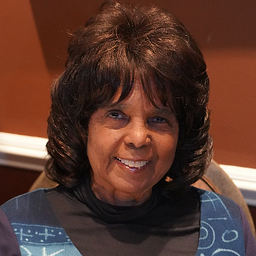
Rosita Stevens-Holsey
Pauli Murray's Niece
Rosita Stevens-Holsey, niece of Reverend Dr. Pauli Murray, is a dynamic educator, author, activist, community engager and budding family historian focused on sharing stories of historical and pioneering voices for children and adults to be inspired by. She holds a B.S. in Science and Education from State University of New York and a Master’s Degree in Counseling and Human Services from Boston University. Ms. Stevens-Holsey is the co-author of the award winning biography Pauli Murray: The Life of a Pioneering Feminist & Civil Rights Activist. -
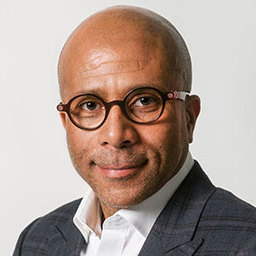
Dr. Anthony B. Pinn
Professor, Rice University
Anthony Pinn, a fellow of the American Academy of Arts and Sciences, is the Agnes Cullen Arnold Distinguished Professor of Humanities, Professor of Religion and founding director of the Center for Engaged Research and Collaborative Learning at Rice. Pinn is also a Professor Extraordinarius at the University of South Africa, and a Visiting Scholar at Harvard University Divinity School. His research includes African American Religious Thought, Contemporary Humanism, Religion and Popular Culture, and Religion in the Arts. He is the author/editor of over 30 books, including Interplay of Things: Religion, Art, and Presence Together (2021), and the novel The New Disciples (2015). -
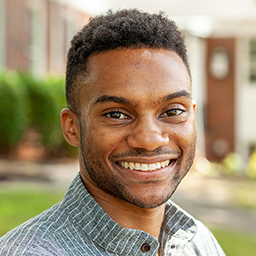
Jesse Huddleston
Community Activist
Jesse Huddleston (he/she/they/we) comes from a family of artists, educators, and public servants, all from North Carolina, where he has lived since 2006. As a Black genderqueer artist and practitioner living in the US South and inspired by our ancestors Pauli Murray and James Baldwin, Jesse continues to develop their humanity and their deep passions for people, equity, and the arts through expansive, creative vocations focused on connecting people and engaging in community. Currently, Jesse works as Senior Program Coordinator of the Duke-Durham Neighborhood Partnership at Duke Community Affairs, as Director of Music Ministry at CityWell United Methodist Church, as Chair of the Pride: Durham, NC Planning Committee at the LGBTQ Center of Durham, and as Board Chair of the Pauli Murray Center for History & Social Justice. They hold a Bachelor's degree in Sociology from Duke University as well as a Master's degree in Counseling from the University of North Carolina at Greensboro. -
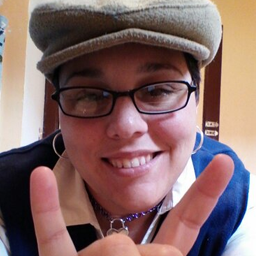
Amy Waltz-Reasonover
Seminary Student
Amy Waltz-Reasonover (she/they) is a queer, Deaf, and disabled seminarian at the Episcopal Seminary of the Southwest in Austin, Texas, and a postulant for Holy Orders in the Episcopal Diocese of Texas. They founded the St. Gallaudet Deaf Prayer Group, an online community in the Diocese of Texas, and are working on a thesis in Deaf theology. Fluent in English and ASL, Amy is passionate about social justice, influenced by early experiences of racial injustice. With a background as a musician and teacher, they have worked extensively with disabled and Deaf/Hard of Hearing students. Amy lives on campus with their spouse, Debra, their children, Heather and Jamie, a service dog, and several cats, and plans to pursue a PhD in theology after graduation and ordination.
Gallery
Partners


About the Project
The Pauli Murray Center celebrates the legacy of Rev. Dr. Pauli Murray, a trailblazing human rights activist, legal scholar, feminist, author, poet, Episcopal priest, labor organizer, and multiracial Black, LGBTQ+ community member. Located at her childhood home in Durham, North Carolina, the Center offers programs in history, education, arts, and activism to promote justice and equity.
Related Links
- Pauli Murray Center Educational Resources (Opens in new tab)
- KALW Podcast "Hats off to Pauli Murray!" (Opens in new tab)
- 1968 Interview with Pauli Murray about early activism (Opens in new tab)
- 1977 Interview with Pauli Murray about being ordained (Opens in new tab)
- 1970 Statement to Congress on Racial and Gender Equity (Opens in new tab)
- Pauli Murray Center Coloring Book (Opens in new tab)
Credits
This virtual experience of the Pauli Murray Center was made possible with support from Iron Mountain's Living Legacy initiative. In 2024, CyArk traveled to North Carolina to complete the 3D documentation of the Pauli Murray Center, collaborating closely with staff to compile audio and video interviews to be used in the experience. Special thanks to Rosita Stevens-Holsey, Dr. Anthony B. Pinn, Jesse Huddleston, Amy Waltz-Reasonover, and the Pauli Murray Center staff for lending their voices and expertise to this project.
Related experience
César E. Chávez National Monument (Opens in new tab) — A Refuge for the Chávez Family and the Farm Labor Movement