Story outline
-
Areni-1 Cave
Welcome to Areni‑1 Cave, a portal to millennia of human innovation. Nestled in Armenia’s rugged Vayots Dzor, this site preserves imprints of early life, sacred rituals, and the birth of winemaking. Step into ancient shelters and mystical galleries, where every stone echoes a timeless story. -
Stop 1. The Cave’s Early Inhabitants
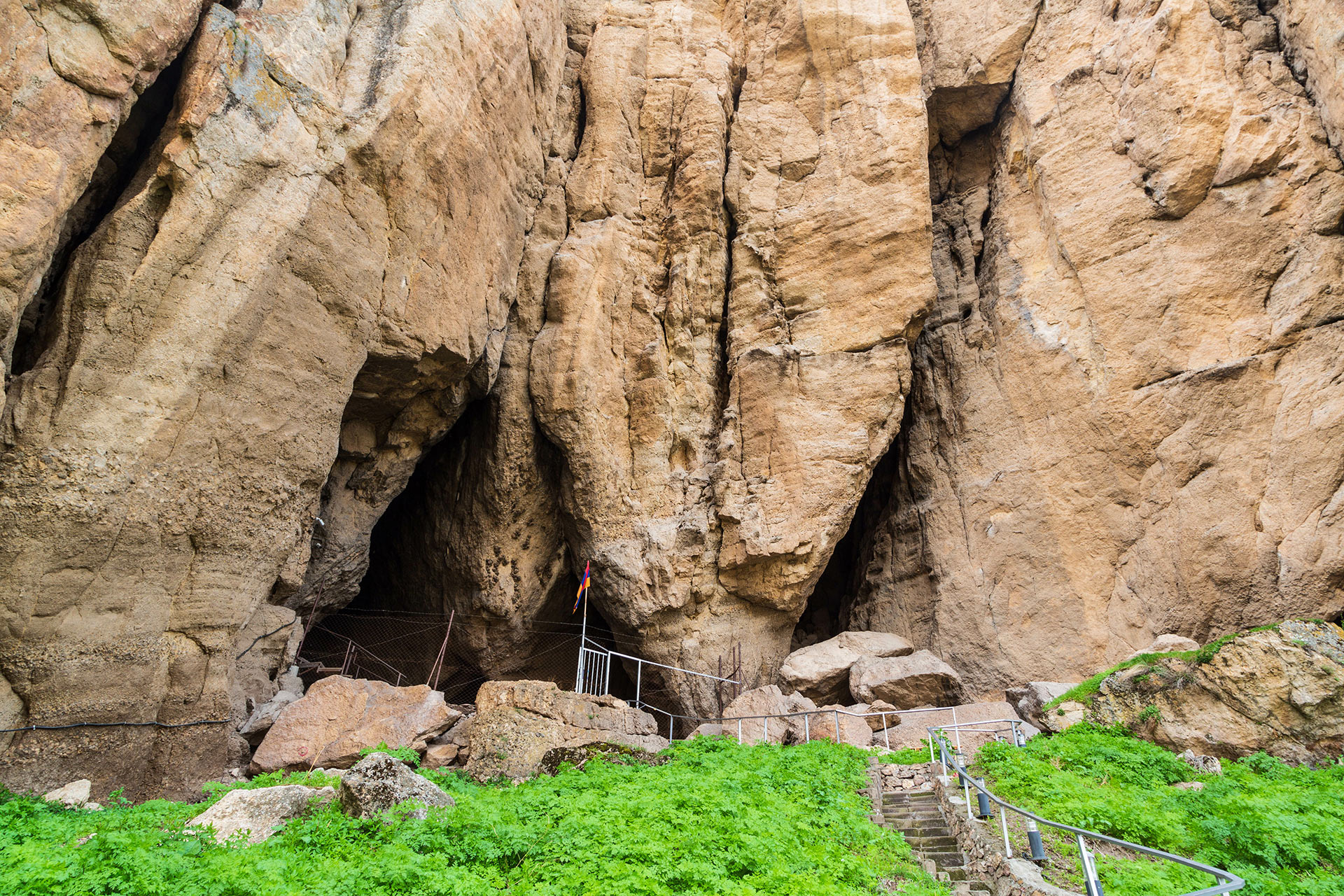
At the cave’s mouth, evidence reveals that early modern humans once found shelter and sparked innovation. Overlooking the Arpa River canyon, Areni‑1 offered abundant resources and protection. Artifacts here narrate a story of survival, creativity, and the formative steps of a community that shaped its world. -
Stop 2. The Oldest Leather Shoe
Within Areni‑1, discoveries such as the leather shoe from ca. 3500 B.C. redefine ancient craftsmanship. Alongside beads, tools, and garments, these finds illuminate daily life and ceremonial customs. They offer a tangible glimpse into a resourceful, creative community whose legacy endures in every artifact. -
Stop 3. Rituals and Ceremonial Practices
In a secluded chamber, carefully arranged burials and symbolic deposits hint at Areni‑1’s ritual heart. The artifacts suggest complex ceremonial practices that honored life, death, and renewal—without confirming acts of sacrifice. This sacred space invites reflection on ancient spirituality and the timeless search for meaning. -
Stop 4. Birthplace of Winemaking
Discover the origins of viticulture at Areni‑1, where early winemaking emerged around 4000 B.C. Evidence of grape crushing on stone platforms and fermentation in clay vessels reveals sophisticated ancient techniques. This historic winery melded everyday life with ritual, marking a pioneering chapter in human innovation. -
Stop 5. The Enigmatic Passage
A hidden entrance opens to an unexplored gallery marked by red ochre—a corridor evocatively dubbed the 'Road of the Dead.' Likely used for ceremonial journeys, this mysterious passage stirs the imagination. Although its full function remains under study, it deepens the cave’s aura of ritual mystery and layered history. -
Stop 6. The Birthplace of Dionysus
Concluding our journey, Areni‑1 stands as a testament to ancient ingenuity and spirit. From early habitation to pioneering winemaking, the cave intertwines daily life with myth and ritual. Its evocative legacy, even linked symbolically to Dionysus, continues to inspire wonder and enrich our understanding of history.
Voices
-

Armine Adamyan
Local Tour Guide
Armine Adamyan serves as a guide in the virtual tour experience of Areni Cave developed under the Community Heritage Exchange Initiative (CHEI) program. -

Boris Gasparyan
Head of Areni Cave Archaeological Expedition
Since 1992, Boris is a researcher at Institute of Archaeology and Ethnography of the National Academy of Sciences of the Republic of Armenia and is an Assistant Professor in the Department Archaeology and Ethnography at Yerevan State University. Since 2000 he directed and co-directed many international joint archaeological missions in Armenia. He is an author of around 180 scientific publications regarding different aspects of Archaeology of Armenia and Near East.
Gallery
Partners



About the Project
Areni‑1 Cave, situated in Armenia’s Vayots Dzor Province, is a remarkable archive of human innovation and cultural evolution. This landmark site has yielded extraordinary discoveries from the Chalcolithic period, including the world’s oldest leather shoe and early evidence of winemaking. Artifacts ranging from finely crafted tools to symbolic ritual deposits and burials reveal a sophisticated society that seamlessly blended daily life with ceremonial practices. Each find provides insight into how ancient inhabitants harnessed their environment and resources, forging techniques that continue to influence modern culture. Areni‑1 remains a vital resource for understanding our shared heritage.
Credits
The guided tour was produced as part of the Community Heritage Exchange Initiative, a collaboration of the U.S. Department of State Ambassadors Fund for Cultural Preservation, StoryCenter, and CyArk. The project was made possible through local collaboration with the Vayots Dzor DMO and numerous individual community members.