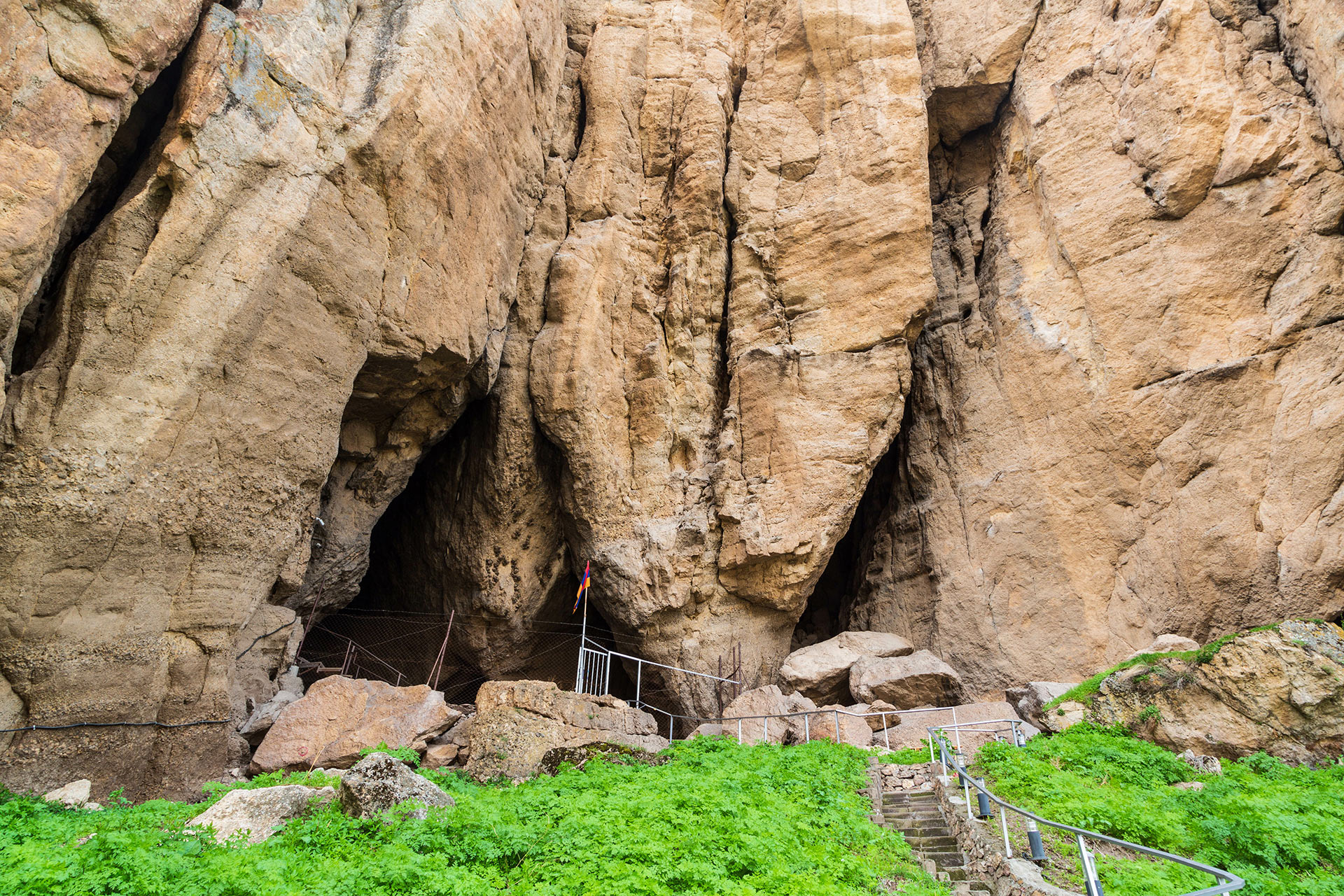
Areni-1 Cave
Welcome to Areni One Cave, a hidden gem nestled in the dramatic landscapes of the Armenian Highlands. This ancient site is more than just a cave. It's a time capsule preserving the echoes of humanity's earliest footsteps for thousands of years. This cave has served as a sanctuary, a workshop, and a temple. Bearing witness to the evolution of human culture, spirituality and innovation. Let's step into the past and uncover the secrets of Areni one.
Stop 1. The Cave’s Early Inhabitants
At the mouth of Areni one, we stand on ground once trodden by early modern humans. Archaeological findings from the Chalcolithic period, roughly 4000 to 3500 BC, reveal that this cave served as a vital shelter and workshop. Its commanding position above the Arpa River canyon offered access to water, abundant springs, and diverse wildlife across the Armenian Highlands, making it an ideal haven for early communities. Artifacts such as tools and personal items speak to a people who not only survived but also innovated, laying down the cultural foundations that continue to echo through this ancient site.
Armine Adamyan
I'm Armine Adamyan and I work here as a tour guide. Right now we are in Areni-1 Cave, and I'm here to introduce to our caves. Areni-1 cave is situated in the east part of the Armenian Highlands in the deep canyon of Arpa River. From Yerevan it can be reached by taking the Yerevan Highway and making a right turn and leading road the Noravank Monastery. This historical geographic space contains numerous life supporting resources. A dense river network, springs, lakes, every sort of wares and of course, a rich flora and fauna. Muflon, wild goat, and lepoards still live here. And of course, the valley of the Arpa River and Vayots in general are also world center for grapes and cereal cultivation.
Boris Gasparyan
I'm Boris Gasparyan from the Institute of Archeology and Ethnography of the National Academy of Sciences of the Republic of Armenia, and the head of Areni archeological expedition working here since 2007. We are at the beginning of the cave on the slope where our excavations discovered the tools of earliest people living in this area, Homo erectus, which is showing that first humans who discovered this cave were hominins, Homo erectus. And from this period the habitation of the cave started.
Stop 2. The Oldest Leather Shoe
Moving deeper into the cave, we arrive at a site of groundbreaking discovery. In 2007, archaeologists unearthed the world's oldest leather shoe, dating back to 3500 B.C., a staggering 5500 years old. This remarkable artifact, preserved in the cave's cool, dry environment, offers a rare glimpse into the lives of its ancient inhabitants. Alongside the shoe beads, clothing and tools were found evidence of skilled craftsmanship and a thriving community. These items were not merely functional, they were imbued with meaning, likely used in rituals that connected the people to the spiritual world. Here, the past feels almost tangible, as if the echoes of their lives still linger in the air.
Armine Adamyan
Cave became mostly popular when in 2007, archeological group discovered the oldest leather shoe in the world. Shoe was sent to Oxford University, then to Dublin one more time for researches, and was clear the shoe is 3500 B.C., which means it is 5500 years old.
Boris Gasparyan
We are now under the cover of the cave in front of trench numbers 3. The trench is interesting by means because we uncovered here lots of products of craftsmen. Shoes, beads, clothing and other values which were prepared for the rituals took place inside. So by that means a group of craftsmen was living there who was working to support the rituals inside of the cave.
Stop 3. Rituals and Ceremonial Practices
As we journey deeper into Areni one, we enter a chamber imbued with mystery and reverence. Excavations in what is known as Trench Number two have uncovered carefully arranged burials and symbolic deposits, pointing to complex ceremonial practices rather than definitive evidence of sacrifice. These findings suggest that the cave functioned as a sacred space, where the boundaries between the earthly and the spiritual were explored. The arrangement of these ritual elements hints at a culture deeply engaged in honoring the cycles of life, death, and renewal. A testament to their rich spiritual tradition.
Boris Gasparyan
Standing at the beginning of the first prayer gallery in front of the trench number two, where we recorded archeologically sacrifiction of human bodies and an entrance which is leading to the secret tombs. In general this is, of course, the cave, which has many of such kind of rooms, and we don't know where they are leading. That's why we are calling them secret rooms and future archeology will show what we are facing with but we are sure that it was part of the ritual because the ancient inhabitants of the cave deeply believe that these entrances were leading to the next world.
Stop 4. Birthplace of Winemaking
Now we stand before a discovery that rewrote history. The oldest known wine making facility in the world, dating back to the Chalcolithic period, around 4000 B.C. this site reveals that the people of Areni one were producing wine over 6000 years ago. The process was remarkably sophisticated. Grapes were crushed on a stone platform. The juice collected in clay vessels and left to ferment. This wine was not just a beverage, it was a symbol of life, rebirth and ritual. The echoes of their winemaking traditions can still be felt today as modern methods remain strikingly similar. Areni one is not just a cave, it is the cradle of winemaking, a testament to humanity's enduring connection to the land and its bounty.
Boris Gasparyan
We are standing in front of the oldest known winemaking unit, which is showing that the ancient inhabitants of the cave from the Chalcolithic period, which is the end of the fifth millennium B.C., and beginning the fourth millennium were producing wine and such with the help of such a unit, which is a platform where the grape was smashed and the juice was has been collected in the tank, and then it was transported to these vessels. We are calling them glasses for aging. So this technology of winemaking does not differ as much from the technology where people are now in the village making homemade wine. We are standing inside of the first rear gallery where you can see the clay structures which has which have ritual meaning, as well as the wine producing complex, which is the part of this ritual world and showing that wine was playing a very significant role in the ritual ceremonies. So it showing the special attitude of people to wine making and the wine in these rituals which were related to rebirth and eternity.
Stop 5. The Enigmatic Passage
Here, a hidden entrance reveals an unexplored gallery within the cave. Geological analyses show a paved corridor marked by a surface stained with red ochre, a detail that has sparked imaginative interpretations, often evocatively termed the road of the dead. This passage is seen as a potential ceremonial pathway, symbolizing a journey toward the realm of the ancestors, although its exact purpose remains under investigation. The enigmatic nature of this corridor underscores Areni one's enduring allure, inviting us to contemplate the mysteries that lie yet undiscovered.
Boris Gasparyan
We are standing at the end of the gallery where you can see another gallery starting, another entrance. Due to our geological analyzes, this entrance is leading to another very big gallery where something is hidden, you know, it's like a new life is starting here, a new perspective is starting here. And there is a paved road with red color, which is the road of the dead. It's reminding the Lord of the Rings this road was created by dead. You cannot pass. So we are expecting very new, interesting finds when we will enter this gallery and open this entrance.
Stop 6. The Birthplace of Dionysus
As our journey through Areni one cave comes to an end, we reflect on its profound significance. From the earliest footsteps of Homo erectus to its transformation into a ritual center during the Chalcolithic period, this cave has been a stage for the human story. The production of wine, the rituals of rebirth, and the spiritual beliefs of its inhabitants all converge here, making Areni one a place of unparalleled historical and cultural importance. Some even call it the birthplace of Dionysus, the Greek god of wine. A fitting tribute to its role in the history of winemaking. Areni one is more than a cave. It is a testament to humanity's creativity, resilience, and enduring quest for meaning.
Boris Gasparyan
Generally, the study of Areni-1 Cave is shown that it was a very unique ecological niche which was exploited by humans since the dawn of human history by Homo erectus and then continuously was exploited in Chalcolithic period, mainly when people turned the cave into a temple, making a very unique and interesting rituals and producing wine, which was taken which has a very important place in these rituals. So in general Areni Cave, we can say it's the birthplace of Dionis, or Dionysus.