Story outline
-
Welcome to Balcony House
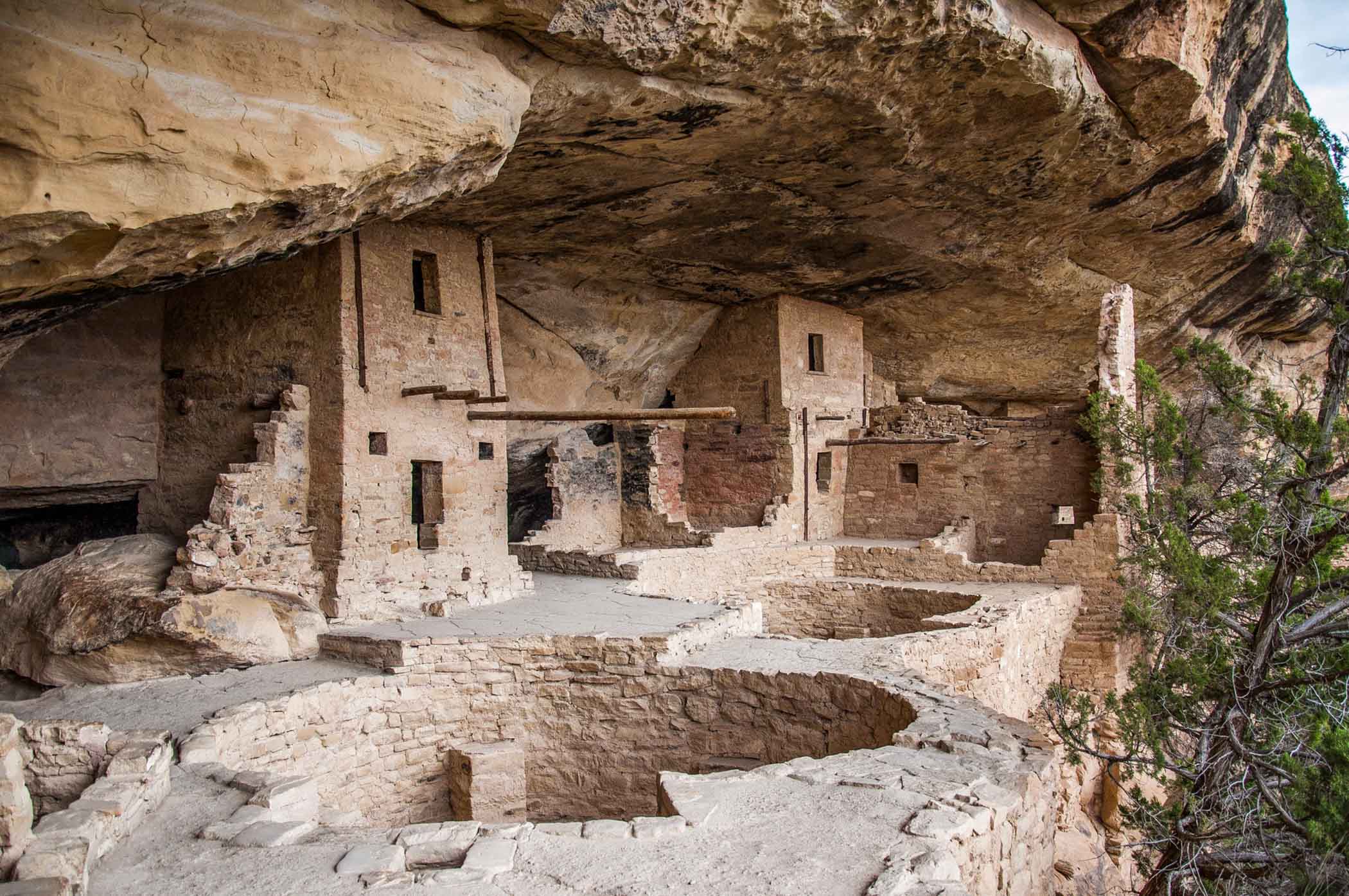
On this park ranger–led tour, you’ll explore Balcony House, an approximately 800-year-old cliff dwelling at Mesa Verde that reflects the ingenuity of the Ancestral Pueblo people. Tucked beneath a natural rock alcove, its carefully built stone masonry has endured for centuries, offering a rare window into daily life, community design, and skilled craftsmanship. As you move through the site, you’ll notice how architecture and landscape work together and how places like this continue to hold deep cultural significance for Pueblo communities today. Above all, Balcony House stands as a powerful reminder of an enduring living legacy. -
Stop 1. Introducing Cliff Dwellings
Mesa Verde's cliff dwellings, like Balcony House, symbolize a significant shift in Puebloan life during the 1100s and 1200s. Originally, communities thrived on mesa tops, cultivating corn, beans, and squash. The move to cliff alcoves reflects adaptive strategies for protection and resource management, highlighting the resilience and ingenuity of Pueblo farming communities. -
Stop 2. Stone Architecture
Balcony House stands as a testament to ancient Pueblo ingenuity, with its sandstone blocks and mud mortar enduring through centuries. Each room served distinct purposes, from sleeping to food storage, reflecting a vibrant community life. The grinding stones echo the enduring cultural significance of corn, a staple that continues to nourish Pueblo traditions today. -
Stop 3. Interior Plasters & Designs
The vibrant rooms, adorned with mineral-based plasters and intricate designs, reflect a deep connection to the broader Pueblo world. These artistic expressions reveal a community rich in identity and cultural exchange. Today, Pueblo weaving, pottery, and craftsmanship continue to celebrate and preserve these enduring traditions. -
Stop 4. Dating Balcony House
Balcony House showcases remarkable preservation of ancient architecture, featuring T-shaped doorways and intact floors. Its natural alcove ceiling shielded the village from weather, safeguarding wooden beams. These timbers are crucial for dendrochronology, allowing researchers to date tree cutting and construction, offering insights into the historical timeline of this cultural treasure. -
Stop 5. Kivas
Balcony House features two kivas, integral to community life. Unlike mesa-top kivas dug into soil, these are crafted with retaining walls on hard sandstone. Historically multifunctional, kivas had flat roofs with ladder access and hearths. Today, they continue to hold cultural significance for Pueblo people, serving as ceremonial and communal spaces. -
Stop 6. Seep Springs
In this alcove, soot-stained ceilings and a shallow depression reveal a vital historical resource—a seep spring. In an arid landscape, this reliable water source was crucial for survival, supporting daily needs and providing resilience during dry periods, highlighting the ingenuity of past inhabitants in adapting to their environment. -
Stop 7. Narrow Passageway
Balcony House features two main sections, each centered around an open plaza, linked by a narrow passage. This corridor, still traversed by visitors today, reveals insights into the village's communal dynamics, illustrating how ancient inhabitants organized their living spaces to foster interaction and community cohesion. -
Stop 8. North Plaza
Balcony House, named for its preserved balcony in the North Plaza, showcases the architectural ingenuity of ancient Pueblo peoples. This feature expanded usable space and connected upper rooms, a common element in Pueblo villages. While few such structures remain intact, Balcony House offers a glimpse into the innovative design of its original inhabitants. -
Stop 9. Parapet Wall
The parapet wall at the North Plaza exemplifies the blend of practicality and aesthetics in ancient architecture. Overlooking a steep canyon, it not only safeguarded the community but also showcased their advanced stonework skills. Artifacts found here reveal a society deeply appreciative of both beauty and utility. -
Stop 10. Viewing the Entire Site
Balcony House, nestled in a canyon alcove, showcases ancient rooms, kivas, and plazas, reflecting the ingenuity and community of its builders. Despite its abandonment in the late 1200s due to drought and social shifts, it remains a poignant symbol of resilience. Descendants continue to honor this living tradition, preserving its cultural legacy.
Voices
-
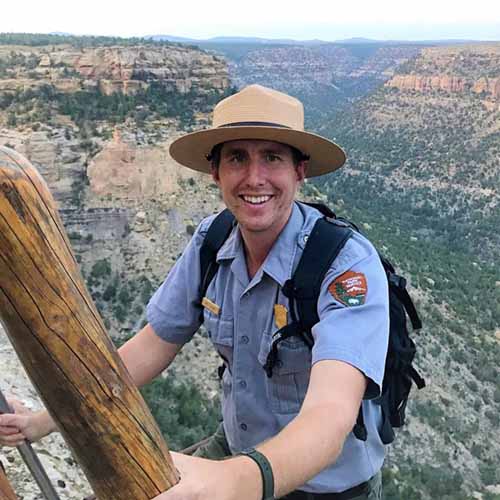
Drew Reagan
Park Ranger
CyArk
Drew Reagan is a former interpretive park ranger at Mesa Verde National Park. He studied archaeology and anthropology at UC Berkeley and now serves as Communications Director at DarkSky International.
Gallery
Partners

About the Project
This virtual experience was made possible through 3D data collected by CyArk at Balcony House in 2017. The resulting 3D model was combined with a video interview with Park Ranger Drew Reagan in 2021 to create an interpretative resource for the Park's distance learning programs.