Story outline
-
Butler Wash
Welcome to Butler Wash Developed Site, part of Bears Ears National Monument in Utah. This place is one of hundreds of ancestral sites part of this living landscape connecting Hopi people form the past and today. -
Stop 1. Footprints of Hopi Ancestors
The trail leads half a mile through a juniper forest to a rocky overlook of Butler Wash. With 33 living clans, Hopi people have been connected to this land since time immemorial. Butler Wash is part of Hopitutskwa, the lands of Hopi ancestors. Sites like this preserve Hopi history and spiritual identity. -
Stop 2. Respecting Ancestral Sites
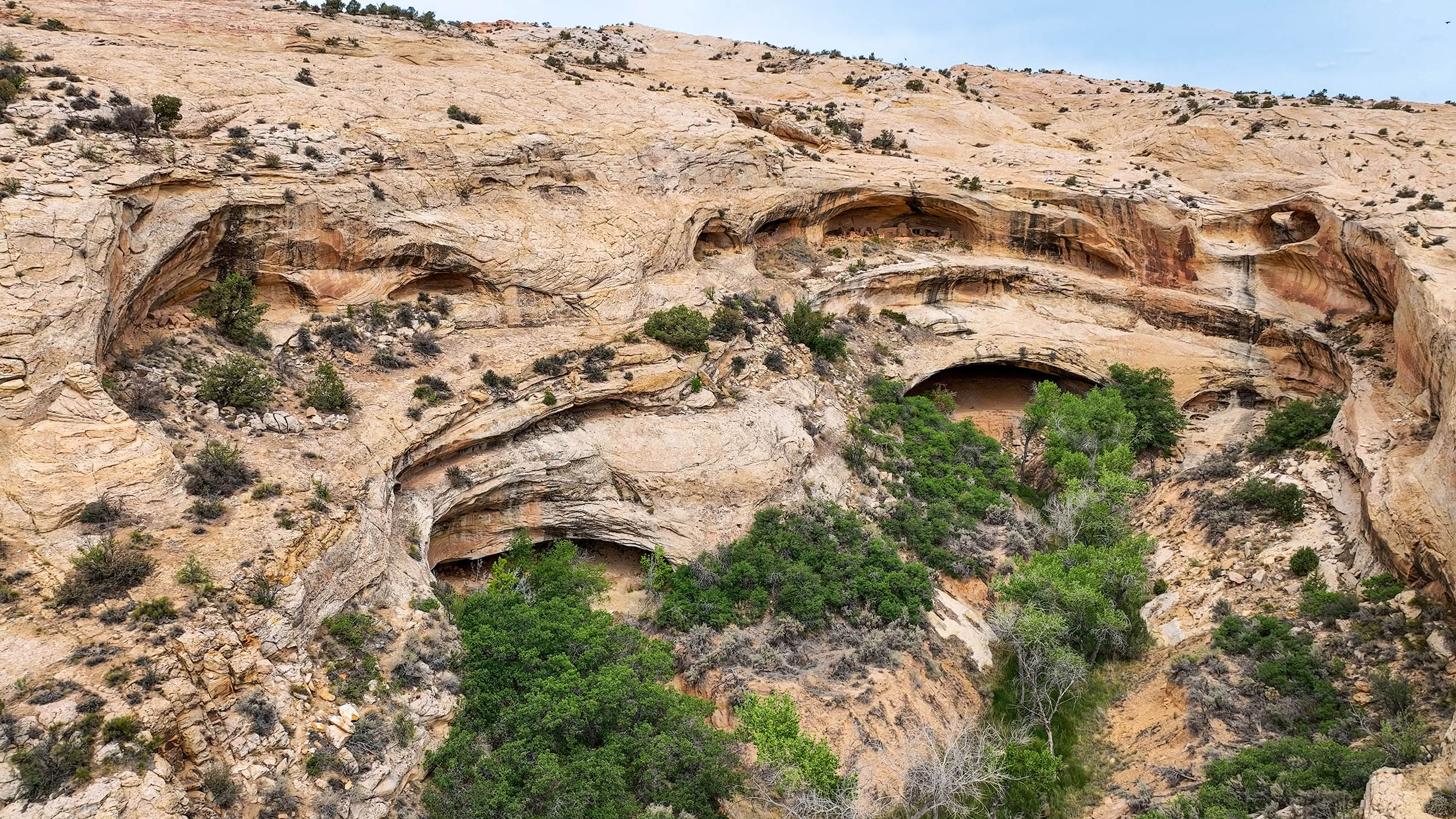
From this viewpoint, you can see stone structures in a sandstone alcove. For Hopi, visiting this site is visiting their ancestors. Impacting these places erases Hopi history and connections to the land. Please visit respectfully, leave everything undisturbed, and share the importance of preserving ancestral sites. -
Stop 3. Footprints of Hopi Migration
Above Butler Wash, the steep ridge of Siiraiya (Saw Ridge) stretches 80 miles through Bears Ears. Butler Wash is one of many homes along Siiraiya linked to a broader Hopi community and migration history. Different communities lived here over time, as seen in wall carvings and paintings. The site may have housed 30 to 50 people at one time. -
Stop 4. Building a Home
In the alcove, you’ll see the foundations of circular and rectangular stone structures. Early builders sought nearby water for drinking and making mud plaster. Some Hopi people still use these traditional building techniques, preserving knowledge passed down through generations with values of perseverance and hard work. -
Stop 5. Living as Part of the Land
The underground structures at Butler Wash known as Kivas. Round Kivas may have been built by people on their migration path, while square Kivas may mark when they saw the blue star and sought the center of the universe. Ceremony is an important part of Hopi life today, not just for Hopi communities but for all living things. -
Stop 6. Food and Farming
Some kivas and small rectangular rooms at Butler Wash were used for food storage. Nearby springs supported crops like watermelon and corn, while soils on top of the rock were ideal for beans. In Arizona, Hopi people have cultivated corn for over 2,000 years, continuing ancestral practices. -
Stop 7. Passing Down Knowledge
Butler Wash was once a thriving community. Men and boys farmed or hunted, while women and girls cared for the home and prepared meals. Knowledge and traditions were passed through generations. As a matrilineal society, Hopi clan membership comes from mothers, while uncles share Hopi history and teachings with younger generations. -
Stop 8. Utilizing Plants
The green areas in the rocky landscape indicate water sources. Plants like cottonwood and oak trees provided wood for building, while others were used for food, ceremonies, and tools. For Hopi people, sustainable living means farming and cultivating in harmony with seasonal cycles, a practice that continues today. -
Stop 9. Resilient Communities
The blackened alcove ceiling reveals fires once lit for warmth, light, and ceremonies. Generations of migrating communities left their mark at Butler Wash through structures, pottery, and wall paintings. These traces connect past and present, preserving a legacy for Hopi and other descendant groups who remain connected to the broader landscape. -
Stop 10. Past and Future
Learning about the past is vital for shaping the future. Please share what you have learned about Hopi people with others so they may also visit these places with respect. Páas uma anqé náatsamnumyani,Kwahkwa.
Voices
-
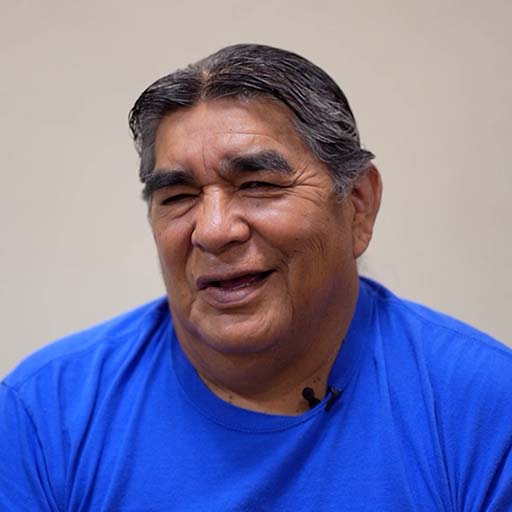
Leigh Wayne Lomayestewa
Hopi Cultural Preservation Office
Leigh Wayne Lomayestewa, a member of the Hopi tribe and the Bear Clan, is a research assistant and the NAGPRA coordinator for the Hopi Cultural Preservation Office of the Hopi Tribe. He serves as the president of the Native Nations Southwest Advisory Panel at the Arizona State Museum and as a member of the Indian Advisory Panel at the Museum of Indian Arts and Culture in Santa Fe, New Mexico. -
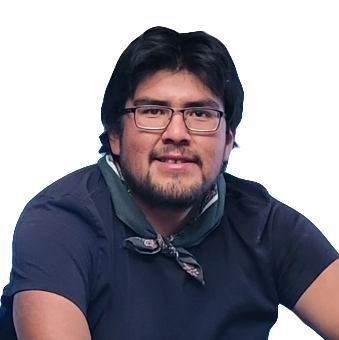
Clint Lomawunu
Cultural Advisor
Clint Dillon Lomawunu from the Village of Sipaulovi and of the Sun Forehead Clan, is a skilled stone mason by trade with expertise in watershed development and a background in bio-archaeology. With experience at the Hopi Cultural Preservation Office and credentials from the Hopi Tutskwa Permaculture Institute, Clint is well prepared to share his knowledge and skills for the benefit of this community. In his role with the Natwani Coalition, he is committed to fostering growth, education, and community wellness, while striving to ensure resilience and diversity for future generations.
Gallery
Partners

About the Project
Butler Wash is an Ancestral Pueblo site part of Bears Ears National Monument in Utah, USA. Many Indigenous descedent communities throughout the southwest region are connected to this site as a place of their ancestors. These places are considered sacred and should be visited from a distance and with respect.
Related Links
Credits
Thank you to our Hopi partners and participants including narrator Trent Tu'tsi with the Cultural Preservation Office of the Hopi Tribe.
Related experience
River House (Opens in new tab) — Ancestral Pueblo home connected to Zuni people.