Story outline
-
Chan Chan
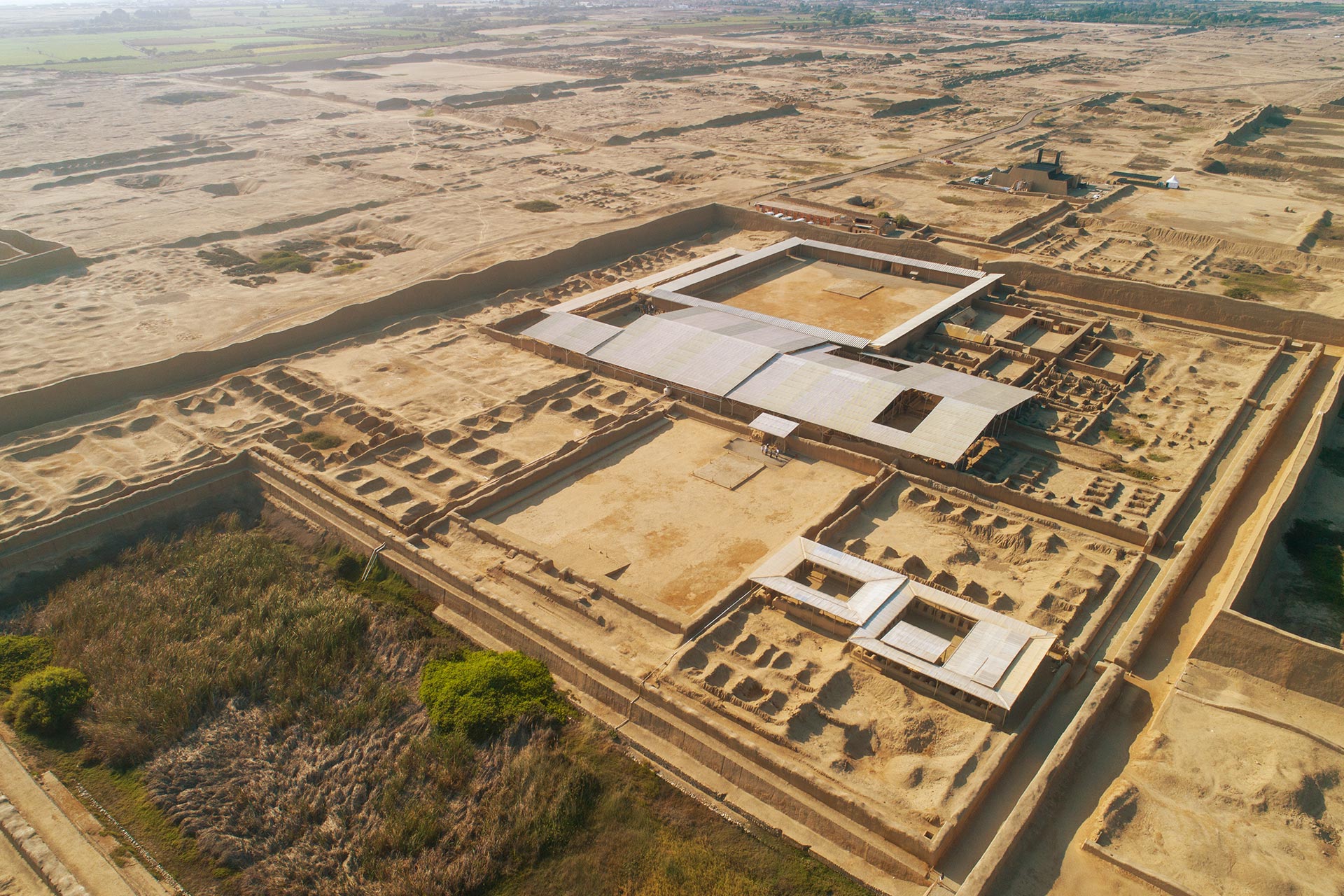
Welcome to the archaeological site of Chan Chan, located in the costal desert of Northwestern Peru. The city of Chan Chan was once the capital of the Chimu Civilization and the largest inhabited city in pre-Columbian South American. Just as the Chimu cultivated a relationship with the environment to build a thriving city in the desert thousands of years ago, site managers today are learning how to adapt and overcome climate-change related threats that put the site at risk. -
Stop 1. The Chimu Civilization
Between 900 and 1470 CE, the Chimu civilization thrived in northwestern Peru. They were known for their engineering achievements by way of creating sustainable desert settlements – the city of Chan Chan being the largest and most notable showcase of their craftsmanship and culture. -
Stop 2. The City of Chan Chan
Chan Chan's distinctive urban plan, characterized by autonomous ciudadelas (or citadels) for the ruling class, showcases the Chimu civilization's strict social structure, with each citadel having its own religious and residential facilities. -
Stop 3. Nature and Architecture
The Chimu civilization transformed the desert into a lush landscape around Chan Chan by engineering canals to divert water from nearby rivers, leading to a flourishing city. The city's architectural features prominently incorporated motifs of agriculture and nature, reflecting the Chimu's deep connection with the environment. -
Stop 4. Climate Change and the Environment
Present-day site managers at Chan Chan face climate change-related challenges, particularly the damaging effects of El Nino cycles, which increase rainfall, erode the adobe structures, and threaten the city's existence. Without intervention, Chan Chan is at risk of being lost due to these climate-induced hazards. -
Stop 5. Preserving Chan Chan
Peru, with the support of international organizations, is actively working to preserve and protect Chan Chan from environmental threats, and a multidisciplinary team has implemented strategies such as large protective roofs to safeguard vulnerable areas of the site from rain and erosion. -
Stop 6. Cultural Heritage Legacy
Chan Chan serves as a crucial intersection of climate change, cultural heritage preservation, and research, offering a testing ground for climate change mitigation strategies applicable to other heritage sites. Those involved in conserving Chan Chan emphasize the global significance of preserving this heritage for all of humanity, transcending its specific cultural origins. -
Stop 7. Conclusion
Thank you for joining me on this incredible journey exploring the history of the Chimu civilization and the city of Chan Chan. In both the past and present, the city is a testament to how important it is for humanity to cultivate a sustainable relationship with the environment.
Voices
-
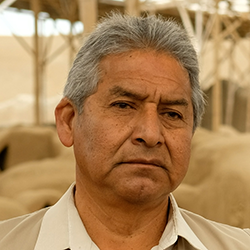
Arturo Núñez
Head of Conservation
Arturo Paredes Núñez, head of the PECACH Research, Conservation and Enhancement Unit is an archaeologist at Chan Chan who has overseen numerous scientific investigations at the site. Núñez research has shed light on the ritual practices of the Chimu. -
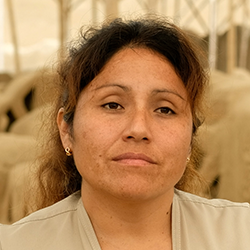
Blanca Sanchez
Director of Conservation
Blanca Sanchez is an archaeologist and conservator at the Unidad Centro Panamericano para la Conservación del Patrimonio en Tierra and the current archaeological site director. Blanca oversees international collaborations and ensures the site is protected for future generations. -
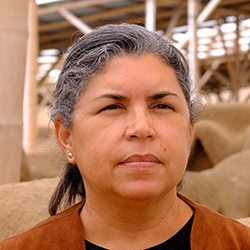
Milagros Flores
President ICOFORT
Milagros Flores is a historian and president of the International Scientific Committee of Icomos on Fortifications and Cultural Heritage. Member of the Icomos Working Group for Climate Change.
Gallery
Partners



About the Project
The archaeological site of Chan Chan covers 20 square kilometers within the costal desert of Northwestern Peru and contains what is considered to be the largest adobe city in the Americas. There are several walled compounds (or palacios) located throughout the site. In August of 2019 CyArk documented the Palacio Tschudi and Palacio Rivero, with Palacio Tschudi featured in this virtual tour of the site. Embark on a extraordinary journey to learn about the Chimu Civilization, the city of Chan Chan, and how human’s relationship with the environment is as important today as it was thousands of years ago.
Related Links
Credits
This Tapestry was made possible with support from Iron Mountain.
Related experience
Cliff Palace (Opens in new tab) — Explore a cliff dwelling and hear from descendent communities