Story outline
-
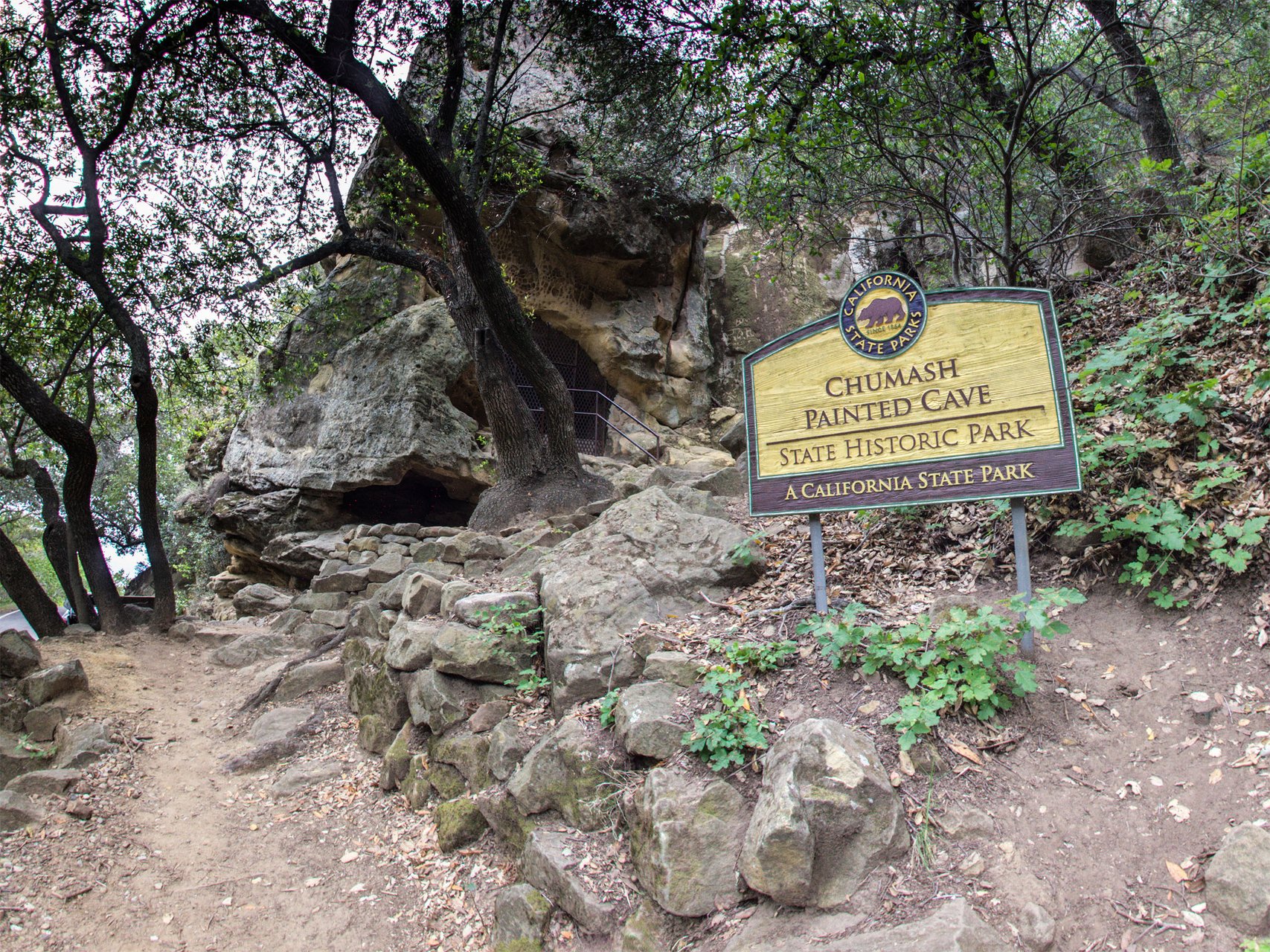
Welcome to Chumash Painted Cave
Alaxuluxen, the Chumash name for the Chumash Painted Cave State Historic Park, is situated on the edge of the traditional Barbareño Chumash territory, which ranged from the Pacific coast to the foothills and southern slopes of the Santa Ynez Mountains. The walls of this small cave contain some of the only remaining wall art created by the Chumash. -
Stop 1. History of Chumash Painted Cave
The Barbareño Chumash were the indigenous people who historically inhabited the region around present-day Santa Barbara, California. They were part of the larger Chumash group, known for their advanced maritime skills, intricate basketry, and vibrant cultural traditions. -
Stop 2. Visiting with Respect
The initials we see at Chumash Painted Cave demonstrates a lack of understanding and respect for the importance of these locations to Native American communities. The act underscores broader issues of cultural preservation and the need for public education about the significance and respect owed to indigenous heritage sites. -
Stop 3. History of the Park
Chumash Painted Cave State Historic Park is protected by California State Parks because it is a significant cultural, historical, and spiritual site that offers insights into the lives and beliefs of the Chumash people. Its preservation ensures that future generations can learn about and appreciate the rich Indigenous heritage of the region. -
Stop 4. Unique Geology
Tafoni weathering refers to the formation of small to large cavities, alcoves, or honeycombed features on rocky surfaces, primarily in granular rocks like sandstone. This type of weathering is a result of a combination of physical, chemical, and biological processes. -
Stop 5. Rock Art & Pigments
The pigments used by the Chumash people for their drawings were primarily derived from natural mineral sources found in their surroundings. Common colors include reds, blacks, and whites. The reds are often attributed to hematite (iron oxide), the blacks to charcoal or manganese, and the whites to chalk or diatomaceous earth. These natural pigments, when mixed with binders like plant sap or animal fat, allowed the Chumash to create vibrant and enduring designs on the cave walls. -
Stop 6. What do the paintings represent?
Projecting modern beliefs or biases onto ancient artworks can skew interpretations. It's essential to approach such sites with humility, understanding that the full depth and nuance of the art may never be entirely grasped by modern viewers. -
Stop 7. Possible Meanings
The Chumash had a keen understanding of the night sky. They identified specific constellations and used them for various purposes, including tracking time and seasons. Chumash oral traditions and myths often featured celestial bodies. One notable legend speaks of the Milky Way as a pathway for the spirits, linking the world of the living and the afterlife. -
Stop 8. Thank You For Visiting
Thank you for touring the Chumash Painted Cave State Historic Park, where you experienced ancient rock art and insights from Barbareño Chumash elder Ernestine Ygnacio De Soto. California State Parks, in collaboration with partners like Ernestine Ygnacio De Soto and the Santa Barbara Museum of Natural History, is dedicated to preserving cultural treasures and educating the public.
Voices
-
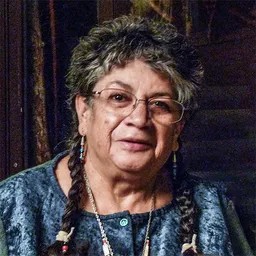
Ernestine Ygnacio de Soto
Chumash Elder
Ernestine Ygnacio-De Soto is a Barbareño Chumash elder. Deeply connected to her heritage, she has dedicated herself to documenting the Barbareño language and has also contributed as an illustrator and Chumash historian. As the daughter of Mary Yee, the last first-language speaker of Barbareño, Ygnacio-De Soto represents a direct connection to this language family, having grown up hearing native speakers. Her familial ties to the region are profound; her ancestors resided near Chumash Painted Cave.
Gallery
Partners

About the Project
Located at the base of the Santa Ynez Mountains in Santa Barbara, CA, Chumash Painted Cave State Historic Park is home to Chumash cave paintings that remain an important touchstone for Chumash history and heritage. In collaboration with California State Parks, CyArk produced a virtual Tapestry experience that allows virtual visitors to connect with the paintings and learn about their significance from Chumash elder Ernestine Ygnacio-De Soto.
Credits
This project was made possible with support from the California State Parks Foundation.
Related experience
César E. Chávez National Monument (Opens in new tab) — A Refuge for the Chávez Family and the Farm Labor Movement