Story outline
-
Dinétah | Crow Canyon Petroglyphs
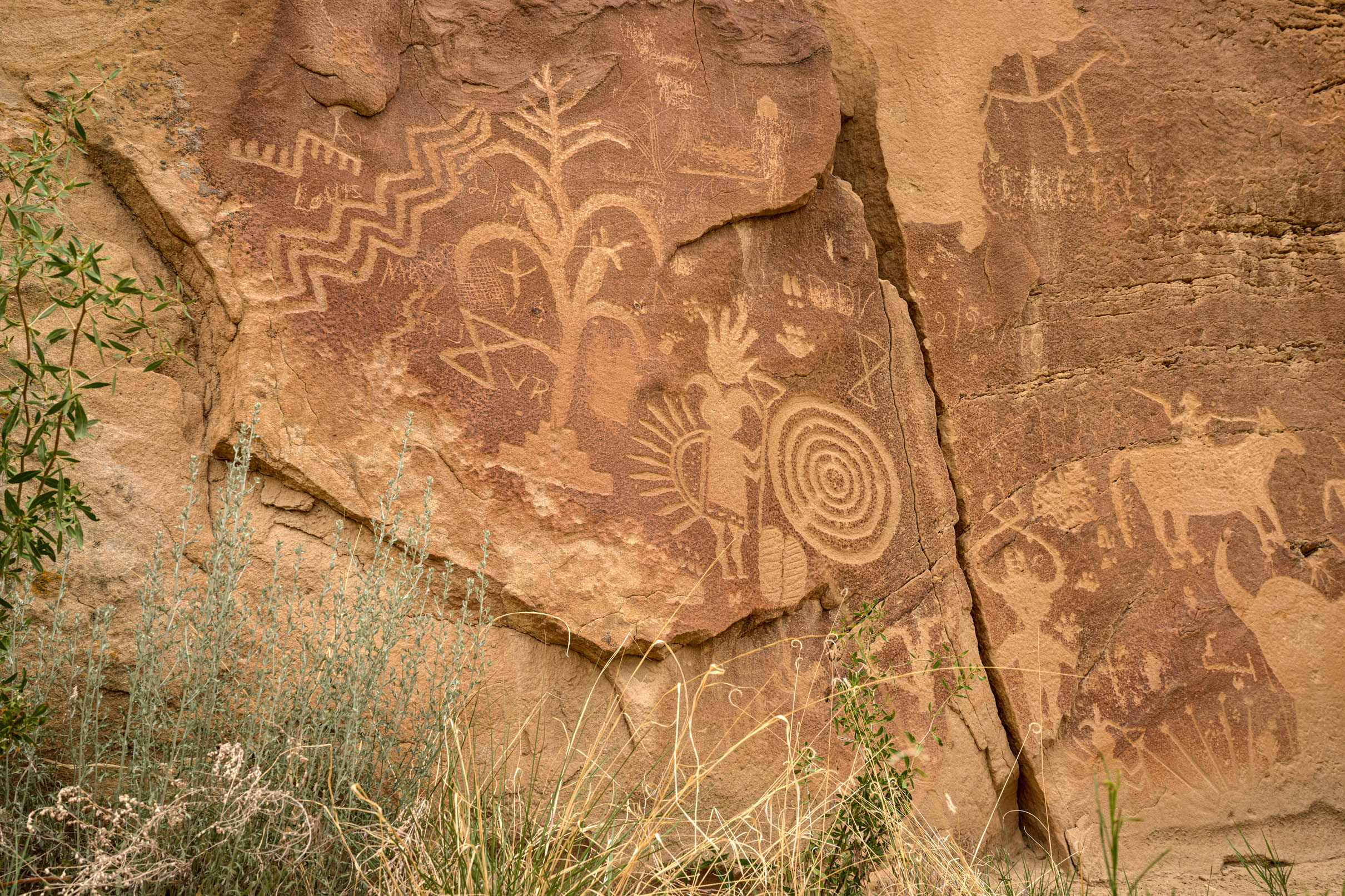
The Crow Canyon Petroglyphs site is located in Northwestern New Mexico and is managed by the Bureau of Land Management. The site is home to one of the largest concentration of Navajo rock art with figures that shed light on the spiritual beliefs, and everyday life of the Navajo. -
Stop 1. Protecting this place
Crow Canyon, located in Northwestern New Mexico, is a region characterized by its striking high-desert landscape connected to Navajo oral history. The area is framed by rugged, flat-topped mesas and vast, open valleys dotted with sagebrush and marked by the distinctive red and orange hues of sandstone cliffs and rock formations. -
Stop 2. Navajo World View
Hundreds of images of animals, humans, supernatural beings, and other images such as corn plants and bows and arrows can be found, carved on south and east-facing canyon walls. The carved figures stand out lighter against the reddish brown sandstone walls. -
Stop 3. Understanding Rock Art
Rock art, such as the petroglyphs found in Crow Canyon, cannot be interpreted like the pages of a book. These ancient carvings were likely created at different times. However, as many of the images are similar to Navajo ceremonial sand paintings it is believed the the panels are associated with ceremonies. -
Stop 4. Connection to ceremonies
Navajo dances and songs are integral components of their ceremonial practices, embodying deep spiritual significance and cultural heritage. These dances and songs are more than mere performances; they are profound expressions of prayer, healing, and storytelling, deeply intertwined with the Navajo worldview. -
Stop 5. Change and continuity
The bow holds a significant place in Navajo history and culture. Traditionally used for hunting and protection, the recurve bow is distinguished by its unique design, where the ends curve away from the archer when unstrung. The bow is also a cultural symbol, often featured in Navajo stories, particularly those involving the Hero Twins. -
Stop 6. Adding over time
The horned human-like figures depicted in this panel are often thought to symbolize deities or Navajo holy people, whereas the figures mounted on horseback might represent early Spanish explorers. The presence of horses is significant, as these animals were not incorporated into Navajo life until they were introduced in the 16th century. -
Stop 7. Pueblitos
This particular pueblito is known as the Crow Canyon Pueblito is just one among several similar pueblito sites found in the area of Crow Canyon. This particular structure was built atop a large boulder and provides an excellent view up and down the canyon. -
Stop 8. Homeland of the Navajo
These petroglyphs are not just art; they're a living connection to spiritual practices that continue to bring balance and harmony to Navajo people. The Bureau of Land Management, which oversees this place, encourages you to visit it with respect so that it can remain vibrant for future generations.
Voices
-
Harry Walters
Diné Historian and Educator
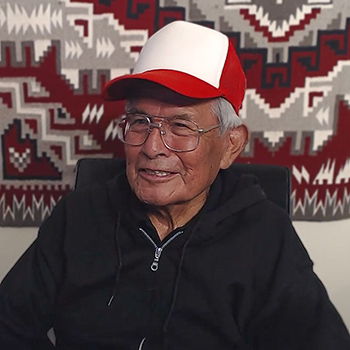
Harry Walters is a distinguished Navajo educator and historian known for his commitment to preserving and sharing Navajo culture and history. He combines traditional Navajo teachings with modern educational methods. Harry taught for many years at Diné College and served as the Director of the Ned Hatathli Museum. -
Tim Begay
BLM Tribal Coordinator
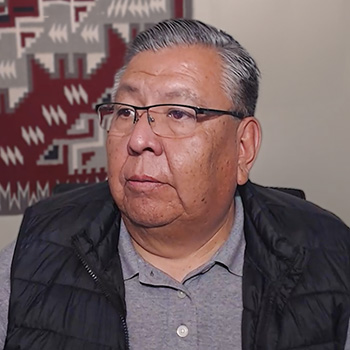
Tim Begay is a dedicated member of the Navajo Nation who brings a wealth of knowledge and experience to his role as the Tribal Coordinator at the BLM Farmington Field Office. Tim previously contributed his expertise as a Cultural Heritage Specialist at the Navajo Nation Historic Preservation Department. -
Erik Simpson
BLM Archaeologist
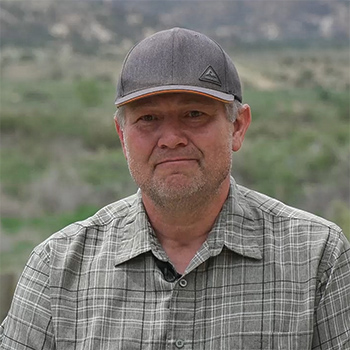
Erik Simpson is the lead archaeologist at the Bureau of Land Management's Farmington Field Office. In his role, Erik is responsible for the study, preservation, and interpretation of archaeological sites within the region he serves.
Gallery
Partners

About the Project
The Crow Canyon Petroglyphs site is located in the heart of Dinétah—the ancestral homeland of the Navajo, or Nihokaa’ Diné people. The red sandstone walls with petroglyphs and archaeological sites in this picturesque valley are a living testament to the Navajo people's enduring resilience and spiritual beliefs. This online tour was developed in collaboration with the Bureau of Land Management and is designed to be an educational resource sharing how the petroglyphs at Crow Canyon connect to living traditions through video interviews with Navajo experts.
Related Links
Credits
This Tapestry tour was made possible with support from the Bureau of Land Management.
A special thanks to Harry Walters, Tim Begay and Erik Simpson for providing their expertise and perspective on this project.
All translation and voice-over was completed by Mildred Walters.
Related experience
Cliff Palace (Opens in new tab) — Explore a cliff dwelling and hear from descendent communities