Story outline
-
Welcome to El Jem
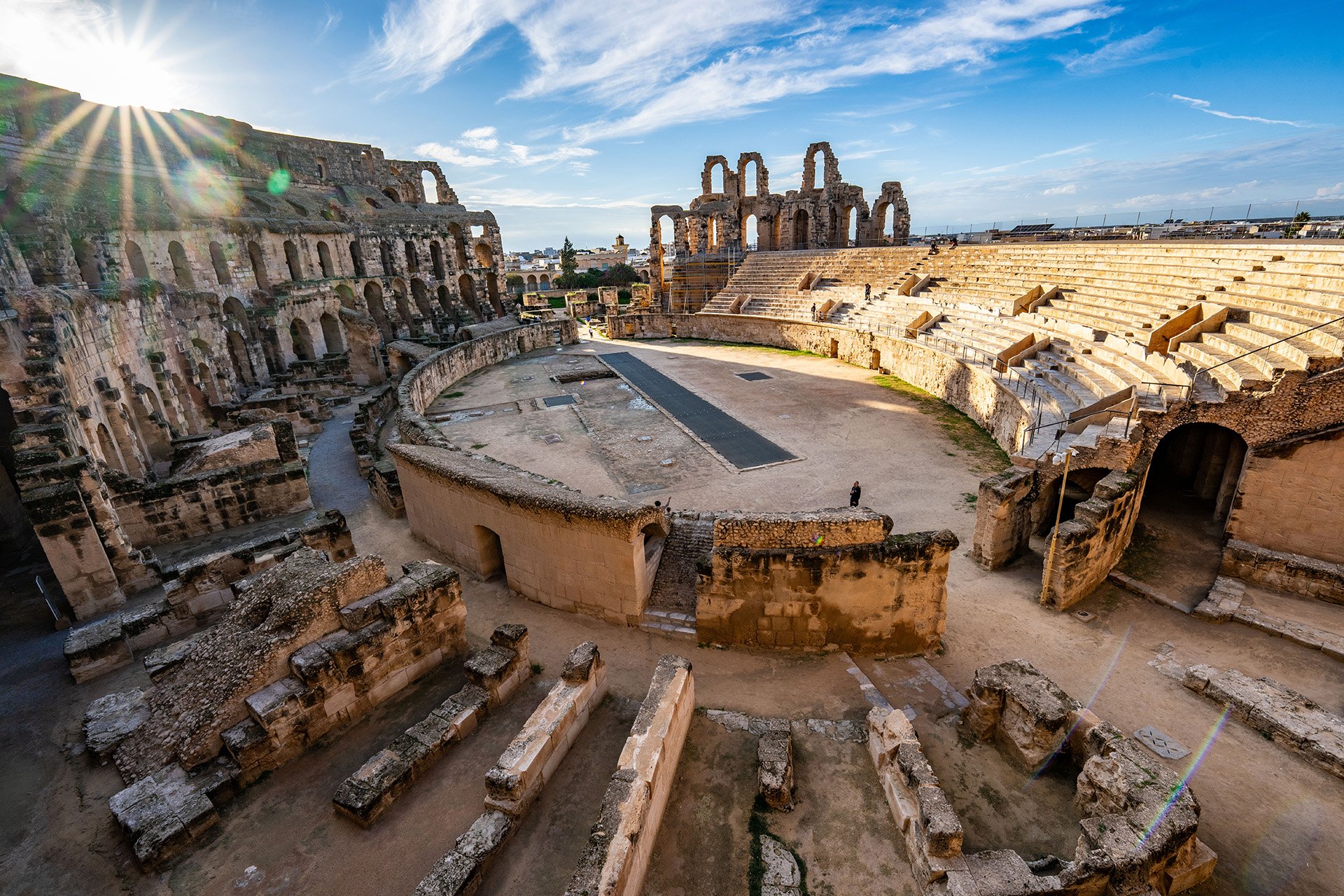
The Amphitheatre of El Jem, located in Tunisia, was built at the start of the 3rd century and reflects the presence of the Roman Empire in the region. It was designated an UNESCO world heritage site in 1979. -
Stop 1. All roads lead to El Jem
El Jem was a thriving Roman complex with diverse structures and infrastructure, including roads, water systems, and agricultural support—making it a hub for community and commerce. -
Stop 2. An architectural feat
The Amphitheatre’s innovative architecture and engineering showcase a blend of Roman and North African techniques, featuring locally sourced sandstone. -
Stop 3. A spectator's view
The Amphitheatre was built to host 30,000 spectators, with seating determined by social status, reflecting the deep-rooted hierarchial structure of Roman society. -
Stop 4. Where the action unfolds
The purpose and use of the Amphitheatre of El Jem has changed over time. It was built to host gladiatorial events, but it also served as a fortress, and the arena is now used for modern day festivals. -
Stop 5. Behind the scenes
Beneath the arena, elaborate underground tunnels served as holding space for gladiators and animals before they were lifted into the arena to fight for entertainment. -
Stop 6. Preserving El Jem
El Jem remains a vital heritage site thanks to ongoing restoration and conservation efforts aimed at sustaining its cultural legacy. -
Stop 7. An evolving legacy
Despite centuries of change and damage, El Jem is still an important physical and cultural monument to the community.
Voices
-

Shayma Griguiche
Local community member
Shayma is from Mhadia Governorate. She is a student at ISG Mahdia and is studying business project management. -
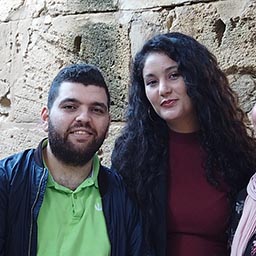
Ameni Ben Romdhane & Hamime Bannour
Local community members
Ameni is from Mahdia Governorate. She holds a master's in documentation in business and works as a project associate for an international think tank.
Hamime is also from Mahdia Governate and holds a bachelor's degree in Management at ISG Mahdia. Hamime has a passion for photography. -
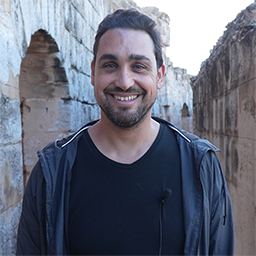
Bassem Hamouda
Local community member
Bassem is from Mhadia Governorate and is interested in understanding history and art. -
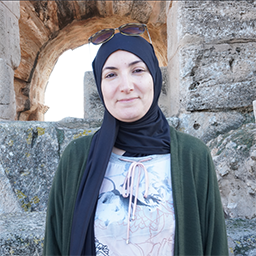
Sihem Ben Mohamed
Heritage advisor
Sihem is a Heritage Advisor and Conservator at the National Heritage Institute.
Gallery
Partners




About the Project
Discover the history, architecture, and stories of El Jem, North Africa’s largest amphitheater, in this community-made virtual tour.
Related Links
Credits
The tour was produced as part of the Community Heritage Exchange Initiative (CHEI), a collaboration of the U.S. Department of State Ambassadors Fund for Cultural Preservation, StoryCenter, and CyArk.
Storytelling Videos: Created in a workshop led by Amy Hill and Raymond Caldwell, Silence Speaks (www.silencespeaks.org). Drone footage by Samy Frikha. Special thank you to Yassine Gaidi for contributing photography.