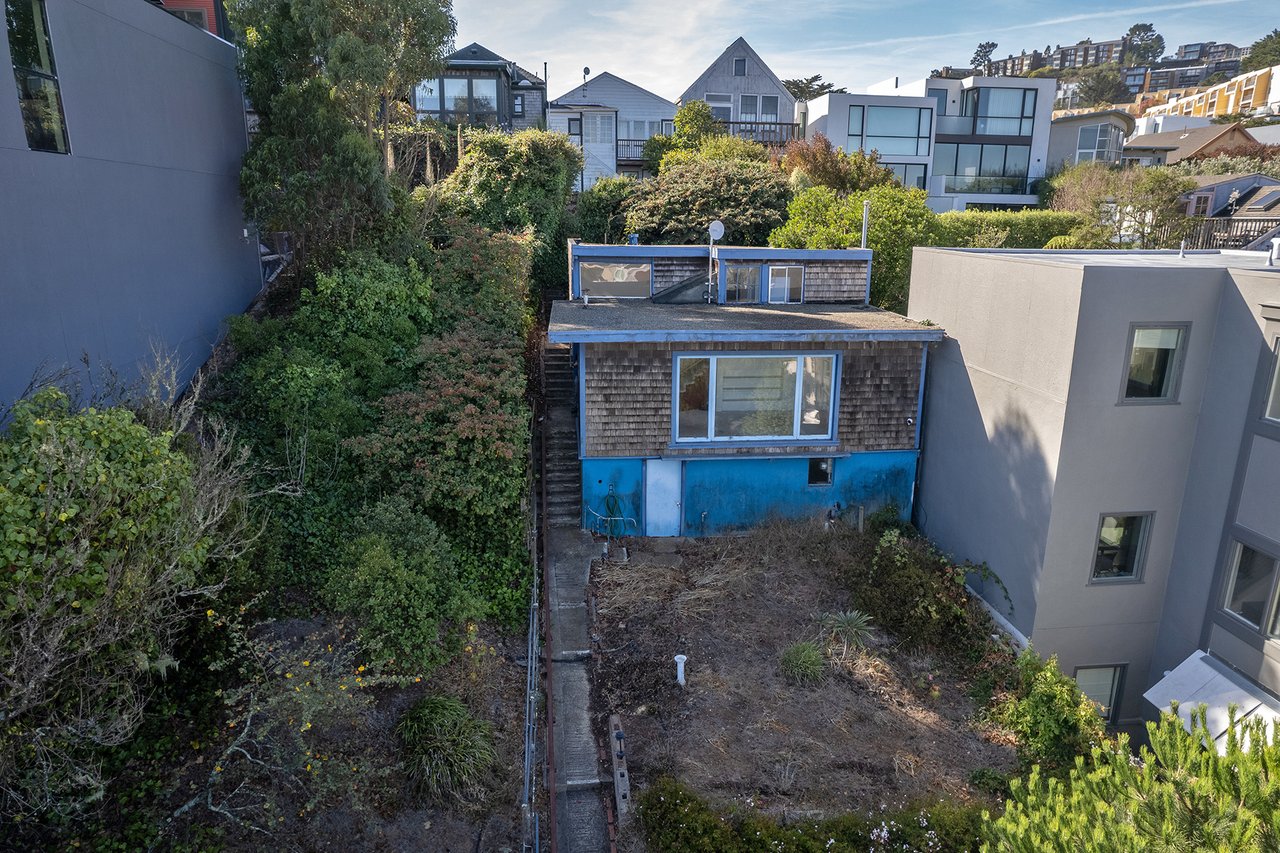
This is a companion guide to the interactive 3D virtual tour: The Lyon-Martin House. You can click here (Opens in new tab) to begin the tour.
Story outline
Each stop is a location within the virtual tour. Use the "Explore in 3D" button to jump straight to any stop.
-
The Lyon Martin House
Explore in 3D: The Lyon Martin House (Opens in new tab)Welcome to the former home of Del Martin and Phyllis Lyon. Del and Phyllis were the first same-sex couple to be married in California in 2008. The two met in the early 1950's and purchased 641 Duncan Street together in 1955. -
Stop 1. Who were Del and Phyllis?
Explore in 3D: Stop 1. Who were Del and Phyllis? (Opens in new tab)Del and Phyllis, pioneers in the lesbian community, purchased their shared home in 1955. Here they hosted social gatherings, worked on advocacy, and later became the first same-sex couple married in California in 2008. -
Stop 2. Creating Privacy
Explore in 3D: Stop 2. Creating Privacy (Opens in new tab)The large front window of Del and Phyllis's home, which initially attracted them to the house, was both a striking feature and a privacy concern, which lead them to cover it with curtains for years. -
Stop 3. Social Action
Explore in 3D: Stop 3. Social Action (Opens in new tab)Their living room served as a welcoming space for countless gatherings and meetings, and provided a refuge for individuals looking to connect and join advocacy work for for lesbian rights. -
Stop 4. Written Works
Explore in 3D: Stop 4. Written Works (Opens in new tab)The upstairs den was Del and Phyllis's hub for writing and activism, producing influential works on lesbian rights and broader social justice issues - including the founding of the Daughters of Bilitis. -
Stop 5. Community Building
Explore in 3D: Stop 5. Community Building (Opens in new tab)Del and Phyllis fostered a sense of community through their partnership and activism and made themselves available to any women who might need to reach out by keeping their phone number public. -
Stop 6. Daily Life
Explore in 3D: Stop 6. Daily Life (Opens in new tab)The kitchen was central to Del and Phyllis's daily life where where they started and ended their days, enjoyed the view of their garden, and gathered with others to conduct advocacy work. -
Stop 7. Growing Old
Explore in 3D: Stop 7. Growing Old (Opens in new tab)651 Duncan Street was the heart of Del and Phyllis's life together, from the start of their relationship to their later years, where the LGBTQ community supported them by adapting the house for their needs. -
Stop 8. Their Legacy
Explore in 3D: Stop 8. Their Legacy (Opens in new tab)Del and Phyllis's home was a vital part of their life together and played a crucial role in their success and legacy, supporting them as they left a lasting impact on the LGBTQ community.
Voices
Hear Stories From Locals & Experts
-

Kendra Mon
Daughter of Del and Phyllis
-

Don Romesburg
Professor of Women's and Gender Studies
-

Marcia Gallo
Associate Professor of History, UNLV
Gallery
Partners




About the Project
Located in the Noe Valley neighborhood of San Francisco, the Lyon-Martin House is the former home of pioneering lesbian activists Del Martin and Phyllis Lyon. Beginning in the 1950s, the home served as a community and meeting space for the first lesbian civil rights organization, Daughters of Bilitis, and was central to the couple's lifelong activism and partnership. For decades, their home transcended both their private and public lives, serving as both a safe space for queer communities and a meeting place for political action. Today, the home remains a touchstone for celebrating LGBTQ+ history and igniting ongoing activism in the fight for equality.
Related Links
Credits
A special thank you to Kendra Mon, Don Romesburg, Marcia Gallo, Susan Stryker, and Shayne Waston.