Story outline
-
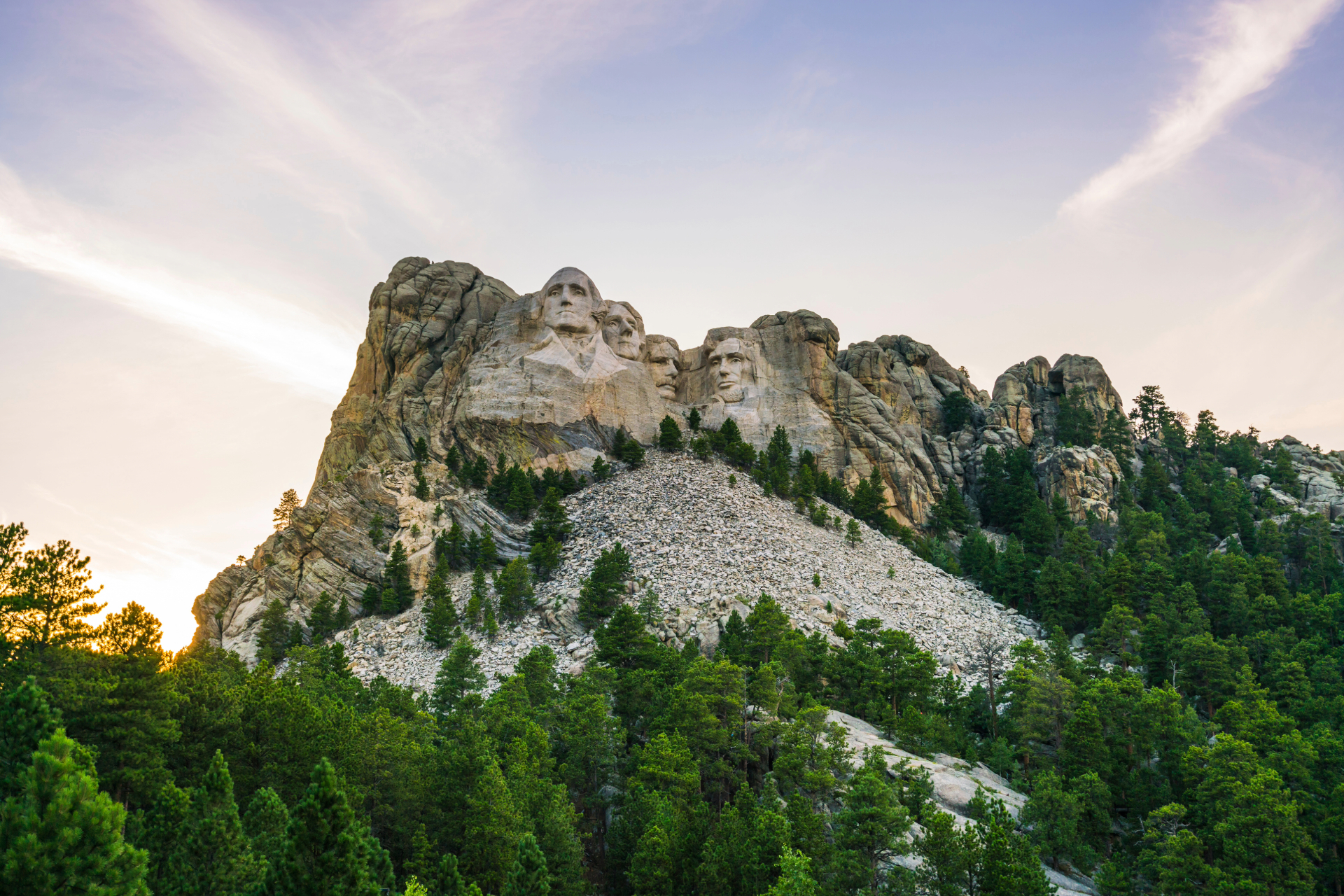
Mount Rushmore National Memorial
Welcome to Mount Rushmore National Memorial, a place honoring cultural traditions. -
Stop 1. The Six Grandfathers
Pahá Sápa, the Black Hills, are sacred to Indigenous communities. This mountain is known as the Six Grandfathers to the Lakota. Throughout the mid-19th century, settlers increasingly sought resources of the west. By 1875, the U.S. government seized the land, forcing Indigenous people into reservations by the late 19th century. -
Stop 2. Tourism in South Dakota
The Black Hills became a tourism hub by the early 20th century, with roads promoting access. By 1920, tourism was South Dakota's second-largest industry. Doane Robinson proposed Mount Rushmore to boost tourism, while the Lakota, Cheyenne, and Arapaho fought for their cultural land rights in court. -
Stop 3. The Sculptor
Gutzon Borglum's studio beneath Mount Rushmore showcases his evolving vision for the Memorial from 1939 to 1941, using a 1/12th scale model. Born in 1867, Borglum’s tumultuous childhood and European art studies shaped his career. He secured funding for Mount Rushmore after leaving the Stone Mountain project in 1925. -
Stop 4. Artistic Vision
Gutzon Borglum selected Washington, Jefferson, Lincoln, and Roosevelt for Mount Rushmore to represent 150 years of U.S. history. He aimed to inspire awe through large-scale art, initially planning full figures. Borglum chose a southeast-facing rock to enhance natural light on the sculpture, adding to their impact. -
Stop 5. The Workforce
From below Mount Rushmore, you can see where winch houses once stood, crucial for hoisting stone during carving. Around 400 workers, many local, formed a close-knit community during the Great Depression. Despite funding challenges, they persevered, with the Civilian Conservation Corps helping with structures. -
Stop 6. Carving of the Memorial
Mount Rushmore's carving involved innovative techniques. Workers used jackhammers to bore holes, filled with dynamite to remove rock. Honeycombing softened granite for easier removal, and fitted drills smoothed the surface. Despite challenges from cracks in the durable Harney Peak Granite, the project lasted 14 years. -
Stop 7. Unfinished and Evolving
Behind the presidential faces is the Hall of Records, Gutzon Borglum’s envisioned vault for historical documents. Though Borglum passed away in 1941, his son Lincoln completed the sculpture. In 1998, 16 porcelain panels were added. -
Stop 8. Indigenous Connections
The Lakota, Nakota, and Dakota Heritage Village offers insights into Indigenous culture. Ben Black Elk, son of Black Elk, shared Lakota traditions with visitors until 1973. Despite a 1980 Supreme Court ruling offering monetary compensation for the Black Hills, Indigenous leaders declined, stating, "The Black Hills are not for sale." -
Stop 9. The Memorial Today
Beneath Mount Rushmore is an amphitheater offering a view of the Memorial offering events and different learning opportunities. Each summer, a lighting ceremony and naturalization event take place, and since 2008, veterans are honored by retreating the flag. -
Stop 10. Opportunities for the Future
Mount Rushmore is a dynamic symbol of history and heritage, sparking conversation. As you leave, carry with you the stories of the many communities shaping this place. Explore, engage with its history, and share your experience with others.
Voices
-
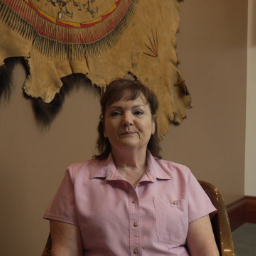
Zane Martin
Former Museum Curator
Zane Martin is a Museum Curator for The Indian Arts and Crafts Board, located in Rapid City, South Dakota. Zane was formerly a Museum Specialist and Technician with the National Park Service, focusing on the archival collections at Mount Rushmore National Memorial. -
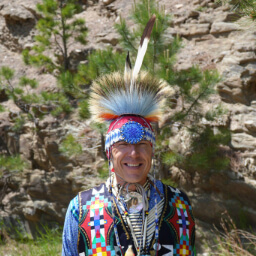
Sequoia Crosswhite
Cultural Interpreter, Musician
Sequoia Crosswhite is an enrolled member of the Cheyenne River Sioux Tribe, and a descendent of Chief War Eagle and Chief Swift Cloud. He is an accomplished musician, grass dancer, historian, and cultural interpreter. Sequoia's handmade flutes and musical recordings uphold the traditions of his Lakota ancestors. -
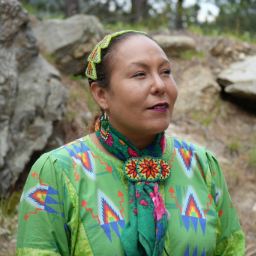
Jasmine Pickner-Bell
Cultural Interpreter, Dancer
Jasmine Pickner-Bell, also known as Good Road Woman in Lakota, is a world champion hoop dancer and a proud member of the Crow Creek Sioux Tribe. As a Cultural Interpreter at Mount Rushmore National Memorial, she shares stories of hope, strength, and cultural dialogue with audiences around the world.
Gallery
Partners

About the Project
CyArk's collaboration with Mount Rushmore National Memorial began in 2010 when CyArk digitally documented the memorial to support educational opportunities at the site. In 2025, CyArk utilized existing data to create this virtual Tapestry experience.
Related Links
Credits
This tour was created with support of the Kacyra Family and the Mount Rushmore Society.