Story outline
-
National Museum of Bosnia and Herzegovina
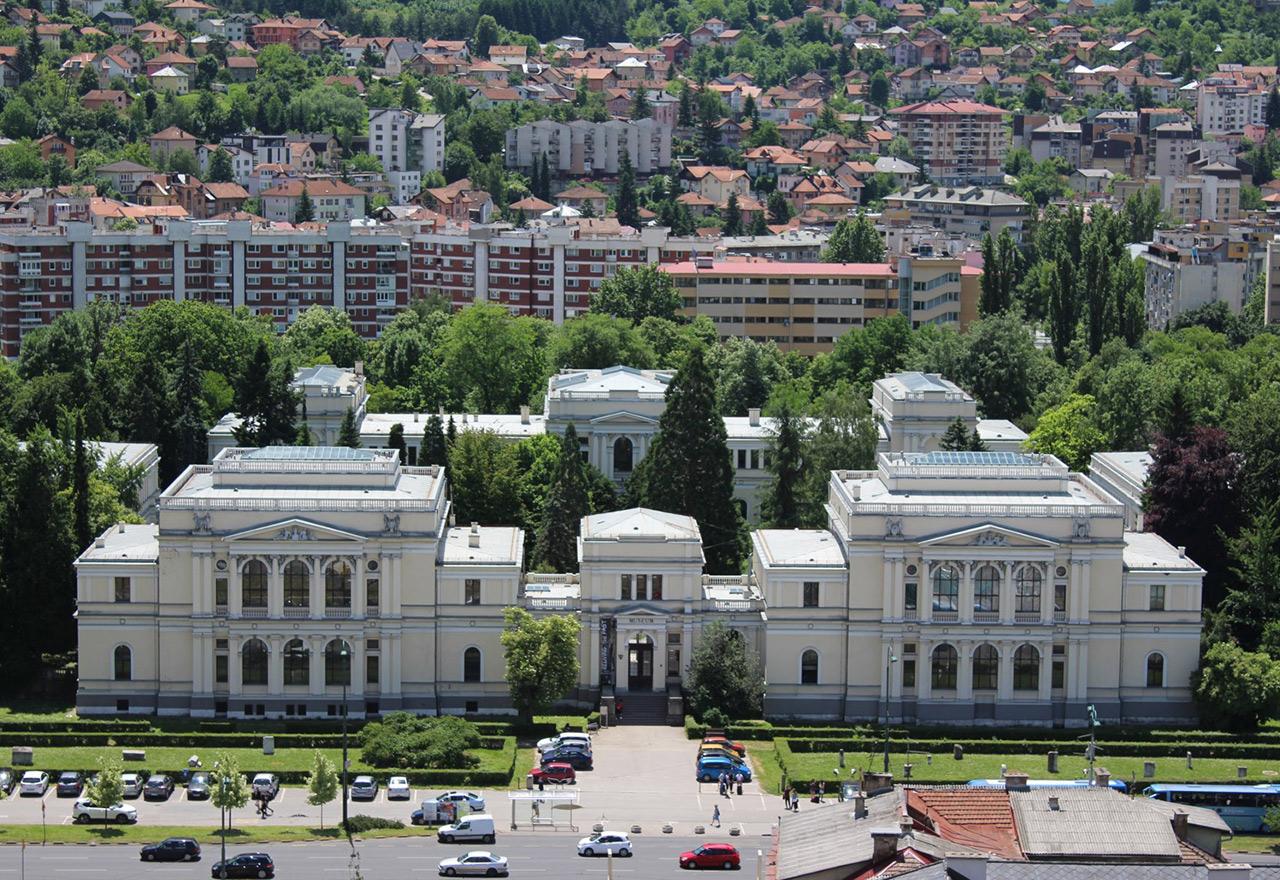
The National Museum of Bosnia and Herzegovina, the country's oldest scientific and cultural institution, was founded in 1888 during Austro-Hungarian rule. The museum, designed by Czech architect Karel Pařík and completed in 1913, features four pavilions and a botanical garden. It was established to collect, study, preserve, and exhibit Bosnia and Herzegovina's archaeological, ethnographic, and natural history. -
Stop 1. The Prehistory Section
The Prehistory Section of the Department of Archaeology welcomed visitors back in 2021 after three decades of closure. The Museum’s new permanent exhibition enhances its architectural and artistic appeal and showcases around 3,000 selected artifacts including a stunning prehistoric wooden boat. -
Stop 2. A Prehistoric Discovery
This impressive prehistoric boat, measuring 40.28 feet, was discovered in 1904 at the archaeological site of Donja Dolina in northern Bosnia and Herzegovina. Originally displayed in a glass case on the ground floor, its current position provides visitors with a better view of its length, shape, and shallow design, which suggests it was crafted to transport goods traded with nearby settlements along the Sava River. -
Stop 3. Conserving the Boat
The wooden boat from Donja Dolina was a major project for the museum's conservators as they prepared for a new permanent exhibition. In addition to reassembling its parts and resealing it to ensure stability, they also had to remove the toxic preservatives that were used over a hundred years ago to protect it from decay. -
Stop 4. The Ceiling and Wall Paintings
These beautifully crafted motifs, adorning the walls and ceiling of the Prehistoric section, harmoniously connect with both the architecture and the displayed artifacts, creating a cohesive whole. -
Stop 5. Votive Chariot from Glasinac
Discovered accidentally in 1880, the Votive Chariot from Glasinac marked a crucial moment in the archaeology of this region contributing to the establishment of the National Museum in Sarajevo. At the time, Bosnia and Herzegovina was under Austro-Hungarian administration, and consequently, this masterpiece of prehistoric metalworking was sent to Vienna, never to return. As a result, visitors in Sarajevo can only view a replica. -
Stop 6. Guardian of Cultural Heritage and Identity
Safeguarding the shared heritage of Bosnia and Herzegovina is a vital mission of the National Museum in Sarajevo. It focuses on protecting and showcasing the region’s rich history and diversity, ensuring that future generations can learn from and appreciate these invaluable treasures.
Voices
-
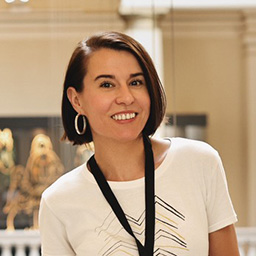
Ana Marić
Acting Deputy Director
Ana Marić (PhD) is a senior curator for the Late Iron Age and Numismatics at the Department of Archaeology of the National Museum of Bosnia and Herzegovina. She is currently serving as an Acting Deputy Director and has completed over ten permanent and temporary exhibitions, as well as projects in other institutions and museums. -

Adnan Kaljanac
Archaeologist
Adnan Kaljanac (PhD) is a professor in the Department of Archaeology at the University of Sarajevo (UNSA), specializing in prehistoric archaeology and archaeological theory. He is also the director of the Institute of Archaeology at UNSA. His areas of interest include non-invasive methods of research of the archaeological sites, spatial archaeology and history of archaeology. -

Andrea Baotić-Rustanbegović
Art Historian
Andrea Baotić-Rustanbegović (PhD) is an art historian from Sarajevo. Her research focuses mainly on the art history of the „long 19th century“, as well as topics concerning historicism, orientalism, and art in public space. She is an active member of ICOMOS Bosnia and Herzegovina. -
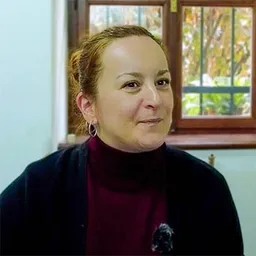
Lejla Bajramović
Conservator
Lejla Bajramović (MA) is a conservator at the National Museum of Bosnia and Herzegovina. Lejla works mostly on the conservation of archaeological material and was part of the team that conserved and restored the prehistoric boat from Donja Dolina site.
Gallery
Partners



About the Project
This experience was created as part of the AFCP Community Heritage Exchange Initiative (CHEI), a collaborative project between the U.S. Department of State’s Ambassadors Fund for Cultural Preservation (AFCP) and CyArk. It was made possible through the strong partnerships of the U.S. Embassy in Sarajevo, the University of Sarajevo’s Faculty of Philosophy, the Academy of Fine Arts, and the National Museum of Bosnia and Herzegovina.
The project was led by Asja Mandić, an art history and museology professor, who coordinated the efforts of her graduate students from both the Faculty of Philosophy and the Academy of Fine Arts, along with other participants. The participants received 3D documentation and storytelling training from CyArk over video sessions and then worked to document and create a Tapestry of the National Museum of Bosnia and Herzegovina.
Related Links
Credits
Special thanks go to the dedicated 3D Capture Team: Muhamed Bešlagić, Adisa Džino Šuta, Ilda Haličević, Ilma Kulić, Martina Marinčić, and Emina Zečirović, whose technical skills brought the project to life. We also acknowledge the creative contributions of the Storytelling Team: Zerina Bećić, Ilma Duraković, Elma Džigal, Zejneba Hajdarević, Sara Jalimam, Andrea Javornicki, Amina Karaica, Najda Rifatbegović, and Lamija Spahić. Special thanks are extended to Haris Adžem, Lejla Bajramović, Andrea Baotić-Rustanbegović, Amra Bakšić Čamo, Igor Čamo, Elma Durmišević and Adnan Kaljanac for their additional support. We would like to specifically recognize Ambassador Michael Murphy, Cultural and Education Attaché Christienne Carroll, and Cultural and Education Affairs Specialist Elizabeta Delić for their invaluable support. Our heartfelt thanks also go to Ana Marić, Acting Deputy Director of the National Museum, and the museum’s entire staff. This project stands as a testament to the power of collaboration in cultural preservation.
Related experience
Amarbayasgalant Monastery (Opens in new tab) — Spiritual resilience and continuity in Mongolia