Story outline
-
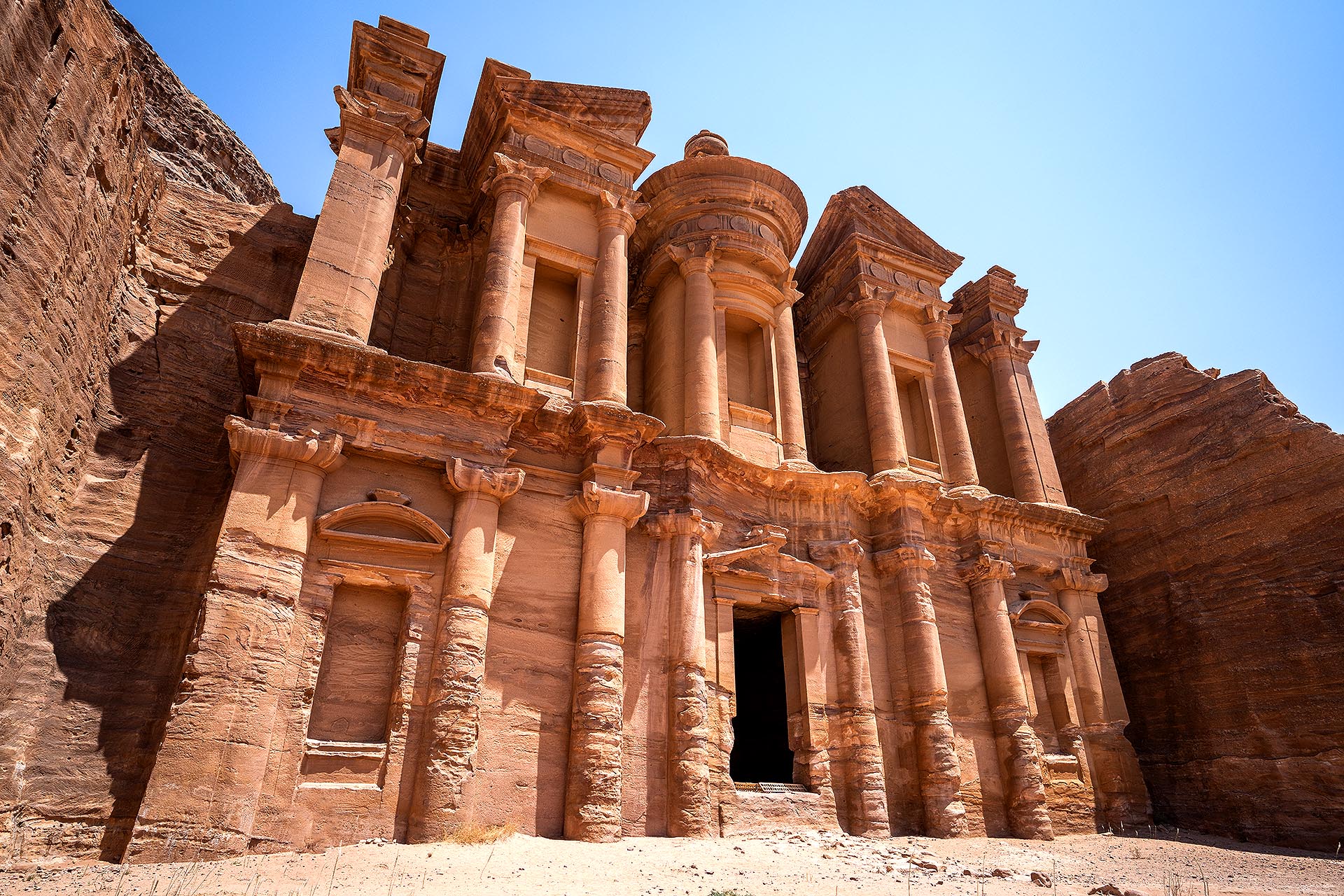
Ad Deir Monastery
Explore Petra’s iconic Ad Deir Monastery through detailed 3D scenes and expert insights. Discover its architecture, cultural fusion, and spiritual legacy in this guided virtual experience. -
Stop 1. Where the Desert Came to Life
Petra, once called Raqmu, thrived as a crossroads of trade where the Nabataeans turned desert into life. Masters of water and stone, they built hidden channels and vibrant architecture, reminders of a people who connected worlds through ingenuity and resilience. -
Stop 2. Climbing to Purpose
The climb to Ad Deir winds past sandstone alive with color and echoes of ancient trade. At the summit, its vast façade stirs awe, a reminder of Nabataean mastery. Beyond, trails descend into wadis, desert valleys that lie dry until rains briefly bring them to life. -
Stop 3. The Stories of Trade
From the hills above Petra, one can imagine caravans below, markets alive with voices, and goods from across the world. The Nabataeans thrived through trade and trust. Today, their descendants feel pride in this heritage and their role as its protectors. -
Stop 4. The Silence Inside
Inside Ad Deir, torchlight reveals interior features rarely seen clearly. Carved niches and subtle decorations suggest the chamber was used for rituals or contemplation, highlighting its spiritual importance to the Nabatean people. -
Stop 5. Engineering the Impossible
North of the Monastery, carved channels and hidden cisterns reveal engineering marvels. The Nabataeans captured every drop of rain, slowing floods with terraces and dams, turning desert to life. Today, as flash floods grow more severe, these ancient methods guide efforts to protect Petra’s future. -
Stop 6. A Place Still Lived In
Petra is more than stone, it has long been home. Bedouin families lived in its carved spaces, guided travelers, and passed down stories. Their roots run deep, like trees among the rocks. To protect Petra is also to honor its descendants - proud stewards of this living heritage. -
Stop 7. Petra’s Future Is in Our Hands
Petra’s future rests on choices we make today. Visitors help by walking marked trails, leaving no trace, and respecting its stones. True preservation also means valuing local communities, sharing food, music, and stories. To protect Petra is to honor both place and people.
Voices
-
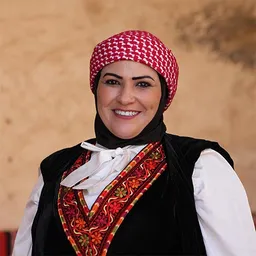
Amal Saraheen
Local Resident & Student
-
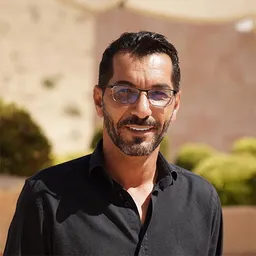
Mamoun Nawafleh
Tour Guide & Author
Mamoun Nawafleh is a Jordanian researcher, author, and expert in archaeoastronomy from Petra (Wadi Musa). -

Dr. Majed Hasanat
Expert in Cultural and Natural Heritage and Former Commissioner of the Petra Archaeological Reserve
-

Dr. Suleiman Al-Farajat
Former Director General of the Baptism Site Authority and Director of the Petra Reserve
Gallery
Partners


About the Project
In this virtual tour of the Ad Deir Monastery, explore one of Petra’s most iconic monuments through the voices of those who know it best. Blending expert insight, local knowledge, and immersive soundscapes, the experience reveals how the Nabataeans shaped this desert site through trade, water engineering, and cultural exchange. Discover the living history of Petra, its past, present, and the communities working to protect its future.
Related Links
Credits
This virtual tour was created in collaboration with the Petra National Trust and was made possible through the generous support of Iron Mountain.
Related experience
Great Mosque of Djenné (Opens in new tab) — Faith and tradition at Africa's revered mud mosque