Story outline
-
Restoring a Staircase to the Gods
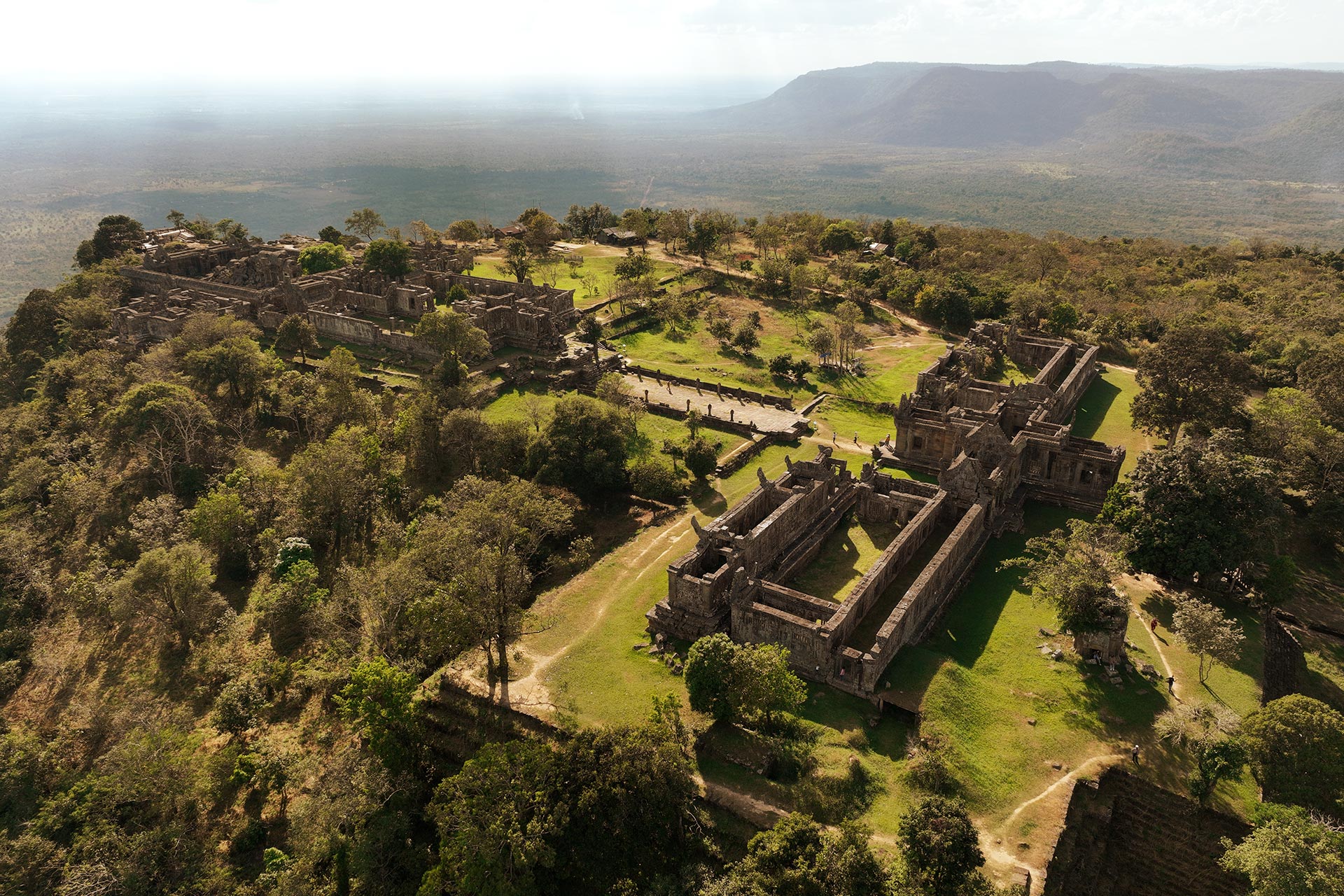
Welcome to Preah Vihear, a grand temple in northern Cambodia. Constructed by the Kings of Angkor during the Khmer empire, it is a testament of devotion to Hindu deities. Today, historic efforts are underway to restore and preserve the northern staircase of this sacred site, safeguarding its legacy for future generations. The northern staircase is located north of Gopura V, measuring 111 m long, 11 m wide, and 40 m high, with 26 sections and many lion sculptures on the stair walls. The staircase was damaged seriously by aging, rainwater, tree roots, and insects. Therefore, the conservation and restoration of the northern staircase is challenging. -
Stop 1. Atop the Mountain
The mountaintop sanctuary of Preah Vihear stands as a religious symbol, echoing the revered Mount Meru of Hindu, and Buddhist cosmology. In these traditions, Mount Meru is hailed as the axis mundi, the cosmic center around which all physical, metaphysical, and spiritual realms revolve. With design and strategic placement, the temple of Preah Vihear mirrors this sacred mountain, embodying the heavenly order and serving as a conduit between the earthly and divine realms. -
Stop 2. Guardians of the Temple
Throughout history, Preah Vihear has served various roles and purposes. Initially constructed as a place of Religious Worship dedicated to the Hindu pantheon, it hosted ceremonies, rituals, and royal consecrations. It also functioned as a Cultural and Social Center, a focal point for community gatherings, education, and artistic activities. These key functions highlight Preah Vihear's significance as a nexus of spiritual, cultural, and social life across different periods of history. -
Stop 3. Restoration Today
Sandstone is a sedimentary rock composed of sand-sized grains of mineral, rock, or organic material, cemented together by minerals like silica, calcium carbonate, or iron oxide. Water can wear away sandstone through a process known as erosion, which involves the mechanical and chemical breakdown of the rock over time. Abrasion, Hydraulic Action, Solution and Leaching, and Transportation are all various ways in which heavy rain seasons contribute to the wearing away of the Staircase. -
Stop 4. Naga and Nature
In Hindu mythology, Devas (celestial beings) and Asuras (demons) once fought to churn the ocean of milk to obtain the elixir of immortality. They used Vasuki, the king of Naga serpents, as the rope to churn the ocean. As the process continued, the deadly poison emerged from the depths of the ocean and threatened to destroy all of creation. In desperation, the Devas and Asuras sought help from Vishnu, who drank the poison to save the world. The role of Vasuki, the Naga, highlights the central role of Nagas in Hindu cosmology, the pull between good and evil, and the cyclical nature of creation and destruction. -
Stop 5. International Collaboration
U.S. Ambassadors Fund for Cultural Preservation (AFCP) provides grants for the preservation of cultural heritage around the world. The fund supports a wide range of projects, including the restoration of historic buildings, archaeological sites, museum collections, more. The efforts between the US and Cambodia are a perfect example of the importance of collaborative endeavors to preserve Cultural Heritage for future generations.
Voices
-

Amparo Garcia
US Embassy at Phonm Penh
Cultural Affairs Officer -
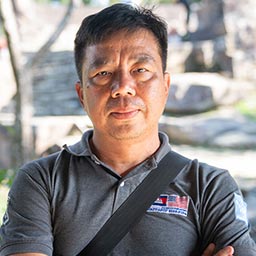
Dr. Ea Darith
National Authority for Preah Vihear
Director of the Department of Conservation and Archaeology -
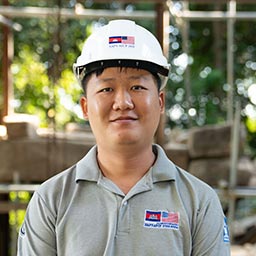
Thim Mengly
National Authority for Preah Vihear
Engineer with the Department of Conservation and Archaeology -
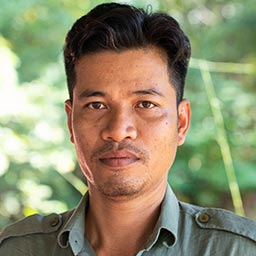
Ol Sam An
National Authority for Preah Vihear
Archaeologist with the Department of Conservation and Archaeology -

Soreimeas Norn
U.S. Embassy at Phnom Penh
Program Management Specialist with the Public Affairs Section (PAS) at the U.S. Embassy in Phnom Penh
Gallery
Partners


About the Project
In 2023, CyArk traveled to document the international reconstruction efforts at Preah Vihear, in northern Cambodia. This ancient Temple Complex was once a spiritual center for Hindu worship built during the reign of the Khmer Empire in the 9th Century. The temple is a grand causeway comprised of towering Gopura entryways connected with ornate sandstone carvings. Today, this mountain top UNESCO World Heritage site is the focus of monumental restoration efforts by the National Authority for Preah Vihear, who are working tirelessly to ensure this sacred place and its legacy are preserved and protected for future generations.
Related Links
Credits
This project was completed as part of the Community Heritage Exchange Initiative with support from the Bureau of Education, the Cultural Affairs at the U.S. State Department, and the US Embassy in Phnom Penh. A special thanks to Amparo Garcia and Sorimeas Norn.
The 3D data and interviews collected as part of this online tour were collected by staff and students from Phare Ponleu Selpak Visual and Applied Arts School in Battambang, Cambodia. A special thank you to Osman Khawaja, Chea Dara, Soeurt Daim, Ra Monyliza, Aev Mary, Chy Leapheng, and Lim Sreyneath.
This project would not have been possible without the support from the National Authority for Preah Vihear. A special thank you to Director General Kong Puthikar, Dr. Ea Darith, Oh Sman, and Thim Mengley.
Related experience
Cliff Palace (Opens in new tab) — Explore a cliff dwelling and hear from descendent communities