Story outline
-
Qassiarsuk Greenland
Welcome to Qassiarsuk, a historical subarctic settlement in southern Greenland with over a thousand years of history. Located at a fjord's end, its fertile hills have attracted Norse settlers and sustained Inuit farming communities for generations. -
Stop 1. Resilience in a subarctic landscape
Norse settlers in the late 10th century adapted farming methods for Greenland's sub-Arctic conditions, focusing on animal husbandry and limited crop cultivation. Modern farms resemble these early practices, but face new climate-related challenges, such as erratic rainfall and extreme weather. -
Stop 2. Ruins of Brattahlid
The 14th and 15th-century ruins before you are believed to be Brattahlid, Erik the Red's estate and the hub of the Eastern Settlement in Greenland. Erik, a Norse explorer, settled here in 986 AD. He named the land "Greenland" to lure settlers from overpopulated Iceland. The Eastern Settlement is estimated to have sustained 3,000 to 5,000 people at its height. -
Stop 3. Tjodhilde's Church
You're before a replica of Tjodhilde's Church, named for Erik the Red's wife, who was instrumental in introducing Christianity to Greenland. Built from turf and timber, this modest-sized replica resembles the nearby ruins believed to be the original. The church is historically significant as the New World's first Christian site. -
Stop 4. Reconstructed Longhouse
A reconstructed Norse longhouse in Qassiarsuk showcases the building's dual-purpose design, with a living area featuring a central hearth and an adjoining space for livestock. Norse farmsteads in Greenland were often isolated due to landscape challenges and scarce fertile land. The settlements initially prospered but declined by the 14th century for various debated reasons. -
Stop 5. Leif Eriksson Monument
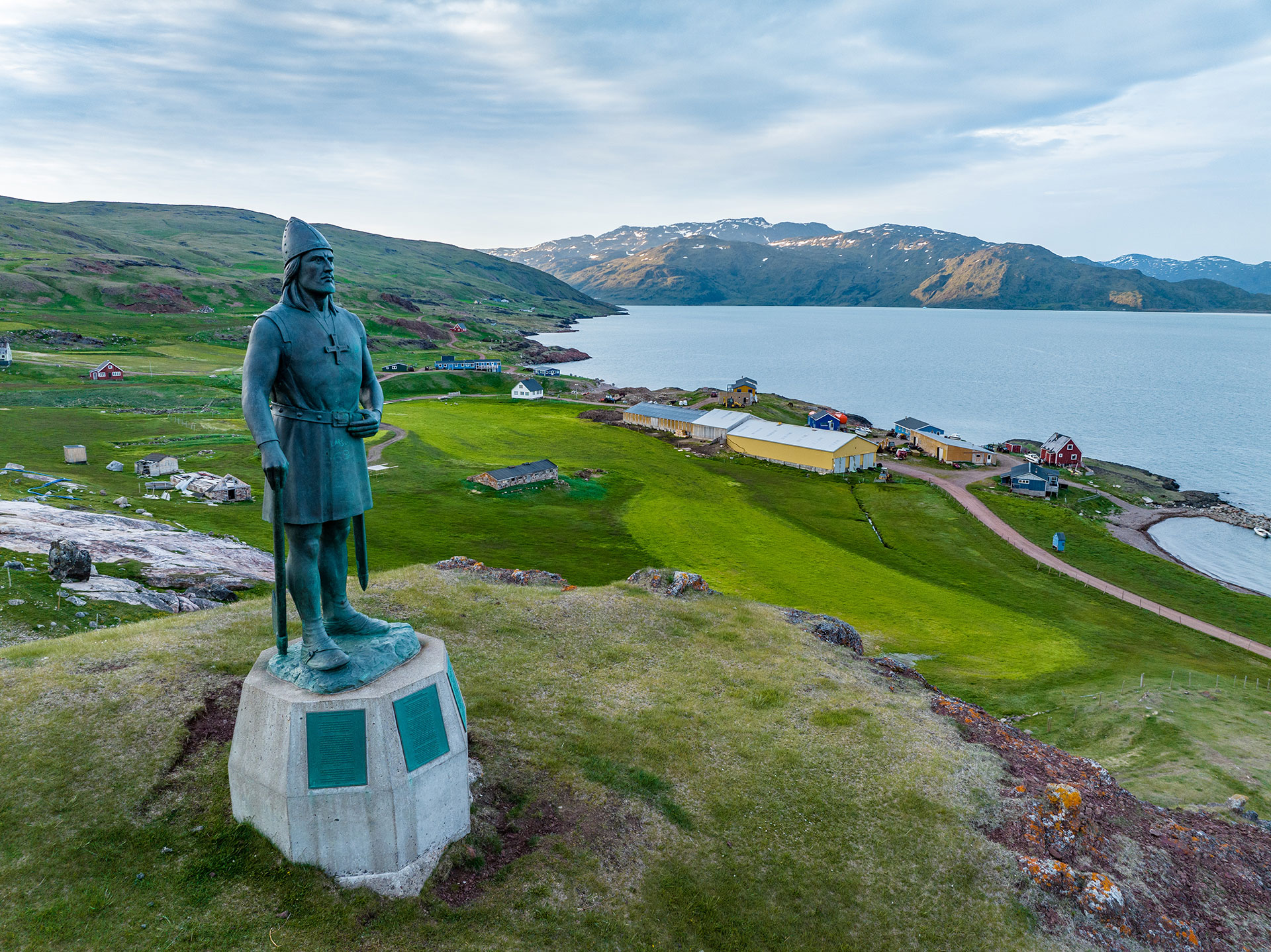
A 10ft bronze statue of Leif Erikson overlooks modern Qassiarsuk. Son of Erik the Red, he is renowned for bringing Christianity to Norse settlers and exploring North America 500 years before Columbus. Believed to have sailed from Greenland to present-day Canada, he named one area Vinland for its fertility. -
Stop 6. Re-emergence of Farming
In the 19th century, Tuperna and Anders Olsen revived farming in Greenland by settling in Upernaviarsuk and Igaliku and adapting Scandinavian farming methods. The reconstructed Inuit winter house you see employs stone, turf, and either wood or whalebone. In spring, the roof is swapped for a tent. Most of today's local farmers are descendants of this couple. -
Stop 7. Otto Frederiksen House
The house before you belonged to Otto Frederiksen, who restarted farming in Qassiarsuk in 1924, making it the first modern farm outside Igaliku. He was the great-grandson of Johannes Andersen and his family continues sheep farming to this day. The house serves as a museum honoring this pioneering lineage. -
Stop 8. A Changing Climate
Greenland. Increased droughts require new irrigation solutions, while rising sea levels and storms accelerate erosion of Norse ruins. Addressing these issues is crucial for both agriculture and heritage preservation. -
Stop 9. Resilience and Adaptation
Norse and Inuit communities have long flourished in subarctic conditions through specialized farming. Both cultures are bound by their shared land use and centuries-old resilience, which continues to evolve due to climate change.
Voices
-
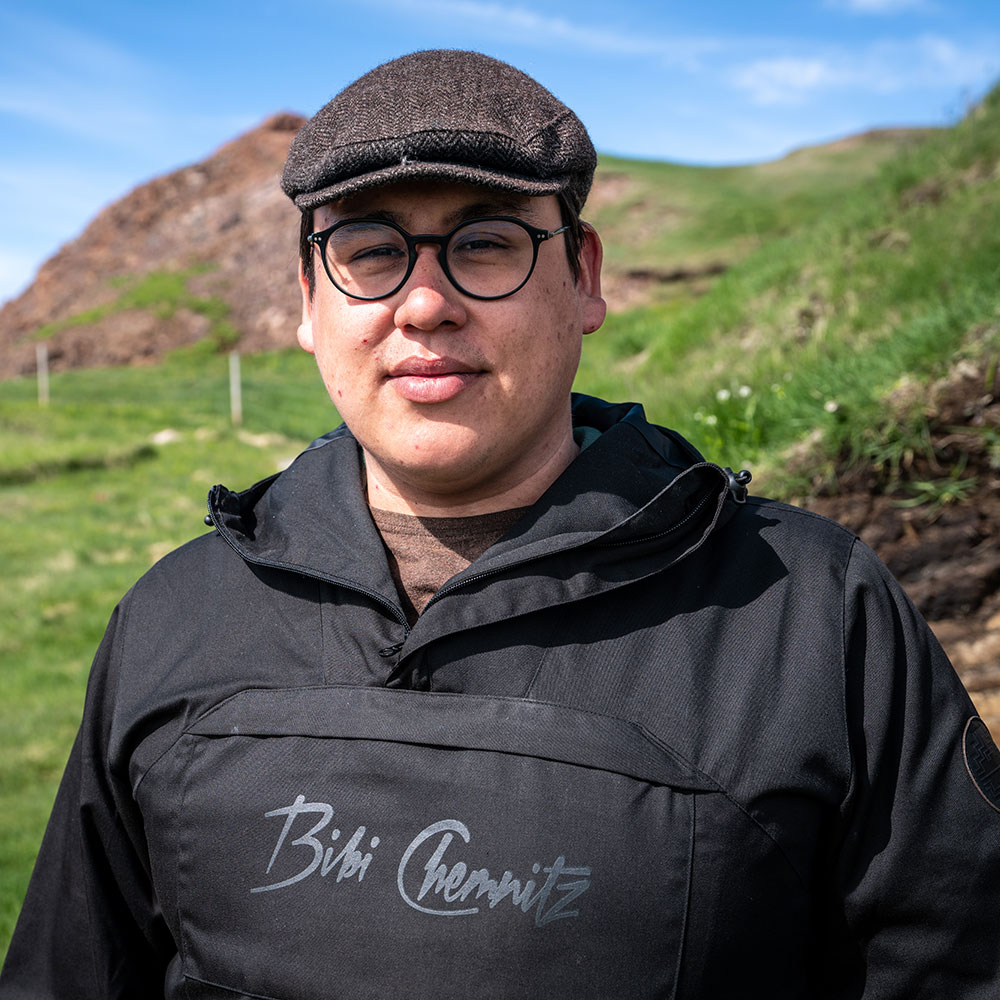
Aqqaluaq-Ole Frederiksen
Local Guide and Farmer
Aqqaluaq-Ole Frederiksen is a local resident whose family has been part of the Qassiarsuk community since the early days of its modern settlement. As a direct descendant of the pioneering farmer Otto Frederiksen, Aqqaluaq-Ole carries on a rich family legacy. Growing up on a farm, he has been actively involved in its operations from a young age, contributing to the enduring agricultural traditions of the region. Additionally, he serves as an Official UNESCO site guide for Qassiarsuk, providing insights into the historical and cultural significance of this remarkable place. -
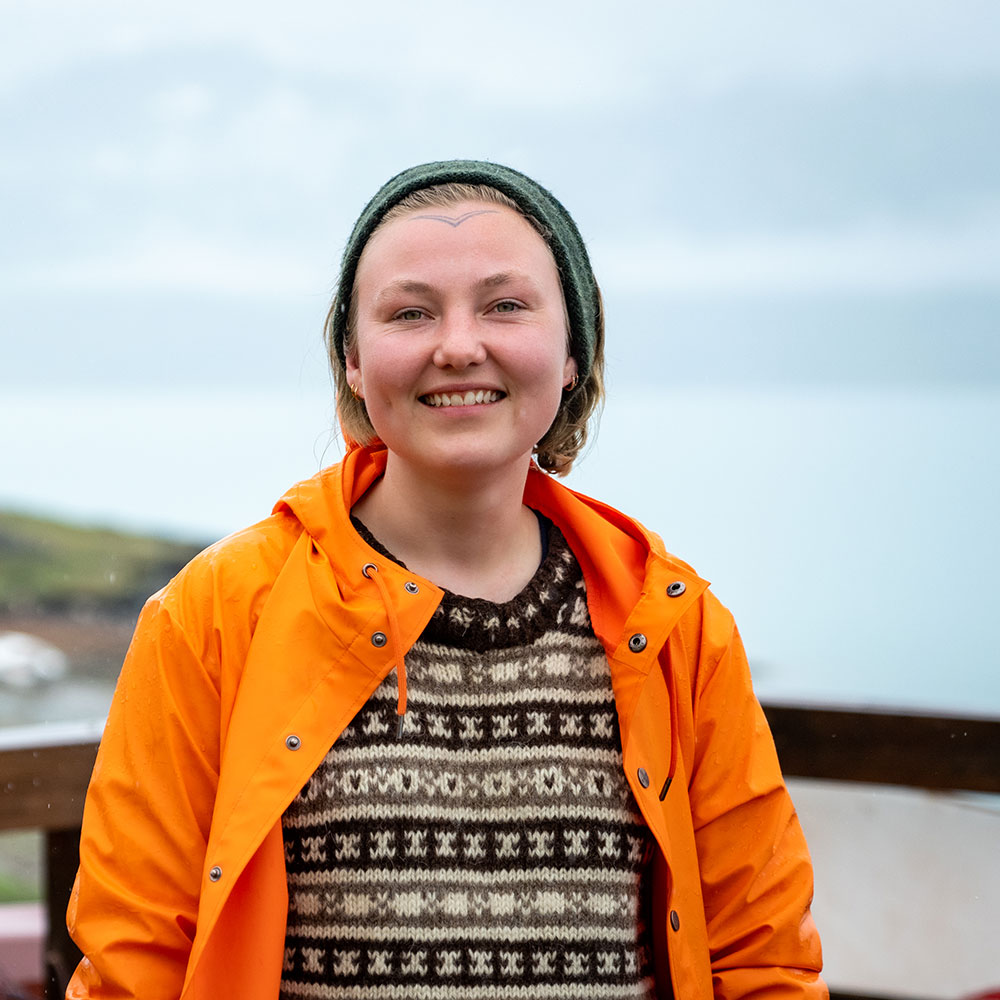
Tupaarnaq Egede
Local Guide
Tupaarnaq Egede, a Greenlandic Inuk from Qaqortoq, brings a unique perspective shaped by her experiences in the fjords, where her father's roots in Igaliku deeply influenced her childhood. Raised in close connection to nature, Tupaarnaq developed early skills in hunting and sailing, engaging with the environment alongside her family. As a Kujataa UNESCO Site Guide, she passionately shares the cultural and historical significance of the region. -
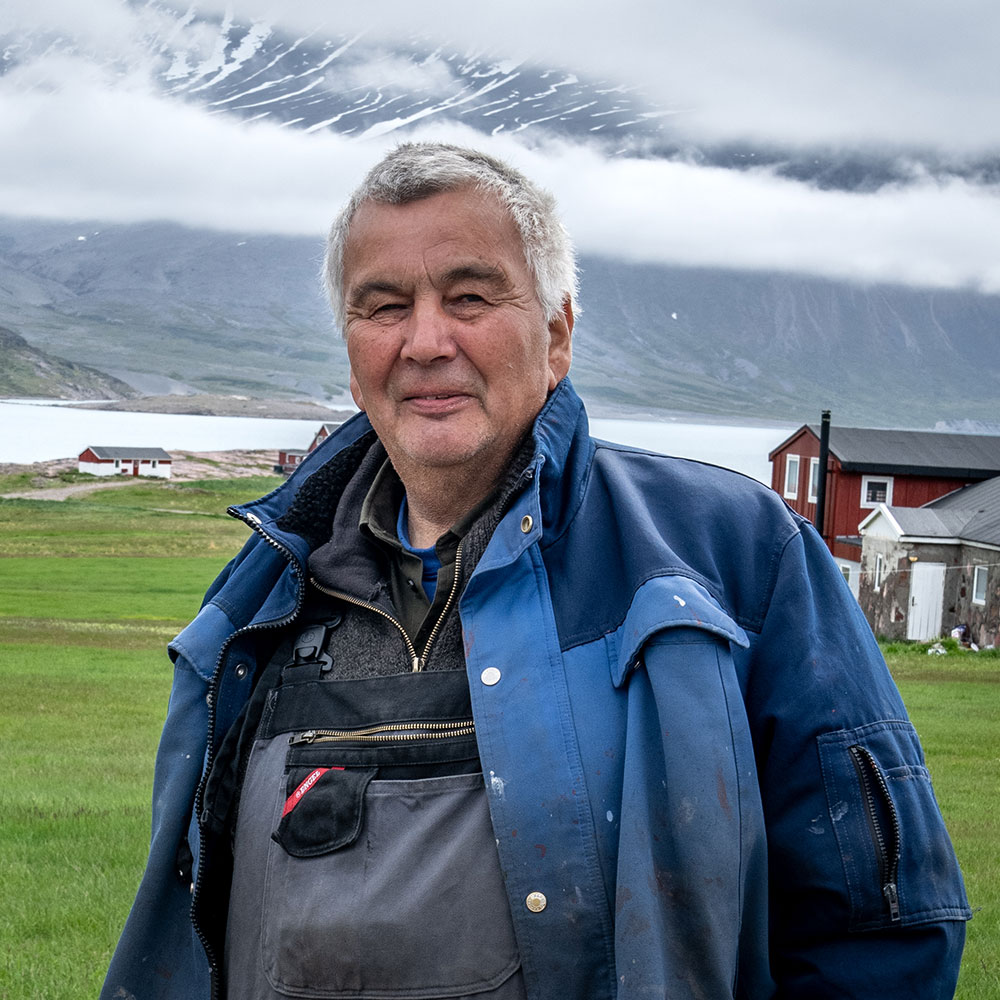
Frederik Egede
Local Farmer
Frederik Egede, also known as Kaava, is a farmer from Igaliku. His nickname, "Kaava," comes from his big brother's playful mix-up of "little brother." Born and raised in Igaliku, Frederik still lives in the house where he was born, finding comfort and purpose in the familiar surroundings.
Gallery
Partners


About the Project
Qassiarsuk, located in Southern Greenland, is a small village steeped in history and natural beauty. Formerly known as Brattahlíð, it's where Viking explorer Erik the Red first settled around 985 AD. Today, the village serves as a blend of old and new; ruins of Norse settlements coexist with modern Inuit farming communities. Overlooking the crystal-clear waters of the Tunulliarfik Fjord, it's a hub for sheep farming, owing to its unusually fertile land in an otherwise harsh, icy landscape. As climate change impacts the region, Qassiarsuk is at the intersection of preserving its rich heritage and adapting its agricultural practices for the future.
Credits
This Tapestry tour was made possible with support from Iron Mountain.