Story outline
-
Rapa Nui
Iorana Korua, Welcome to Rapa Nui, a volcanic island located in the middle of the Pacific Ocean. Rapa Nui and is one of the most remote islands on the planet. Starting 1,000 years ago, the island was settled by Polynesian explorers who, through their extensive ocean voyages, developed a unique culture based on the use of natural resources. -
Stop 1. Welcome to Rapa Nui
You're at Anakena in northern Easter Island, one of its few sandy beaches. It's believed to be where the first Polynesian chief, Hotu Matu'a, landed, celebrated annually in July. Despite isolation, the Rapa Nui people have thrived by using local resources. Their culture and traditions, maintained through oral history, remain strong today. -
Stop 2. Sacred Resting Places
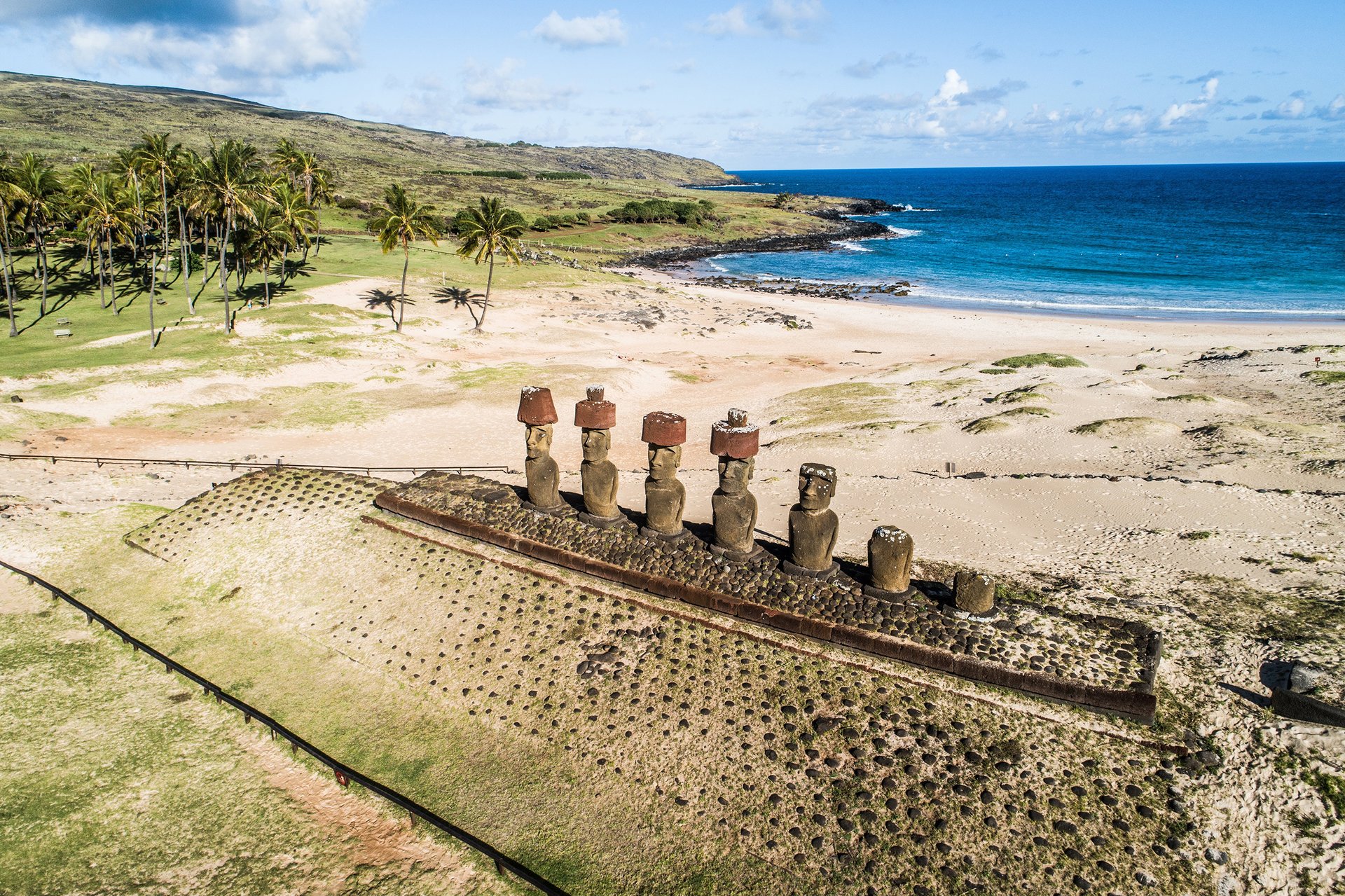
Rapa Nui is known for its ahu, stone platforms honoring ancestors, usually topped with moai, human-shaped stone figures. These moai remain significant to the Rapa Nui people today as a symbol of their living heritage. -
Stop 3. Living Faces
About 100 yards from the single moai at Ahu Ature Huki is Ahu Nau Nau, featuring seven well-preserved moai with distinct facial details. These figures are more angular and each is unique, reflecting both evolving carving styles and the individuals they represent. -
Stop 4. What is Mana?
Ahu and moai hold spiritual power, or mana, due to their ancestral connections and are governed by respect rules called tapu. These concepts remain vital in Rapa Nui culture and guide interactions with these sacred sites, which visitors should also respect. -
Stop 5. Importance of Family
Ahu are situated near important clan villages, with most moai facing inland, although some face the sea. Historically, family homes were stone structures arranged by status around the ahu. Today, Rapa Nui residents maintain strong family ties and live off local resources like agriculture and fishing. -
Stop 6. Protecting a Legacy
Though ahu construction has ceased, Rapa Nui people still respect land and sea, and follow cultural norms like mana and tapu. The island became a National Park in 1935 and a UNESCO World Heritage Site in 1996. Since 2017, the indigenous community Ma'u Henua manages the park, preserving the island's cultural heritage.
Voices
-
Merahi Atam
Archaeologist
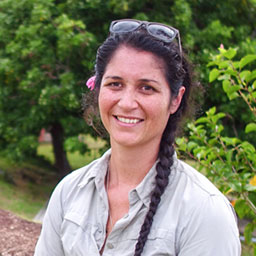
Merahi Atam is an archaeologist who works with the Secretaria Tecnica de Patrimonio Rapa Nui to preserve and protect the Rapa Nui culture. -
Pau Hereveri
Stonecarver
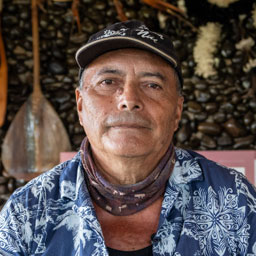
Pablo Hereveri, better known as "Pau", is a master craftsman who has been involved in stone and wood carving since he was 5 years old, and today is recognized as one of the great carvers on the island. His large-scale work in stone has taken him to tour Europe, the United States, and Australia, leaving the Rapa Nui culture in those countries with the delivery of large-scale sculptures, which included the gift of a moai to Pope Francis in 2017. -
Hotu Iti Araki
Musician and Cultural Performer
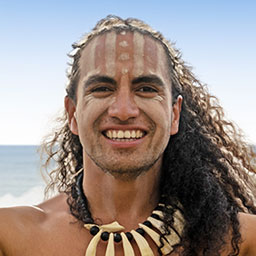
Hotu Iti Araki is the Director of Mana Ma'Ohi, an artistic and cultural group that works to preserve and protect the Rapa Nui Polynesian ancestral culture through traditional dance and music. Founded in 2011, Mana Ma'Ohi has traveled within Chile and internationally sharing the Rapa Nui culture with the world.
Gallery
Partners


About the Project
Rapa Nui, also known as Easter Island, is a remote volcanic island located in the southeastern Pacific Ocean. The island is famous for its archaeological wonders, especially the moai statues. These monumental statues were carved by the Rapa Nui people from the island's volcanic rock. They represent ancestors and deified chiefs, and they hold profound cultural and spiritual significance for the local community. The moai are not just silent testaments to the island's rich history and the artistic prowess of its ancient inhabitants but also a reflection of the Rapa Nui people's complex relationship with their environment.
Related Links
Credits
This Tapestry tour of Rapa Nui was made possible thanks to our partners Thanks to our partners Merahi Atam and family, Koro Gustavo Borquez Paoa, Koro Tomás Pedro Tuki Tepano and family, Hotu Iti Araki, Koro Pablo "Pau" Hereveri, Hana Paoa Huki and family, Koro Haumoana Hey Araki, Cristian Moreno Pakarati, Mario Amarhiro Tuki Villanueva.
Related experience
El Kurru & The Tomb of Tanwetamani (Opens in new tab) — A 2,500 year old tomb protected by the local community