Story outline
-
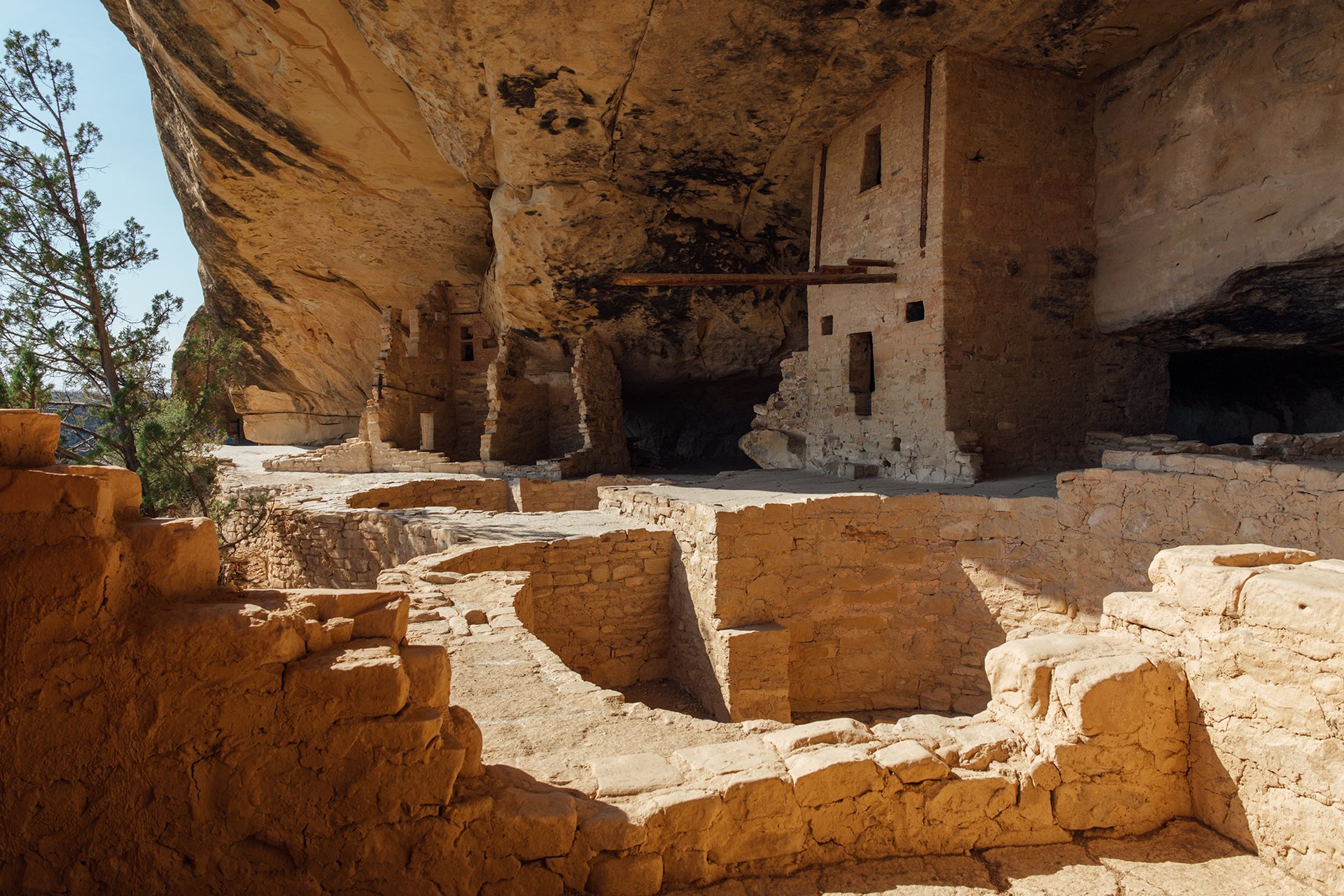
Balcony House Ancestral Home
In this experience, explore Balcony House through a Hopi lens. Approach with respect, as you would a home and learn about climate, heritage, and Hopi culture. -
Stop 1. Footsteps of Our Ancestors
For Hopi people, visiting Mesa Verde is like coming home to visit Hopi ancestors that still reside here. It is important to visit these places with respect and acknowledge the connections that descendant communities maintain with this land. -
Stop 2. Spring Preparation
There is a Hopi practice of men planting and tending to crops and teaching boys care through prayer and nurturing. Women and girls process the harvest, learning to use every part of the plant. Success in farming and life begins with a good heart, strong character, and prayer. -
Stop 3. Water & Rainfall
Hopi people do not run from the rain, but embrace it. Through prayers and songs, Hopi people ask for rain as it helps all living things grow. It is ok to enjoy the rain and puddles, but do not waste water or take it for granted; it is very powerful and a way Hopi ancestors visit and provide blessing. -
Stop 4. Food & Cooking
The most vital ingredient in Hopi cooking is the cook’s loving and generous heart. Blue and white corn are key to Hopi meals. Blue corn makes breads like piiki and dumplings, while white corn is used in stews and soups. Fresh or ground corn is used seasonally following practices passed on from Hopi ancestors. -
Stop 5. Hopi Clans
For Hopi, Mesa Verde is known as Tawtoykya—“A Place For Songs.” Once home to many clans, it was a place of cooperation and shared purpose. Today, 33 Hopi clans remain and reside in northern Arizona on the Hopi Mesas, each with unique roles, carrying on lessons from Hopi ancestors in community life. -
Stop 6. Experiencing Hopi
Hopi ancestors are present throughout Hopi people's migration path throughout the region. Maintaining connections with these lands is critical to the lives of present day Hopi communities. Through these places, continue to learn more and visit with respect.
Gallery
Partners



About the Project
This Tapestry experience is part of the NEH-supported Resonant project. Through this collaborative project, partners developed a virtual reality (VR) experience and companion web resources allowing players to explore Hopi heritage, history, and culture through the lens of a changing climate at two ancestral sites: Wupatki Pueblo at Wupatki National Monument and Balcony House at Mesa Verde National Park. This project began in 2019 with the Prototype level grant. Lessons learned from the prototype development have informed the current scope of the project. The goals of the Resonant project are to amplify Hopi knowledge about cultural landscapes, sustainability, and changing climate; provide a respectful resource that facilitates intergenerational dialogue within Hopi communities; combat stereotypes about Indigenous people in the Southwest; and promote respectful engagement with cultural sites visited by the public.
Related Links
Credits
Resonant was developed by CyArk in collaboration with Hopivewat Learning Center, Hopi Cultural Preservation Office, Hopi Public Library, and FableVision Studios. Resonant has been made possible in part by a major grant from the National Endowment for the Humanities: Democracy demands wisdom.
Any views, findings, conclusions, or recommendations expressed in this experience, do not necessarily represent those of the National Endowment for the Humanities.
Related experience
River House (Opens in new tab) — Ancestral Pueblo home connected to Zuni people.