Story outline
-
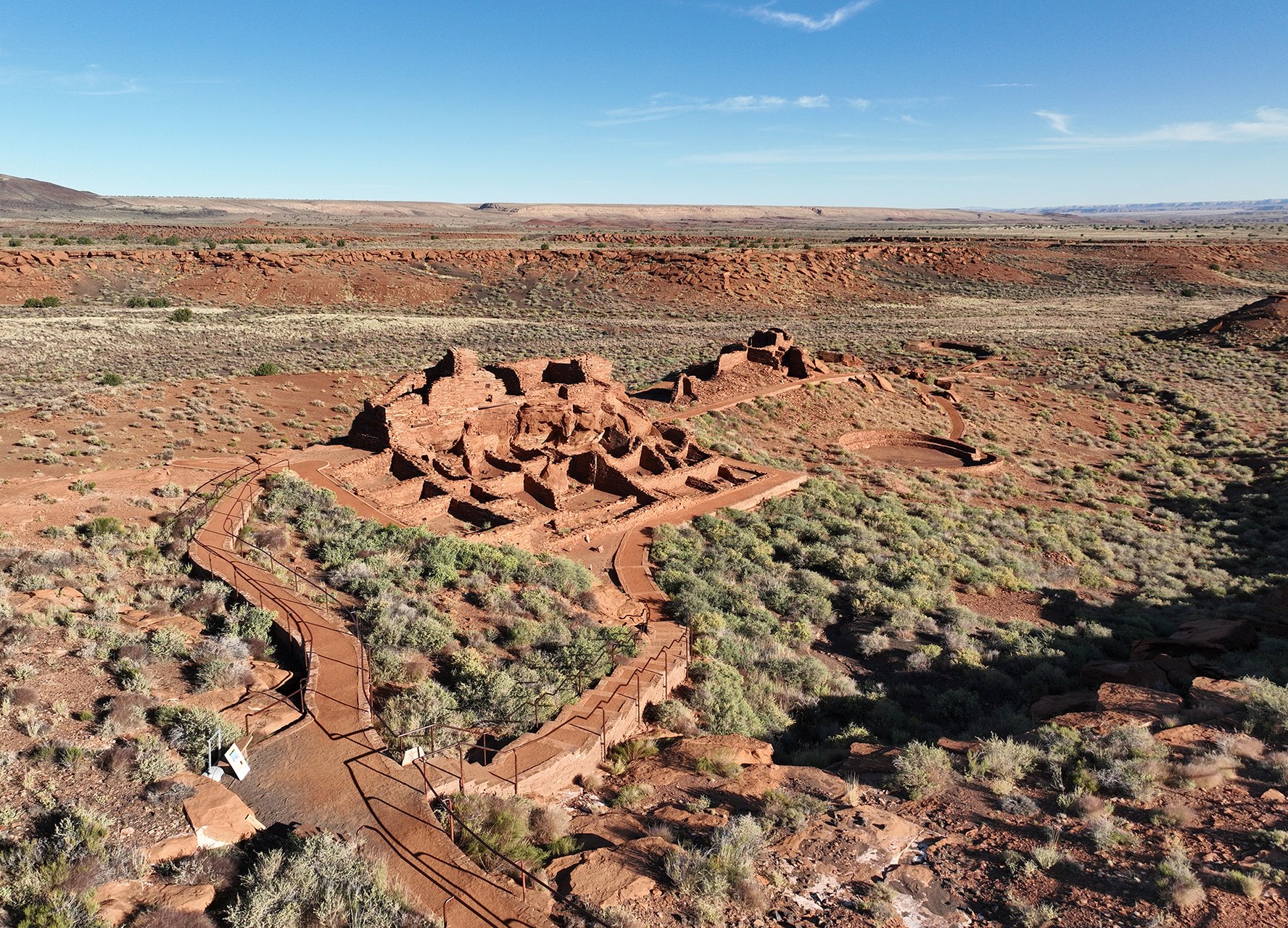
Wupatki Pueblo
Follow the footsteps of Hopi ancestors through ancestral lands at Wupatki National Monument and learn about Hopi connections to the land in the past and today. -
Stop 1. The Land is Our Home
We’ve arrived at Nuva’ovi, an ancestral village connected to Hopi people. Once among Northern Arizona’s largest sites, it reflects the Hopi values of humility, hard work, and respect for the earth—principles still guiding us today. -
Stop 2. Plants & Animals
At Wupatki, Hopi ancestors lived with the land, harvesting plants like Sivipsi and möha, and hunting small game with care and purpose. Today, climate change threatens these traditions, reminding us to respect nature to ensure a sustainable future. -
Stop 3. Letting the Earth Rest
In winter, Hopi ancestors gathered by the fire to hear stories of tradition, migration, and ceremony. These quiet months were for reflection, rest, and planning. Corn, an important staple, remains central to teachings on planting, harvesting, and perseverance. -
Stop 4. Changing Climates
For centuries, Hopi have lived in balance with nature. At Wupatki, ancestral knowledge shaped dry farming methods that conserve water and honor the land. These teachings offer vital guidance for facing today’s climate challenges with respect and sustainability. -
Stop 5. Continuing Connections
Wupatki is part of a larger landscape of Hopi migration that remains important to understanding what it means to be Hopi today. Thank you for visiting and please take what you have learned to visit with respect.
Gallery
Partners



About the Project
This Tapestry experience is part of the NEH-supported Resonant project. Through this collaborative project, partners developed a virtual reality (VR) experience and companion web resources allowing players to explore Hopi heritage, history, and culture through the lens of a changing climate at two ancestral sites: Wupatki Pueblo at Wupatki National Monument and Balcony House at Mesa Verde National Park. This project began in 2019 with the Prototype level grant. Lessons learned from the prototype development have informed the current scope of the project. The goals of the Resonant project are to amplify Hopi knowledge about cultural landscapes, sustainability, and changing climate; provide a respectful resource that facilitates intergenerational dialogue within Hopi communities; combat stereotypes about Indigenous people in the Southwest; and promote respectful engagement with cultural sites visited by the public.
Related Links
Credits
Resonant was developed by CyArk in collaboration with Hopivewat Learning Center, Hopi Cultural Preservation Office, Hopi Public Library, and FableVision Studios. Resonant has been made possible in part by a major grant from the National Endowment for the Humanities: Democracy demands wisdom.
Any views, findings, conclusions, or recommendations expressed in this experience, do not necessarily represent those of the National Endowment for the Humanities.
Related experience
Cliff Palace (Opens in new tab) — Explore a cliff dwelling and hear from descendent communities