Story outline
-
Sloan Canyon Petroglyph Site
An Indigenous Highway through the Mojave Desert -
Stop 1. An Indigenous Highway
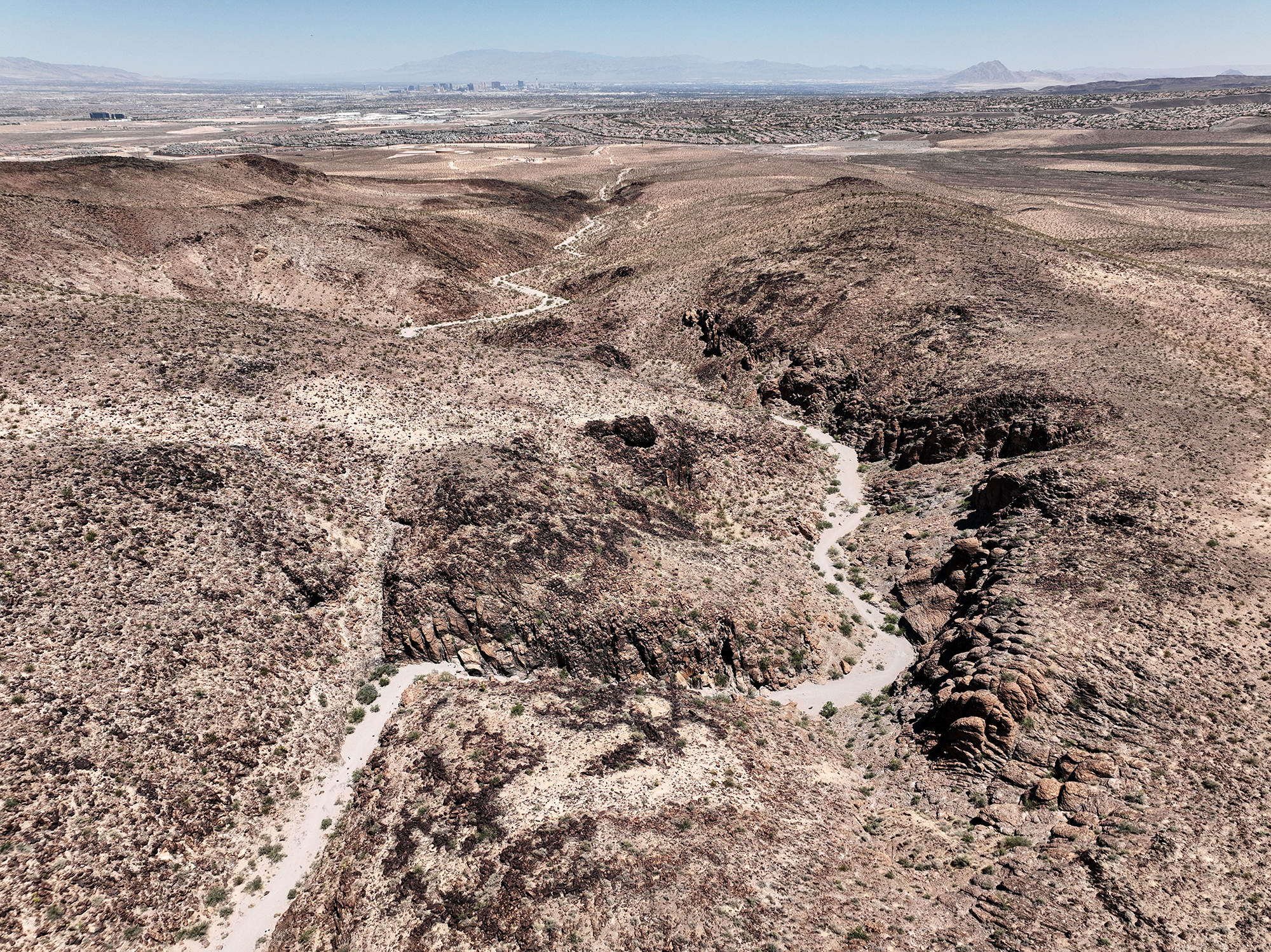
South of Las Vegas, Petroglyph Canyon in the North McCullough Wilderness reveals thousands of years of Native history. Six dry waterfalls mark past volcanic eruptions, while rock writing, possibly a burden basket, reflects the Southern Paiute emergence story and enduring ties to the Mojave Desert. -
Stop 2. Guardians of the Canyon
Petroglyph Canyon, also known as the Library, features over 1,700 examples of rock writing and a tortoise-shaped rock formation, important to the Southern Paiute people. Visitors are asked to stay on trails, avoid touching the rock writing, and take only photos. -
Stop 3. Connection to Nature
In Petroglyph Canyon, the sights and sounds of the city give way to a vibrant desert filled with bighorn sheep, desert tortoises, birds, and lizards. Rock writing here echoes desert life, reflecting the carvers’ deep knowledge of the desert and the importance of respecting its balance. -
Stop 4. Life Cycles
In Petroglyph Canyon, rock writing reveals a living landscape shaped by life cycles. The Canyon is part of the Salt Song Trail, a place where Nuwuvi Salt Singers honor those who have passed, keeping ancestral energy and cultural connections alive. -
Stop 5. Waypoints
The rock writing in Petroglyph Canyon reflects the trail's long history as a route for trade, migration, and cultural exchange. Part of the Salt Song Trail spanning four states, it links sacred sites and landscapes central to Nuwu heritage. -
Stop 6. Transitions through Time
Like the desert’s seasons, Petroglyph Canyon’s rock writing highlight changes over time, including a rider on a mule. European settlers arrived late to the Mojave, using Native trails and trade routes to move deeper into the region. -
Stop 7. Learn More
Sloan Canyon is sacred to many Tribal Nations and vital to the desert ecosystem. Visitors are encouraged to explore respectfully and support the communities and organizations preserving its legacy.
Voices
-
Bridget Sandate
Chemehuevi Tribal Member
-
Chris Spotted Eagle
Citizen of the Las Vegas Paiute Tribe
-
Annette Bennett
Archaeologist, Bureau of Land Management
Annette Bennett is the Bureau of Land Management's archaeologist for the Sloan Canyon National Conservation Area. The Sloan Canyon National Conservation Area is located just south of Las Vegas and was set aside in 2002 by an act of Congress.
Gallery
Partners

About the Project
The Sloan Canyon Tapestry experience was created through a collaboration between CyArk, the Bureau of Land Management (BLM) Red Rock/Sloan Field Office, the Las Vegas Paiute Tribe, and the Chemehuevi Indian Tribe. CyArk documented the site utilizing laser scanning and photogrammetry to produce a high-resolution 3D model of Petroglyph Canyon and select rock writing. Guided by Indigenous perspectives and BLM staff, the virtual experience highlights the history and ongoing connections of Southern Paiute people to Sloan Canyon.
Related Links
Credits
Thank you to Bridget Sandate from the Chemehuevi Indian Tribe and Vice-Chairman Chris Spotted Eagle from the Las Vegas Paiute Tribe.
Related experience
Sites of Dinétah | Crow Canyon (Opens in new tab) — Navajo living history carved into stone