Story outline
-
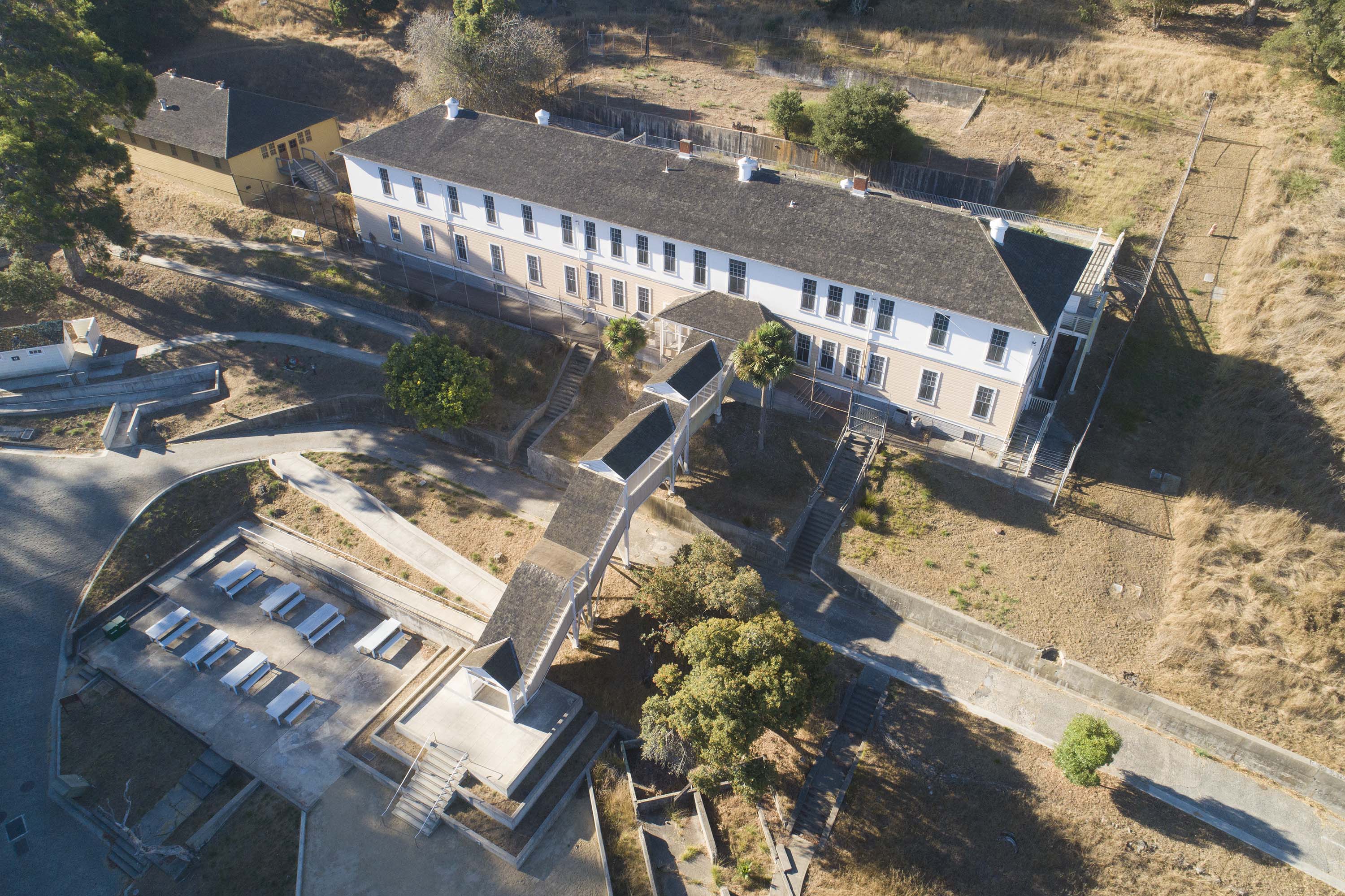
North Garrison at Fort McDowell
World War II Japanese American Incarceration Site. -
Stop 1. Japanese Americans on the Island
Who was confined on Angel Island during World War II? The former Immigration Station was utilized by the US Army as a detention center where they confined Japanese Americans from Hawai’i and the West Coast along with other people they deemed a threat to US security. -
Stop 2. Under Military Control
What are some factors that led to the confinement of Japanese Americans at Angel Island and elsewhere? A history of anti-Asian sentiment prevented Japanese Americans from becoming naturalized citizens and influenced the targeting of Japanese Americans during WWII. -
Stop 3. Language of Confinement
According to Densho.org, the term ‘internment’ refers to the legally permissible, though morally questionable, detention of ‘enemy aliens’ in times of war. The term applies to Japanese Americans confined in confined in sites, like Angel Island, run by the Army and Department of Justice. -
Stop 4. Life in Confinement
What was confinement like on Angel Island? Japanese Americans were detained in crowded rooms with rows of bunks stacked three levels high. Inscriptions written on the walls shed light on the backgrounds of those detained here and their WWII experience. -
Stop 5. POW Mess Hall
How did this site change during WWII? This mess hall was built on a preexisting recreation area and was utilized as a place for those confined on the island to eat meals. -
Stop 6. Mass Evacuation & Confinement
On Angel Island, all of the internees were male and almost all were born outside the US. When Executive Order 9066 was later passed in March of 1942, the US government began the forced removal and confinement of over 120,000 Japanese American men, women, and children. -
Stop 7. Japanese Americans in the Military
What were other Japanese American experiences on the island? During WWII, the island was used by the military for the war effort. Despite the questioning of Japanese Americans' loyalties, many served in the military, including on Angel Island. -
Stop 8. Separation & Uncertainty
What happened to Japanese Americans after confinement on Angel Island? After Angel Island, internees were typically sent to multiple camps all over the country. Often it was many years before they were able to return home or be reunited with their families. -
Stop 9. Remembering Injustice
How do we remember Japanese American WWII confinement today? With the Civil Liberties Act of 1988, the government issued an official apology and reparations to survivors. Today the immigration station is a testament to the resilience of Japanese American and immigrant communities.
Voices
-

Hannah Schoenberger
AIISF staff and Yonsei
Hannah Schoenberger joined the staff of the Angel Island Immigration Station Foundation in 2023. She supports the team with research, exhibit development and design, and social media. She graduated from Occidental College with a degree in American Studies focused on Asian American history and collective memory. As a Bay Area native and fourth-generation Japanese American, she feels a personal connection to the intersecting histories of immigration and World War II detention on Angel Island. -
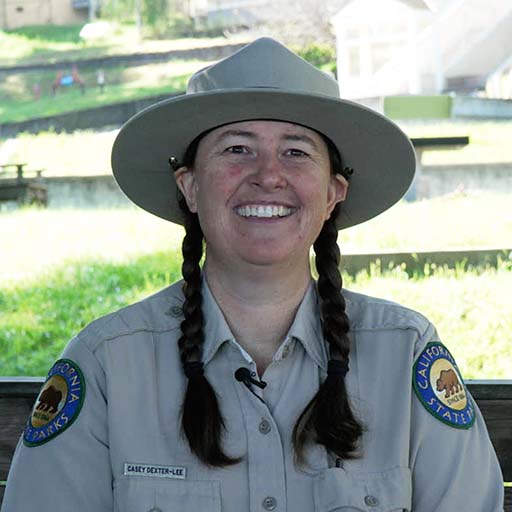
Casey Dexter-Lee
State Park Interpreter II
Casey Dexter-Lee has worked for California State Parks since 2000. She has been in charge of the educational programs at Angel Island State Park since 2017. She was part of the team that developed the park’s Interpretation Master Plan and helped pilot the PORTS, distance-learning program at the park. She was the park’s lead to volunteers and interpretive staff on the island. She is a graduate of UC Santa Cruz with a degree in history and minor in education. She has lived on Angel Island since her parks career began.
Gallery
Partners



About the Project
CyArk collaborated with the Angel Island Immigration Station Foundation and Angel Island State Park to create this experience to explore the history and experience of Japanese Americans who the US government confined during WWII.
Related Links
- Angel Island Immigration Station Foundation (Opens in new tab)
- Angel Island State Park (Opens in new tab)
- Angel Island Immigration Station Lego Model (Opens in new tab)
- Taken From Their Families Exhibit: Japanese Hawaiians (Opens in new tab)
- Taken From Their Families Exhibit: Japanese Americans (Opens in new tab)
Credits
This project was funded, in part, by a grant from the U.S. Department of the Interior, National Park Service, Japanese American Confinement Sites Grant Program. The views and conclusions contained in this document are those of the authors and should not be interpreted as representing the opinions or policies of the U.S. Government. Mention of trade names or commercial products does not constitute their endorsement by the U.S. Government.
Related experience
Cliff Palace (Opens in new tab) — Explore a cliff dwelling and hear from descendent communities