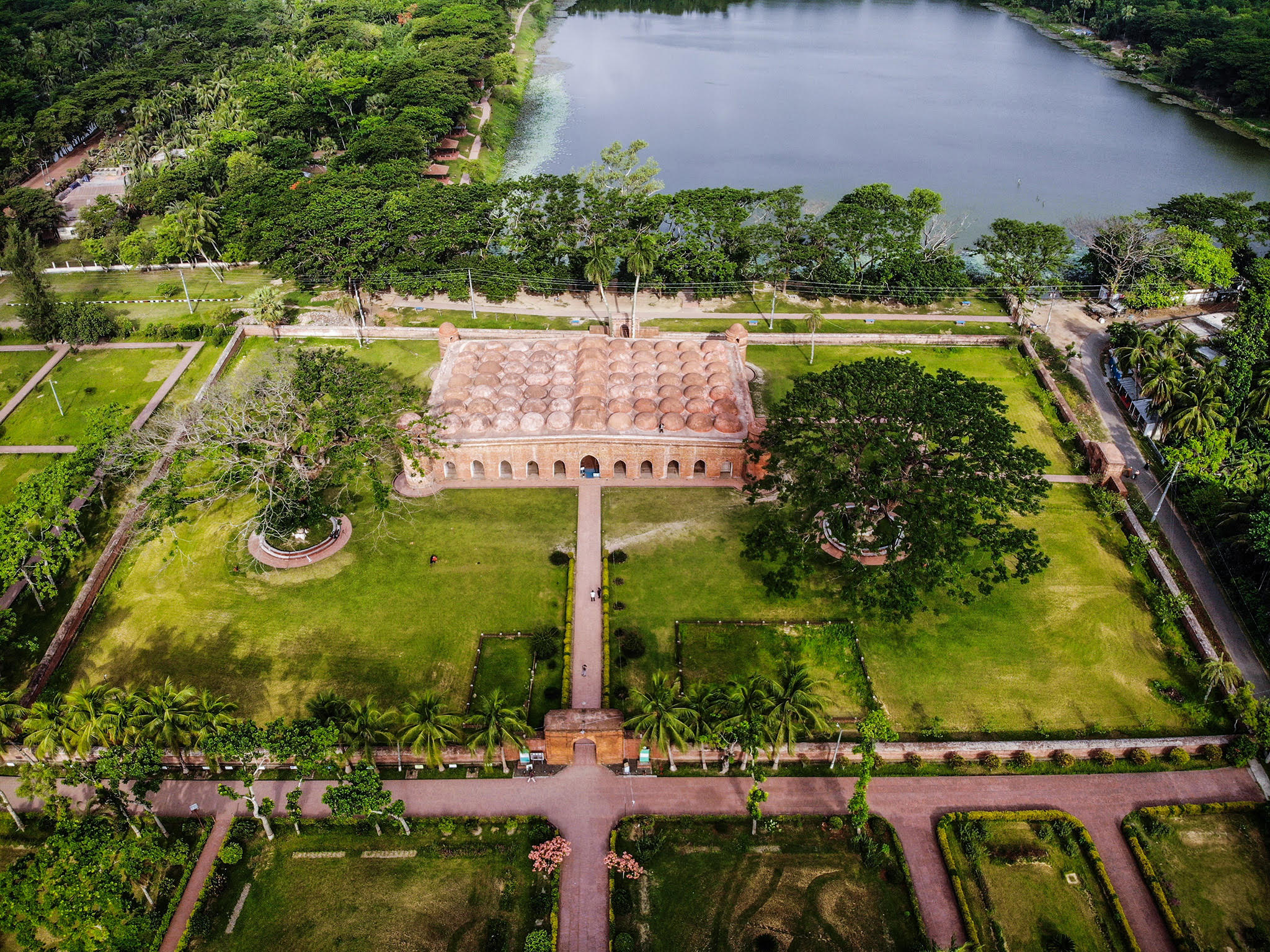
This is a companion guide to the interactive 3D virtual tour: Sixty Dome Mosque of Bagerhat. You can click here (Opens in new tab) to begin the tour.
Story outline
Each stop is a location within the virtual tour. Use the "Explore in 3D" button to jump straight to any stop.
-
The 60 Dome Mosque
Explore in 3D: The 60 Dome Mosque (Opens in new tab)The Sixty Dome Mosque in Southern Bangladesh is a significant 15th-century religious site that embodies local resilience, but it's increasingly threatened by the impacts of climate change. -
Stop 1. Spiritual Serenity
Explore in 3D: Stop 1. Spiritual Serenity (Opens in new tab)The "60 Dome Mosque" in Bagerhat actually has 81 domes and is an engineering marvel crucial to local religious life. Located near the Bay of Bengal, the area is flood-prone during storms. -
Stop 2. Place of Refuge
Explore in 3D: Stop 2. Place of Refuge (Opens in new tab)Many residents living nearby lack sturdy homes, and during cyclones, they frequently seek shelter within the mosque. It's remarkable that even after 600 years, the steadfast walls of this ancient mosque continue to provide invaluable protection and safety to the community. -
Stop 3. Holy Architecture
Explore in 3D: Stop 3. Holy Architecture (Opens in new tab)The mosque's interior features a "forest" of columns supporting overhead domes. The mihrabs, made from ceramic tiles, indicate the direction of Mecca and serve as prayer focal points, with the central mihrab uniquely made of stone. -
Stop 4. Climate Change
Explore in 3D: Stop 4. Climate Change (Opens in new tab)Bangladesh faces climate challenges due to its geography, high population density, and agricultural reliance. Coastal areas, where the Sixty Dome Mosque is located, are particularly vulnerable to flooding, storms, and rising sea levels, issues exacerbated by climate change. -
Stop 5. Eroding Bricks
Explore in 3D: Stop 5. Eroding Bricks (Opens in new tab)Efflorescence is the white, powdery salt deposit seen on bricks, caused by water dissolving salts within porous materials. This process can weaken structures over time due to salt expansion and contraction with varying moisture and temperature. -
Stop 6. A Sufi Saint
Explore in 3D: Stop 6. A Sufi Saint (Opens in new tab)Khan Jahan Ali was a key 15th-century figure in Bangladesh, known for his contributions to the country's social, religious, and architectural development. As a saint and administrator, he founded many important Islamic structures. -
Stop 7. Community Resilience
Explore in 3D: Stop 7. Community Resilience (Opens in new tab)The Sixty Dome Mosque is a testament to both the skill of its original craftsmen and the ongoing preservation efforts of the local community. Bagerhat's residents show resilience and ingenuity, thriving in a challenging landscape.
Voices
Hear Stories From Locals & Experts
-

Maruf Hossain
Associate Professor of Architecture
Maruf Hossain is an associate professor of Architecture at Khulna University and a practicing architect. -

Afroza Khan Mita
Regional Director of DOA
Ms. Afroza Khan Mita is an archaeologist and Regional Director with the Department of Archaeology.
Gallery
Partners



About the Project
Welcome to the Sixty Dome Mosque in Bagerhat, a cherished religious site in Southern Bangladesh. The old city of Bagerhat was founded by Khan Jahan Ali in the 15th Century and was centered around the 60 Dome mosque. Located just North of the largest mangrove forest in the world, this low-lying region is known for its fertile soil and severe weather. Today the Sixty Dome Mosque serves as a cherished sanctuary for prayer and a testament to the tenacity and resourcefulness of the local community. Join Maruf Hossein, an architect, and Ms. Afroza Khan Mita, the regional director for the Department of Archaeology, as they guide you through the mosque's construction, its importance to the community, and the challenges it faces due to climate change.
Related Links
Credits
This Tapestry tour was made possible with support from Iron Mountain
Related experience
Cliff Palace (Opens in new tab) — Explore a cliff dwelling and hear from descendent communities