Story outline
-
Welcome to Lincoln County, Nevada
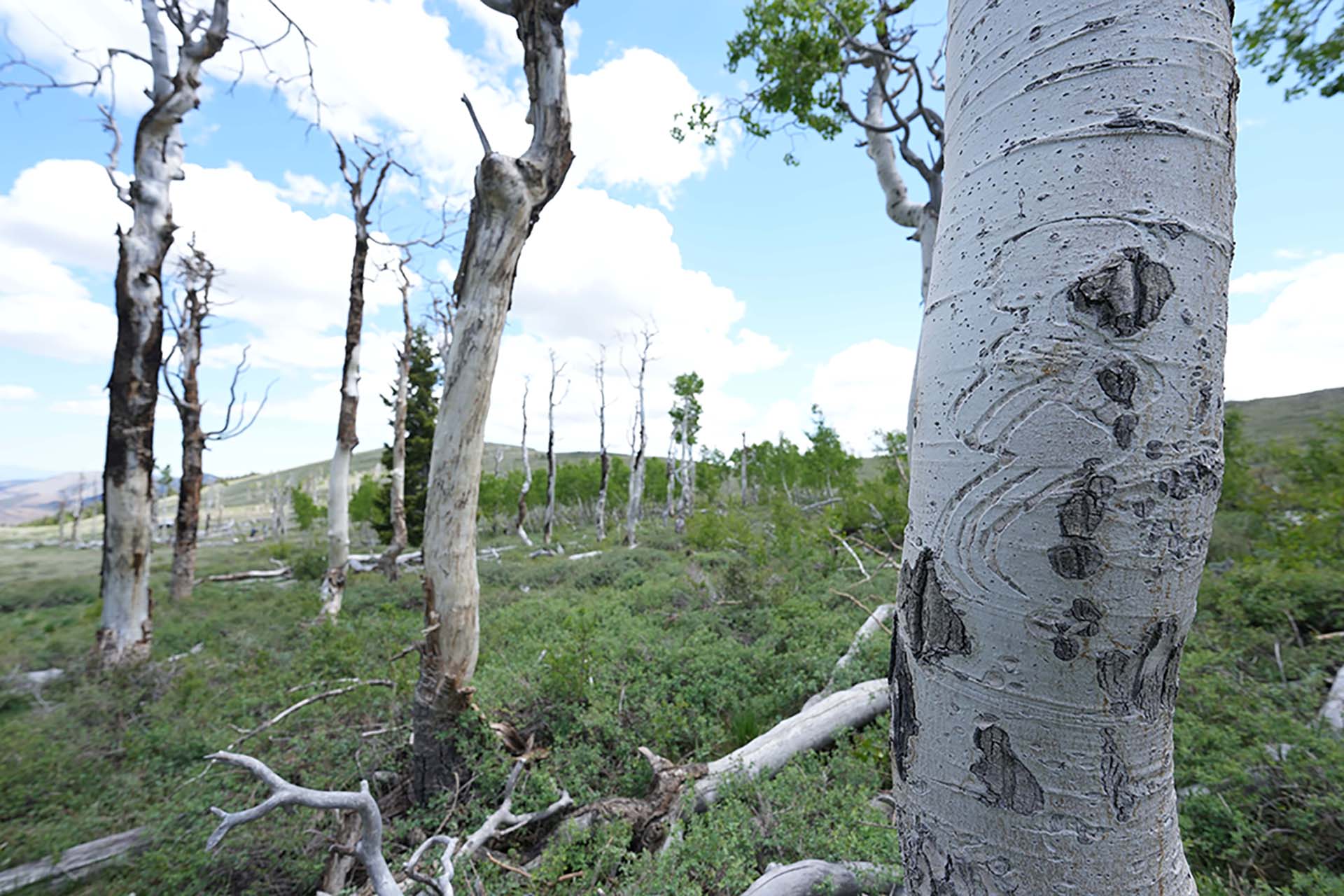
Lincoln County, Nevada, once a mining hub, also holds a quieter legacy—sheepherding. This is exemplified through tree carvings known as arborglyphs. -
Stop 1. Sheepherding in the U.S.
Following the Gold Rush, sheepherders tended flocks across vast landscapes of the Western United States. In their solitude, many turned to carving arborglyphs into trees—capturing fleeting, personal moments of their lives. -
Stop 2. Learning from Arborglyphs
Aspen groves thrive in Lincoln County’s high elevations and serve as ideal canvases for arborglyphs due to their smooth bark. While these carvings provide valuable insight into sheepherder presence and land use, they face increasing threats from natural decay and human impact. -
Stop 3. Types of Carvings
Arborglyphs range from simple names and dates to images like the figure of a woman, reflecting diverse expressions and messages. Interpretation can be subjective, as age and weathering often blur the lines between intention and natural markings. -
Stop 4. Carving Techniques
Creating a clear arborglyph required skillful technique and patience, with many carvings only becoming visible years after they were made. The slow healing process of aspen bark meant carvers often never saw the final result of their work. -
Stop 5. Sheepherder Shelters
At places like the Salt Springs Hut, layered carvings from both sheepherders and homesteaders reflect decades of shared land use. The repeated return of carvers to the same sites suggests these locations offered essential resources for flocks. -
Stop 6. Snapshots in Time
Arborglyphs are a snapshot in time from generations of sheep herders. They were a way for individuals to say, “I was here.” However, these are only a temporary visual legacy as environment, development, and time threaten them.
Voices
-

Iñaki Arrieta Baro
Head, Jon Bilbao Basque Library
CyArk
-

John Bieter
History Professor, Boise State University
CyArk
-
Jake Northup
Planning & Environmental Specialist, BLM
CyArk
-
Dan Devlin
Landowner
CyArk
Dan Devlin is a rancher who owns 460 acres on Mt. Wilson.
Gallery
Partners


About the Project
This virtual experience explores the historic arborglyphs carved into quaking aspen trees in the high country of Lincoln County, Nevada, near Mt. Wilson. Created with support from the Lincoln County Archaeological Initiative, administered by the Bureau of Land Management’s Caliente Field Office, the project was developed by CyArk in collaboration with Lertxun-marrak: The Arborglyph Collaborative. Carved by sheepherders, these names, dates, figures, symbols, and inscriptions offer a rare glimpse into the lives, labor, and traditions that shaped the cultural landscape of the American West. Through digital documentation and storytelling, the experience helps preserve these fragile cultural resources and share their significance with a wider audience.
Related Links
Credits
This project was made possible through funding from the Lincoln County Archaeological Initiative, administered by the Bureau of Land Management’s Caliente Field Office.
CyArk extends its sincere thanks to the BLM Caliente Field Office team for coordinating community connections and joining us in the field; to The Arborglyph Collaborative for sharing their expertise and resources; and to the Devlin family for welcoming us to the Salt Springs property and sharing their family history.
Special thanks to all of the interview participants for contributing their knowledge, expertise, and personal experiences.