This is a companion guide to the interactive 3D virtual tour: Discover Shirk Ranch. You can click here (Opens in new tab) to begin the tour.
Story outline
Each stop is a location within the virtual tour. Use the "Explore in 3D" button to jump straight to any stop.
-
Welcome to Shirk Ranch
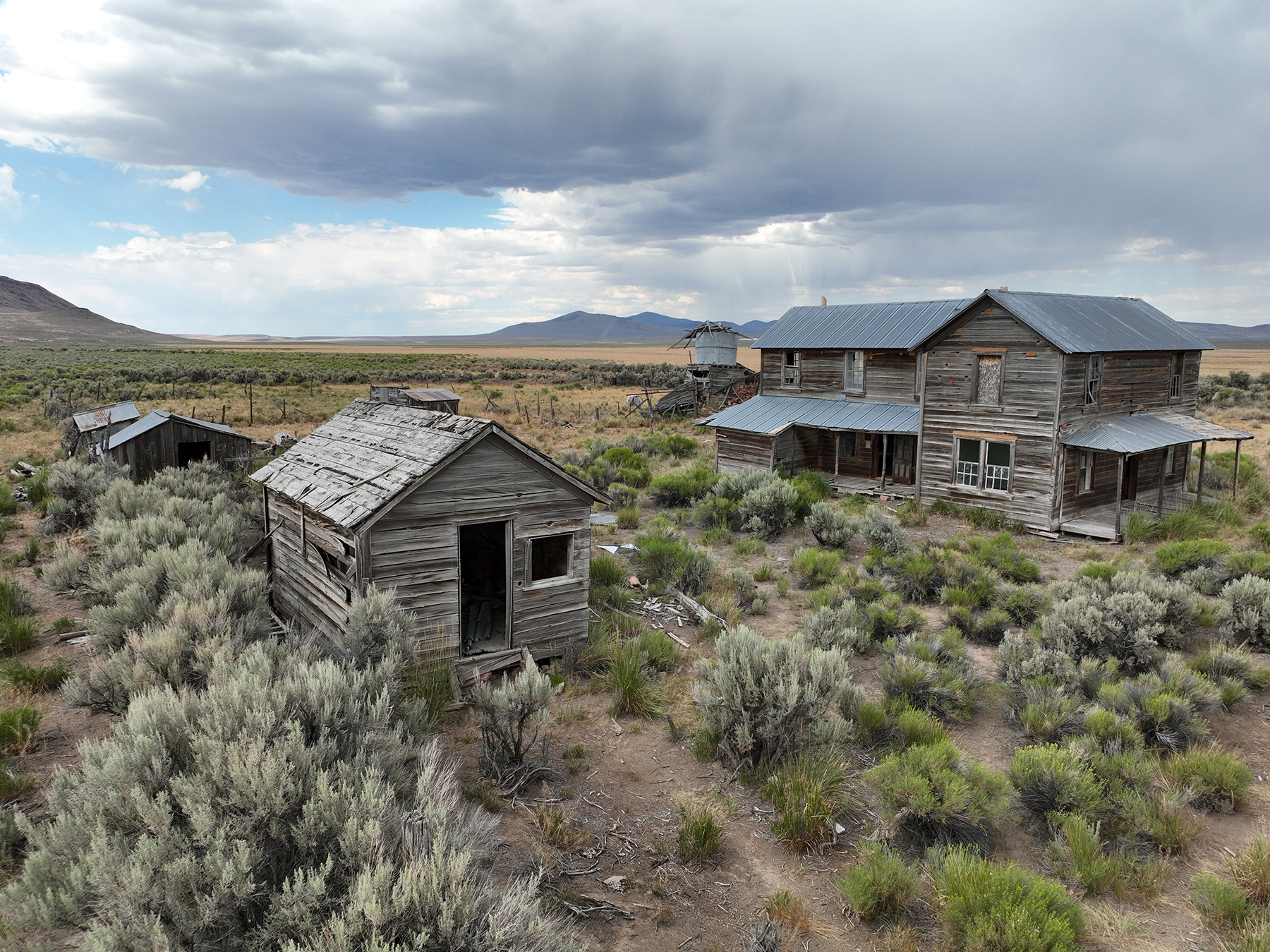
Explore in 3D: Welcome to Shirk Ranch (Opens in new tab)Shirk Ranch stands in Oregon’s remote Guano Valley, a high desert outback. Built in 1881, it endures in rugged isolation, echoing a bygone frontier life. -
Stop 1. A Vital Landscape
Explore in 3D: Stop 1. A Vital Landscape (Opens in new tab)Despite the extreme conditions, this area has been central to the lives of diverse communities. For thousands of years, Indigenous groups have utilized the landscape, relying on an abundance of water. White settlers established homesteads, influencing violent land disputes. Cattleman David Shirk purchased this ranch in 1883 for a horse-raising business. -
Stop 2. Who Were the Shirks?
Explore in 3D: Stop 2. Who Were the Shirks? (Opens in new tab)David Shirk, a skilled rancher from Indiana, built his life on cattle drives, settling at Shirk Ranch with his family. His wife, Frances, was a talented horse rider and cook. Despite his achievements, Shirk's legacy is intertwined with the forced removal of Indigenous populations, reflecting the era's harsh realities. -
Stop 3. Making a Home
Explore in 3D: Stop 3. Making a Home (Opens in new tab)The two-story Shirk Ranch house, built between 1883 and 1914, features weatherboard siding and a modern metal roof. Once the heart of family life, it retains original hardwood floors alongside later additions like vinyl and brick from the 1980s. -
Stop 4. Life on the Ranch
Explore in 3D: Stop 4. Life on the Ranch (Opens in new tab)David Shirk fostered camaraderie at his ranch, where hands dined in the main house and enjoyed a billiard room upstairs. On cold winter nights, the house came alive with laughter, crackling juniper logs, and the aroma of home-cooked meals. -
Stop 5. An Abundant Ecosystem
Explore in 3D: Stop 5. An Abundant Ecosystem (Opens in new tab)Shirk Ranch is a haven for rare plants like Crosby’s buckwheat and vibrant wildflowers, alongside wildlife like mule deer, coyotes, pronghorn antelope, and bats roosting in empty structures. Guano Creek sustains birds and chub fish, completing this thriving desert ecosystem. -
Stop 6. Gravesite
Explore in 3D: Stop 6. Gravesite (Opens in new tab)Life in the Old West was unforgiving, with disputes often settled by violence. A gravesite at Shirk Ranch marks Bill Vickers and J. Gruenke, killed in 1887 under mysterious circumstances. Local lore suggests a deputy and possibly Shirk were involved, though the truth remains elusive. -
Stop 7. Layers of History
Explore in 3D: Stop 7. Layers of History (Opens in new tab)Shirk Ranch, once a thriving homestead, now stands as a testament to time's passage. Layers of history linger in its structures, telling stories of the Shirks and those who worked here. A reminder of change, it’s now shared by wildlife, inviting reflection and exploration.
Gallery
Partners

About the Project
The Historic Shirk Ranch was home to David Shirk and his family beginning in the early 1880s. The establishment of Shirk Ranch was part of a border movement of ranchers and settlers into southeast Oregon, shaping ranching life that persists in the area today. The ranch illuminates how early settlers to eastern Oregeon relied on the landscape for their livelihood and day-to-day life. In 2022, CyArk digitally documented the ranch resulting in a photo realistic 3D model of the site. Working with the Bureau of Land Management at the Lakeview District Office in Oregon, CyArk utilized the 3D model to create a virtual Tapestry experience where virtual visitors can learn about David Shirk and the history of early ranching in southeast Oregon.
Related Links
Credits
This experience was developed in conjunction and with the support of the Bureau of Land Management (Lakeview Field Office).