Story outline
-
Weaverville Joss House State Historic Park
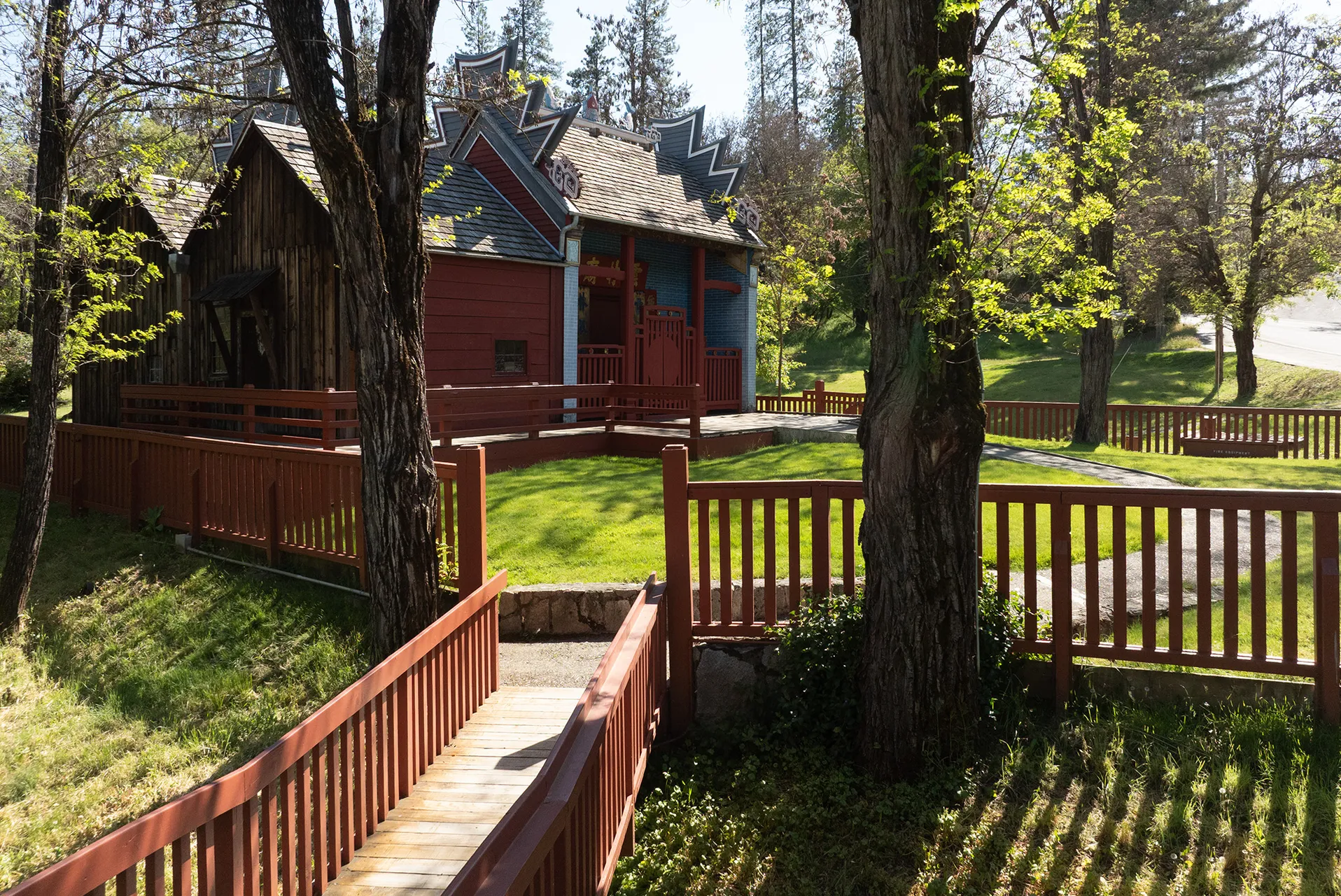
Weaverville Joss House State Historic Park preserves one of North America's oldest Taoist temples. Rooted in Chinese immigrant history, it remains an active place of religious practice and a vital testament to community resilience, and cultural continuity in northern California.
-
Stop 1. Nature, Balance, and Protection
Enter the temple grounds and discover Taoist design guiding every feature: a curved bridge to deter spirits, red fence and a flowing creek for luck, and a roof ridge symbolizing a protective pond. Rebuilt in 1874, the site’s forms, colors, numbers, and symbols embody harmony and protection.
-
Stop 2. A Political History
Though a religious place, the Weaverville temple also embodies Chinese political history. Its poetic name and door couplets allude to Chinese revolutionaries, while welcoming boards and poems, provided by a Chinese secret society, quietly challenged Manchu-led imperial rule.
-
Stop 3. Connections to China
Passing through three spirit-warding doors, the lobby links the temple, living quarters, and meeting rooms. Crafted mostly in Toisan China and shipped through San Francisco, the Weaverville temple combines a unique combination of Chinese and American history.
-
Stop 4. A Community Hub
This mid-19th-century caretaker’s quarters and meeting room was part of what anchored the community here in the heart of Weaverville’s Chinatown. This space was a vital community center, serving as social hall, courtroom, school, hostel, and registry. Donation boards record donors and changes to the community over time, testifying to resilience amid discrimination and exclusion.
-
Stop 5. Spiritual Center
Surrounding the main altar are ritual objects central to Taoist practice: offerings, incense, and a historic prayer furnace. These rites connect earthly and spiritual realms, honor ancestors, and express hopes for prosperity—reflecting beliefs of Chinese immigrants who called California "Gold Mountain." -
Stop 6. Taoist Deities
Behind the main altar, three ornate wooden shrines house 13 locally crafted clay Taoist deities. These figures, crafted in the 1870s, reflect traditional Taoist practices, community identity, and early immigrant craftsmanship.
-
Stop 7. A Living Legacy
Generations of caretakers have preserved Weaverville’s rare Taoist temple. Moon Lee, whose grandfather helped build it, became caretaker in 1903 and donated it to California State Parks in 1956. Today the site remains both a living temple and a center Chinese American heritage.
-
Stop 8. Thank You for Visiting
Thank you for visiting Weaverville Joss House State Historic Park. We encourage you to continue exploration through visiting the site's museum and nearby historic sites to deepen your understanding of cultural resilience, spiritual practice, and community heritage.
Voices
-
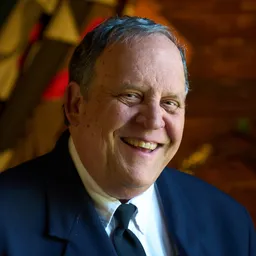
Jack Frost
Historic Monument Guide, CA State Parks
Jack Frost is a Historic Monument Guide with CA State Parks at Weaverville Joss House State Historic Park.
-

Yvonne Smith
Community Member
Yvonne Smith is a community member and practioner at the Weaverville Temple.
-
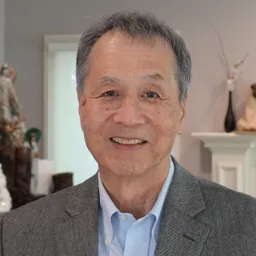
David Lei
Chinese Historical Society of America Board Member
David Lei has a passion for building communities, history, and the arts. He has been actively involved in many non profit organizations including The Chinese Performing Arts Foundation, Asian Art Museum, The Chinese American Community Fund, and the Bancroft Library and Center for Asian American Media.
-
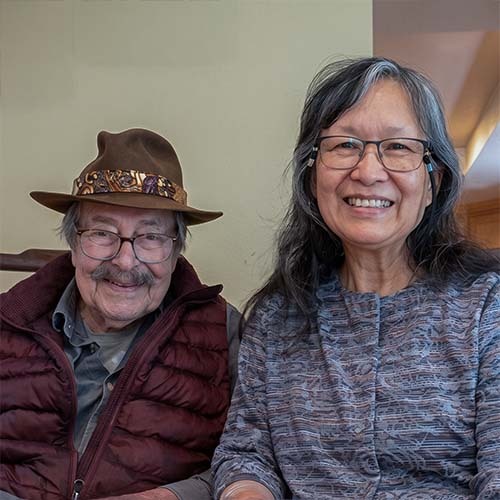
Chuimei Ho and Bennet Bronson
Scholars of Chinese American History
Chuimei Ho and Bennet Bronson are prominent researchers, historians, and authors specializing in Asian art, archaeology, and the history of Chinese Americans.
Gallery
Partners

About the Project
This virtual experience is a collaboration between CyArk, California State Parks, and Parks California. Utilizing 3D documentation of the Weaverville Joss House, this virtual experience provides an educational resource where virtual visitors can learn about Chinese American history and Taoist philosophies through exploration of the temple that has been utilized for over 150 years.
Related Links
Credits
Thank you to Jack Frost, Yvonne Smith, Davie Lei, Bennet Bronson, and Chuimei Ho for your insights on the Weaverville Joss House.